


Transcriptome profiling of the intoxication response of Tenebrio molitor larvae to Bacillus thuringiensis Cry3Aa protoxin
- PMID: 22558093
- PMCID: PMC3338813
- DOI: 10.1371/journal.pone.0034624
Transcriptome profiling of the intoxication response of Tenebrio molitor larvae to Bacillus thuringiensis Cry3Aa protoxin
Abstract
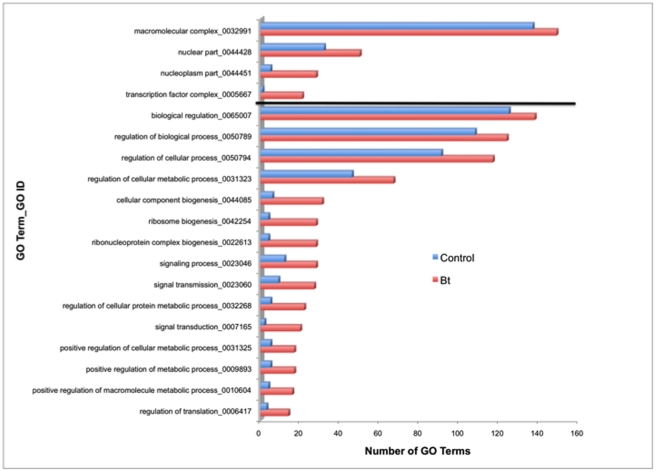
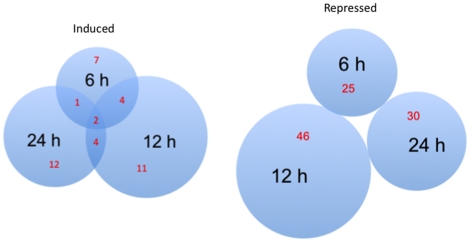
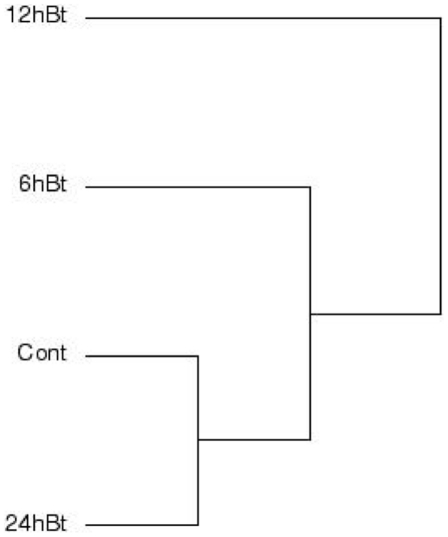
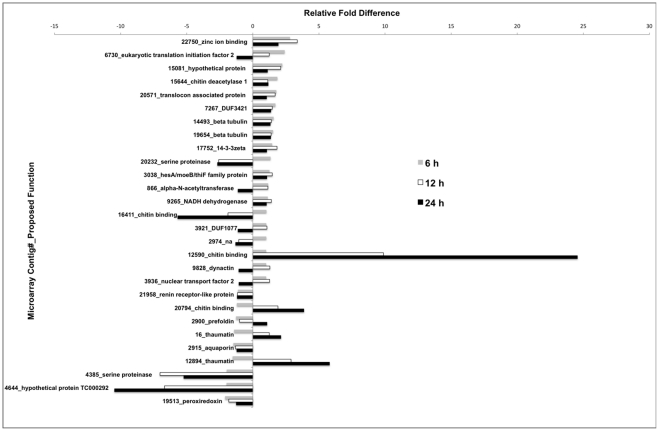
Bacillus thuringiensis (Bt) crystal (Cry) proteins are effective against a select number of insect pests, but improvements are needed to increase efficacy and decrease time to mortality for coleopteran pests. To gain insight into the Bt intoxication process in Coleoptera, we performed RNA-Seq on cDNA generated from the guts of Tenebrio molitor larvae that consumed either a control diet or a diet containing Cry3Aa protoxin. Approximately 134,090 and 124,287 sequence reads from the control and Cry3Aa-treated groups were assembled into 1,318 and 1,140 contigs, respectively. Enrichment analyses indicated that functions associated with mitochondrial respiration, signalling, maintenance of cell structure, membrane integrity, protein recycling/synthesis, and glycosyl hydrolases were significantly increased in Cry3Aa-treated larvae, whereas functions associated with many metabolic processes were reduced, especially glycolysis, tricarboxylic acid cycle, and fatty acid synthesis. Microarray analysis was used to evaluate temporal changes in gene expression after 6, 12 or 24 h of Cry3Aa exposure. Overall, microarray analysis indicated that transcripts related to allergens, chitin-binding proteins, glycosyl hydrolases, and tubulins were induced, and those related to immunity and metabolism were repressed in Cry3Aa-intoxicated larvae. The 24 h microarray data validated most of the RNA-Seq data. Of the three intoxication intervals, larvae demonstrated more differential expression of transcripts after 12 h exposure to Cry3Aa. Gene expression examined by three different methods in control vs. Cry3Aa-treated larvae at the 24 h time point indicated that transcripts encoding proteins with chitin-binding domain 3 were the most differentially expressed in Cry3Aa-intoxicated larvae. Overall, the data suggest that T. molitor larvae mount a complex response to Cry3Aa during the initial 24 h of intoxication. Data from this study represent the largest genetic sequence dataset for T. molitor to date. Furthermore, the methods in this study are useful for comparative analyses in organisms lacking a sequenced genome.
Conflict of interest statement
Figures
References
-
- Shelton AM, Zhao JZ, Roush RT. Economic, ecological, food safety, and social consequences of the deployment of Bt transgenic plants. Ann Rev Entomol. 2002;47:845–881. - PubMed
-
- Crickmore N, Zeigler DR, Schnepf E, Van Rie J, Lereclus D, et al. Bacillus thuringiensis toxin nomenclature. 2011.
-
- van Frankenhuyzen K. Insecticidal activity of Bacillus thuringiensis crystal proteins. J Invertebr Pathol. 2009;101:1–16. - PubMed
Publication types
MeSH terms
Substances
LinkOut - more resources
Full Text Sources
