


High genetic diversity among community-associated Staphylococcus aureus in Europe: results from a multicenter study
- PMID: 22558099
- PMCID: PMC3338755
- DOI: 10.1371/journal.pone.0034768
High genetic diversity among community-associated Staphylococcus aureus in Europe: results from a multicenter study
Abstract
Background: Several studies have addressed the epidemiology of community-associated Staphylococcus aureus (CA-SA) in Europe; nonetheless, a comprehensive perspective remains unclear. In this study, we aimed to describe the population structure of CA-SA and to shed light on the origin of methicillin-resistant S. aureus (MRSA) in this continent.
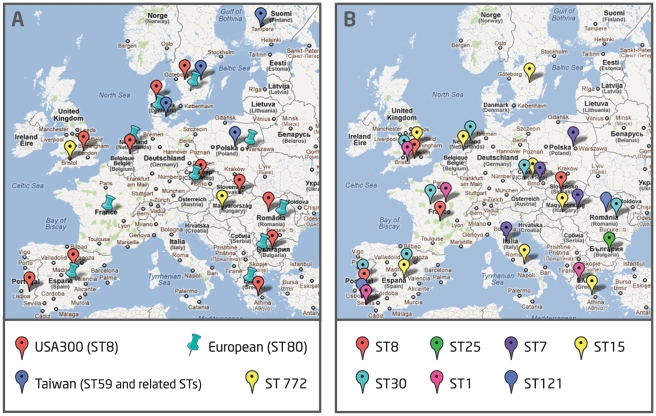
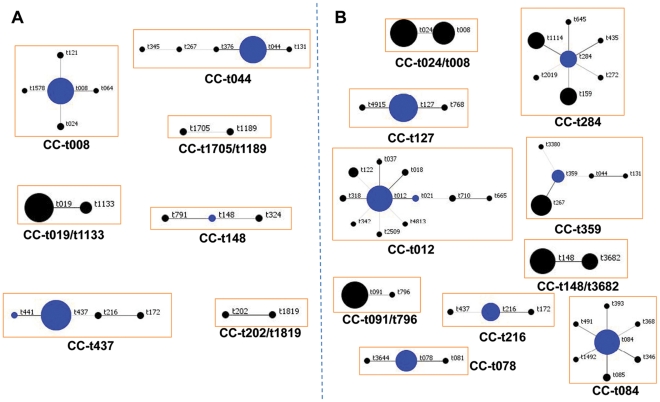
Methods and findings: A total of 568 colonization and infection isolates, comprising both MRSA and methicillin-susceptible S. aureus (MSSA), were recovered in 16 European countries, from community and community-onset infections. The genetic background of isolates was characterized by molecular typing techniques (spa typing, pulsed-field gel electrophoresis and multilocus sequence typing) and the presence of PVL and ACME was tested by PCR. MRSA were further characterized by SCCmec typing. We found that 59% of all isolates were associated with community-associated clones. Most MRSA were related with USA300 (ST8-IVa and variants) (40%), followed by the European clone (ST80-IVc and derivatives) (28%) and the Taiwan clone (ST59-IVa and related clonal types) (15%). A total of 83% of MRSA carried Panton-Valentine leukocidin (PVL) and 14% carried the arginine catabolic mobile element (ACME). Surprisingly, we found a high genetic diversity among MRSA clonal types (ST-SCCmec), Simpson's index of diversity = 0.852 (0.788-0.916). Specifically, about half of the isolates carried novel associations between genetic background and SCCmec. Analysis by BURP showed that some CA-MSSA and CA-MRSA isolates were highly related, suggesting a probable local acquisition/loss of SCCmec.
Conclusions: Our results imply that CA-MRSA origin, epidemiology and population structure in Europe is very dissimilar from that of USA.
Conflict of interest statement
Figures
References
-
- Shore AC, Deasy EC, Slickers P, Brennan G, O’Connell B, et al. Detection of staphylococcal cassette chromosome mec type XI carrying highly divergent mecA, mecI, mecR1, blaZ, and ccr genes in human clinical isolates of clonal complex 130 methicillin-resistant Staphylococcus aureus. Antimicrob Agents Chemother. 2011;55:3765–3773. - PMC - PubMed
Publication types
MeSH terms
LinkOut - more resources
Full Text Sources
Medical
