


Use and safety of unfractionated heparin for anticoagulation during maintenance hemodialysis
- PMID: 22560830
- PMCID: PMC4088960
- DOI: 10.1053/j.ajkd.2012.03.017
Use and safety of unfractionated heparin for anticoagulation during maintenance hemodialysis
Erratum in
- Am J Kidney Dis. 2012 Dec;60(6):1056
Abstract
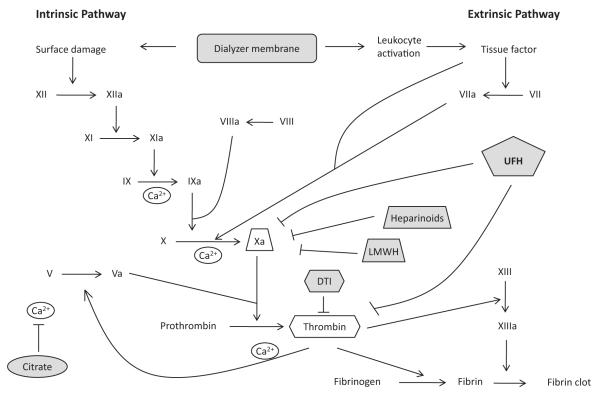
Anticoagulation is essential to hemodialysis, and unfractionated heparin (UFH) is the most commonly used anticoagulant in the United States. However, there is no universally accepted standard for its administration in long-term hemodialysis. Dosage schedules vary and include weight-based protocols and low-dose protocols for those at high risk of bleeding, as well as regional anticoagulation with heparin and heparin-coated dialyzers. Adjustments are based largely on clinical signs of under- and overanticoagulation. Risks of UFH use include bleeding, heparin-induced thrombocytopenia, hypertriglyceridemia, anaphylaxis, and possibly bone mineral disease, hyperkalemia, and catheter-associated sepsis. Alternative anticoagulants include low-molecular-weight heparin, direct thrombin inhibitors, heparinoids, and citrate. Anticoagulant-free hemodialysis and peritoneal dialysis also are potential substitutes. However, some of these alternative treatments are not as available as or are more costly than UFH, are dependent on country and health care system, and present dosing challenges. When properly monitored, UFH is a relatively safe and economical choice for anticoagulation in long-term hemodialysis for most patients.
Copyright © 2012 National Kidney Foundation, Inc. Published by Elsevier Inc. All rights reserved.
Figures

References
-
- US Renal Data System USRDS 2010 Annual Data Report: Atlas of Chronic Kidney Disease and End-Stage Renal Disease in the United States. Am J Kidney Dis. 2011;57((1)(suppl 1)):e1–e526. - PubMed
-
- Cameron JS. Practical haemodialysis began with cellophane and heparin: the crucial role of William Thalhimer (1884-1961) Nephrol Dial Transplant. 2000;15(7):1086–1091. - PubMed
-
- Fellner SK, Purkerson ML. Gordon Murray: heparin, hemodialysis and hubris. Am J Nephrol. 2002;22(2-3):271–277. - PubMed
-
- Brunet P, Simon N, Opris A, et al. Pharmacodynamics of unfractionated heparin during and after a hemodialysis session. Am J Kidney Dis. 2008;51(5):789–795. - PubMed
Publication types
MeSH terms
Substances
Grants and funding
LinkOut - more resources
Full Text Sources
Medical
