


Characteristics of a widespread community cluster of H275Y oseltamivir-resistant A(H1N1)pdm09 influenza in Australia
- PMID: 22561367
- PMCID: PMC3379839
- DOI: 10.1093/infdis/jis337
Characteristics of a widespread community cluster of H275Y oseltamivir-resistant A(H1N1)pdm09 influenza in Australia
Abstract
Background: Oseltamivir resistance in A(H1N1)pdm09 influenza is rare, particularly in untreated community cases. Sustained community transmission has not previously been reported.
Methods: Influenza specimens from the Asia-Pacific region were collected through sentinel surveillance, hospital, and general practitioner networks. Clinical and epidemiological information was collected on patients infected with oseltamivir-resistant viruses.
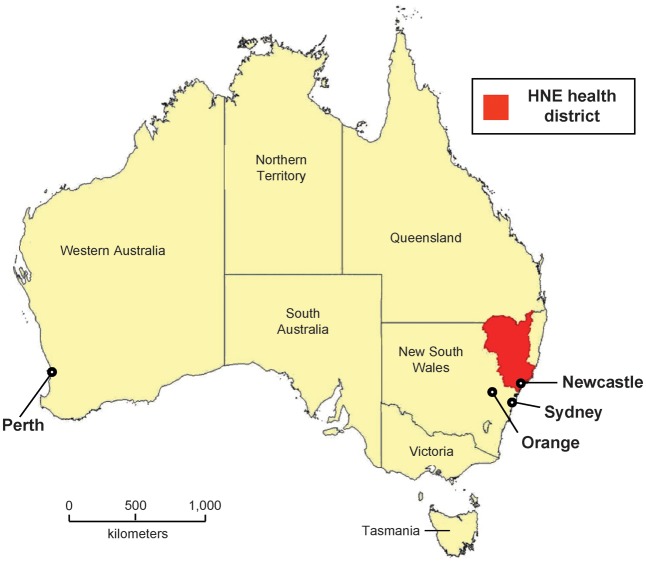
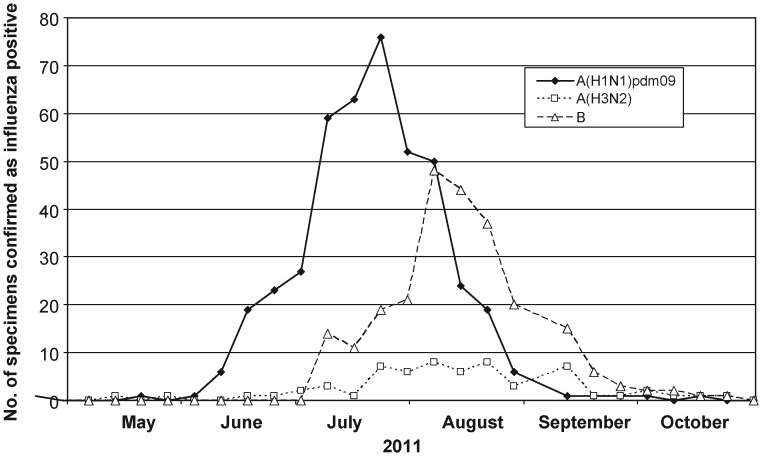
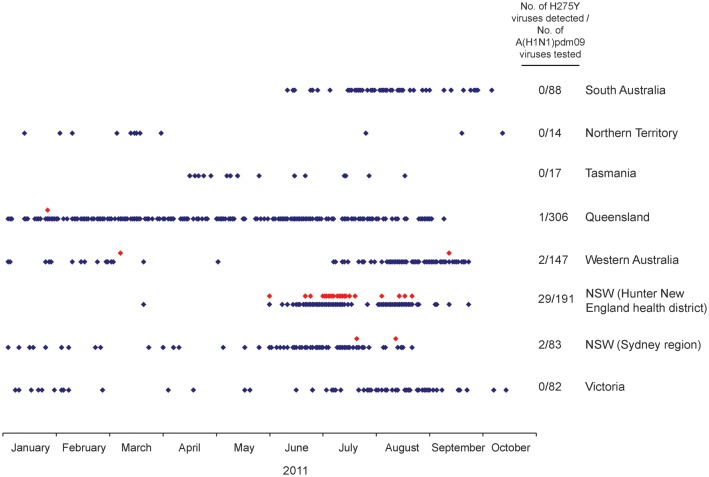
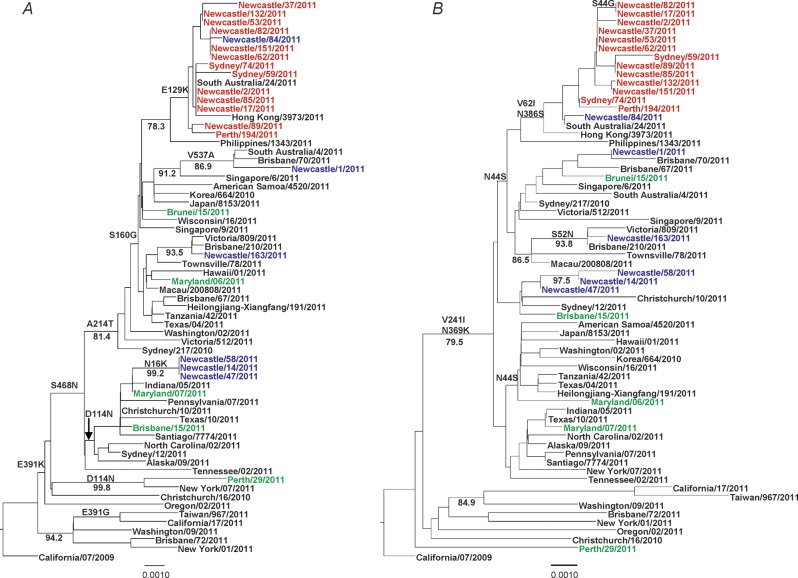
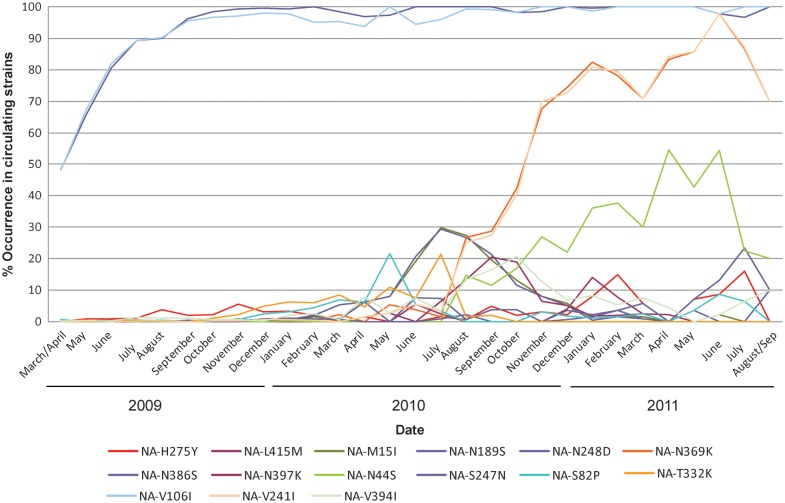
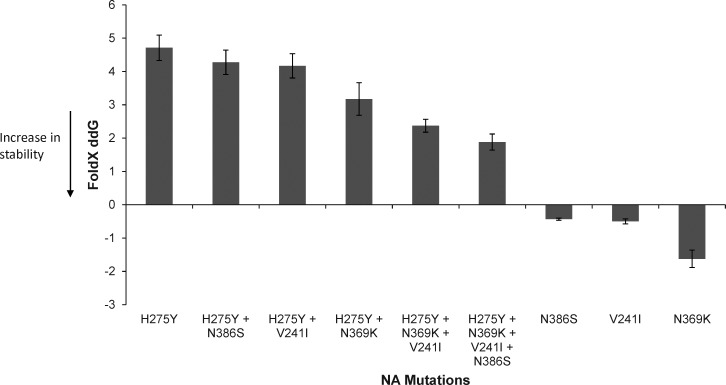
Results: Twenty-nine (15%) of 191 A(H1N1)pdm09 viruses collected between May and September 2011 from Hunter New England (HNE), Australia, contained the H275Y neuraminidase substitution responsible for oseltamivir resistance. Only 1 patient had received oseltamivir before specimen collection. The resistant strains were genetically very closely related, suggesting the spread of a single variant. Ninety percent of cases lived within 50 kilometers. Three genetically similar oseltamivir-resistant variants were detected outside of HNE, including 1 strain from Perth, approximately 4000 kilometers away. Computational analysis predicted that neuraminidase substitutions V241I, N369K, and N386S in these viruses may offset the destabilizing effect of the H275Y substitution.
Conclusions: This cluster represents the first widespread community transmission of H275Y oseltamivir-resistant A(H1N1)pdm09 influenza. These cases and data on potential permissive mutations suggest that currently circulating A(H1N1)pdm09 viruses retain viral fitness in the presence of the H275Y mutation and that widespread emergence of oseltamivir-resistant strains may now be more likely.
Figures
Comment in
-
Understanding influenza virus resistance to antiviral agents; early warning signs for wider community circulation.J Infect Dis. 2012 Jul 15;206(2):145-7. doi: 10.1093/infdis/jis338. Epub 2012 May 4. J Infect Dis. 2012. PMID: 22561368 No abstract available.
References
-
- Creanga AA, Johnson TF, Graitcer SB, et al. Severity of 2009 pandemic influenza A (H1N1) virus infection in pregnant women. Obstet Gynecol. 2010;115:717–26. - PubMed
-
- Ling LM, Chow AL, Lye DC, et al. Effects of early oseltamivir therapy on viral shedding in 2009 pandemic influenza A (H1N1) virus infection. Clin Infect Dis. 2010;50:963–9. - PubMed
-
- Campbell CN, Mytton OT, McLean EM, et al. Hospitalization in two waves of pandemic influenza A(H1N1) in England. Epidemiol Infect. 2010;139:1560–9. - PubMed
-
- Newsome K, Williams J, Way S, et al. Maternal and Infant Outcomes Among Severely Ill Pregnant and Postpartum Women with 2009 Pandemic Influenza A (H1N1)—United States, April 2009–August 2010. MMWR Morb Mortal Wkly Rep. 2011;60:1193–6. - PubMed
Publication types
MeSH terms
Substances
LinkOut - more resources
Full Text Sources
Other Literature Sources
Medical
