


Interobserver reliability and diagnostic performance of Chiari II malformation measures in MR imaging--part 2
- PMID: 22562191
- PMCID: PMC3376256
- DOI: 10.1007/s00381-012-1763-3
Interobserver reliability and diagnostic performance of Chiari II malformation measures in MR imaging--part 2
Abstract
Purpose: Brain MR imaging is essential in the assessment of Chiari II malformation in clinical and research settings concerning spina bifida. However, the interpretation of MR images of the malformation is not always straightforward. Morphometric analyses of the extent of Chiari II malformation may improve the assessment. In an attempt to select appropriate morphometric measures for this purpose, we investigated the interobserver reliability and diagnostic performance of several morphometric measures of Chiari II malformation on MR images.
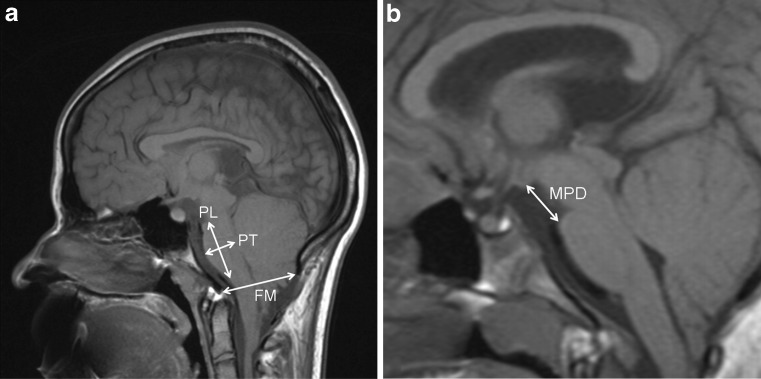
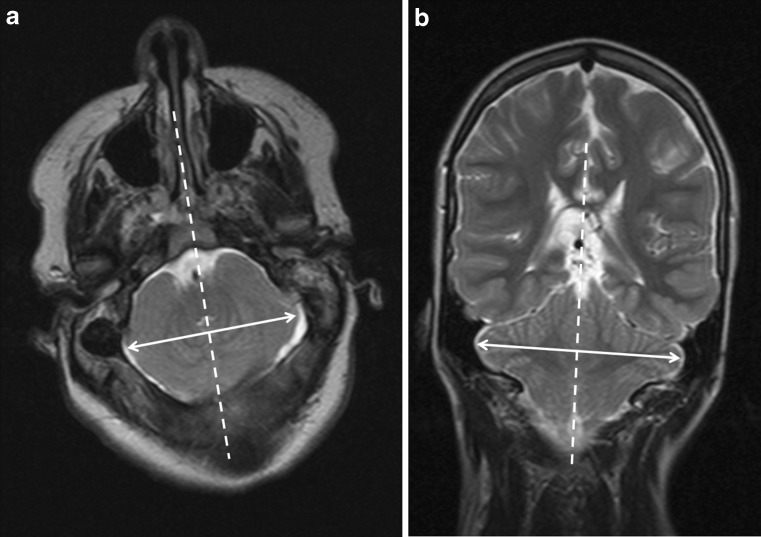
Methods: Brain MR images of 79 children [26 with open spinal dysraphism, 17 with closed spinal dysraphism, and 36 without spinal dysraphism; mean age 10.6 (SD 3.2; range, 6-16) years] were evaluated. All children had been assessed for Chiari II malformation (defined as cerebellar herniation in combination with open spinal dysraphism; n = 23). Three observers blindly and independently reviewed the MR images for 21 measures of the cerebellum, brainstem, and posterior fossa in three planes. The interobserver reliability was assessed by an agreement index (AI = 1 - RRE) and the diagnostic performance by receiver operating characteristic analyses.
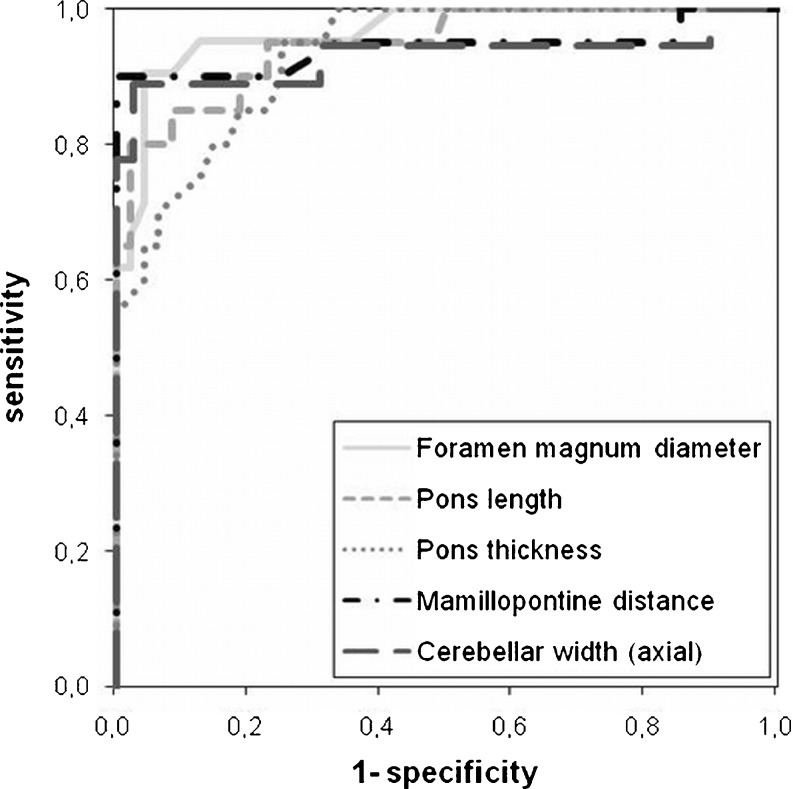
Results: Reliability was good for most measures, except for the degree of herniation of the vermis and tonsil. Most values differed statistically significantly between children with and without Chiari II malformation. The measures mamillopontine distance and cerebellar width showed excellent diagnostic performance.
Conclusions: Morphometric measures may reliably quantify the morphological distortions of Chiari II malformation on MR images and provide additional tools to assess the severity of Chiari II malformation in clinical and research settings.
Figures
References
-
- Barkovich AJ. Congenital malformations of the brain and skull. In: Barkovich AJ, editor. Pediatric neuroimaging. 4. Philadelphia: Lippincott Williams & Wilkins; 2005. pp. 374–384.
-
- Chiari H. Ueber Veränderungen des Kleinhirns infolge von Hydrocephalie des Grosshirns. Deut Med Wochenschr. 1891;17:1172–1175. doi: 10.1055/s-0029-1206803. - DOI
MeSH terms
LinkOut - more resources
Full Text Sources
Medical
