


Excessive muscle paralysis due to pulmonary carcinoid -a case report
- PMID: 22563250
- PMCID: PMC3342021
- DOI: 10.4137/CCRep.S9227
Excessive muscle paralysis due to pulmonary carcinoid -a case report
Abstract
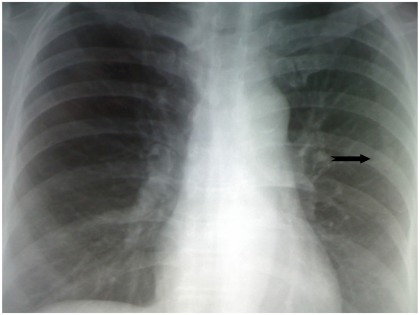
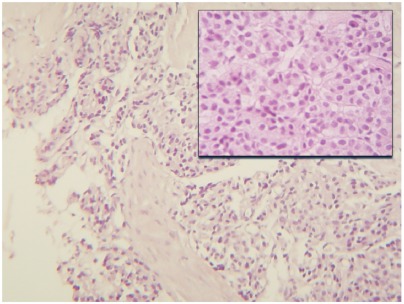
We present the case of a 58-year-old woman with a renin secreting typical bronchopulmonary carcinoid. This patient showed hypotension, constipation and fatigue due to extensive hypokaliemia (K =1.9 meq/L). Aldosterone (102.7 ng/100 mL) and renin (46 ng/mL) were excessively elevated at that time, but cortisol level was normal. Routine chest roentgenography and computed tomography revealed a nodular lesion in the upper left lung lobe, which was suspicious for a neurosecretory pulmonary tumor. The final diagnosis was made by using bronchoscopic procedures and the histologically diagnosis was compatible as a typical pulmonary carcinoid. The tumor was resected curatively, and the renin and aldosterone level became normal. A year after the patient looks healthy.
Keywords: hypokaliemia; neurosecretory pulmonary tumor; pulmonary carcinoid; renin.
Figures


References
-
- Kulke MH, Mayer RJ. Carcinoid tumours. N Engl J Med. 1999;340:858–68. - PubMed
-
- Zuetenhorst JM, Taal BG. Metastatic carcinoid tumours: a clinical review. Oncologist. 2005;10:123–31. - PubMed
-
- Hage R, de la Rivière AB, Seldenrijk CA, van den Bosch JMM. Update in pulmonary carcinoid tumours: a review article. Ann Surg Oncol. 2003;10:697–704. - PubMed
-
- Davila DG, Dunn WF, Tazelaar HD, Pairolero PC. Bronchial carcinoid tumors. Mayo Clin Proc. 1993;68:795–803. - PubMed
-
- Modlin IM, Sandor A. An analysis of 8305 cases of carcinoid tumors. Cancer. 1997;79:813–29. - PubMed
Publication types
LinkOut - more resources
Full Text Sources
