


Estimation of fish biomass using environmental DNA
- PMID: 22563411
- PMCID: PMC3338542
- DOI: 10.1371/journal.pone.0035868
Estimation of fish biomass using environmental DNA
Abstract
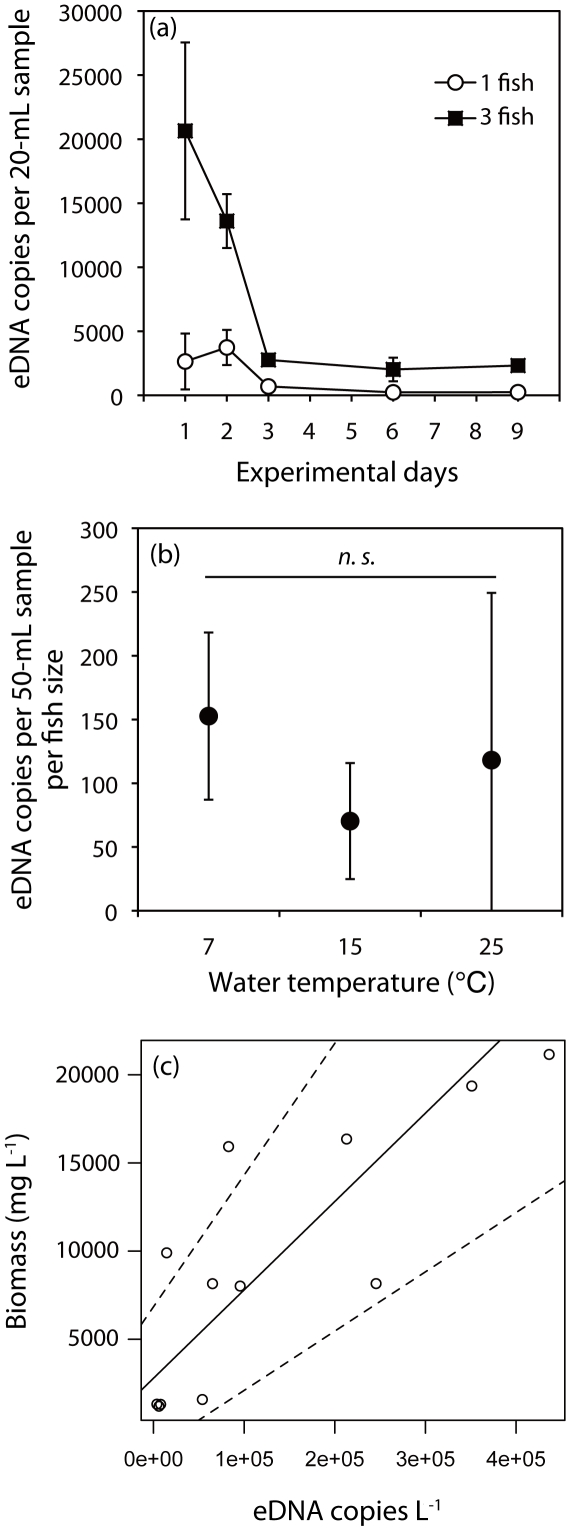
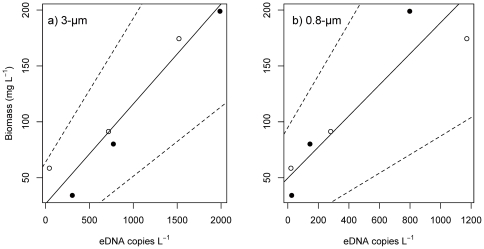
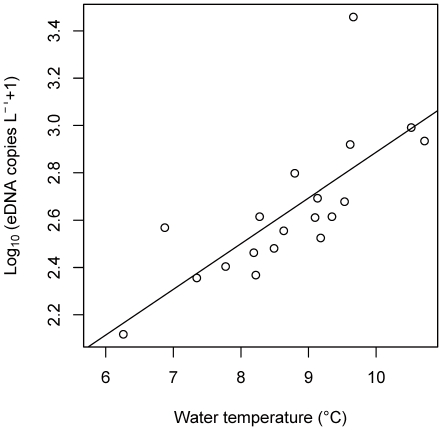
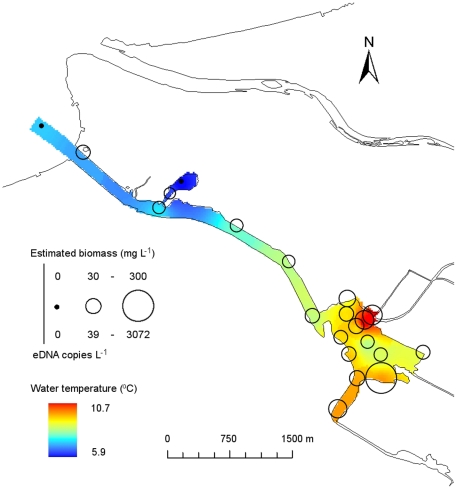
Environmental DNA (eDNA) from aquatic vertebrates has recently been used to estimate the presence of a species. We hypothesized that fish release DNA into the water at a rate commensurate with their biomass. Thus, the concentration of eDNA of a target species may be used to estimate the species biomass. We developed an eDNA method to estimate the biomass of common carp (Cyprinus carpio L.) using laboratory and field experiments. In the aquarium, the concentration of eDNA changed initially, but reached an equilibrium after 6 days. Temperature had no effect on eDNA concentrations in aquaria. The concentration of eDNA was positively correlated with carp biomass in both aquaria and experimental ponds. We used this method to estimate the biomass and distribution of carp in a natural freshwater lagoon. We demonstrated that the distribution of carp eDNA concentration was explained by water temperature. Our results suggest that biomass data estimated from eDNA concentration reflects the potential distribution of common carp in the natural environment. Measuring eDNA concentration offers a non-invasive, simple, and rapid method for estimating biomass. This method could inform management plans for the conservation of ecosystems.
Conflict of interest statement
Figures
References
-
- Begon M, Townsend CR, Harper JL. Ecology: from individuals to ecosystems. Hoboken, NJ, USA: Wiley-Blackwell; 2005. 752
-
- Valentini A, Pompanon F, Taberlet P. DNA barcoding for ecologists. Trends Ecol Evol. 2009;24:110–117. - PubMed
-
- Jerde CL, Mahon AR, Chadderton WL, Lodge DM. “Sight-unseen" detection of rare aquatic species using environmental DNA. Conserv Lett. 2011;4:150–157.
Publication types
MeSH terms
Substances
LinkOut - more resources
Full Text Sources
Research Materials
