


Mifepristone increases the cytotoxicity of uterine natural killer cells by acting as a glucocorticoid antagonist via ERK activation
- PMID: 22563497
- PMCID: PMC3341349
- DOI: 10.1371/journal.pone.0036413
Mifepristone increases the cytotoxicity of uterine natural killer cells by acting as a glucocorticoid antagonist via ERK activation
Abstract
Background: Mifepristone (RU486), a potent antagonist of progesterone and glucocorticoids, is involved in immune regulation. Our previous studies demonstrated that mifepristone directly augments the cytotoxicity of human uterine natural killer (uNK) cells. However, the mechanism responsible for this increase in cytotoxicity is not known. Here, we explored whether the increased cytotoxicity in uNK cells produced by mifepristone is due to either anti-progesterone or anti-glucocorticoid activity, and also investigated relevant changes in the mitogen-activated protein kinase (MAPK) pathway.
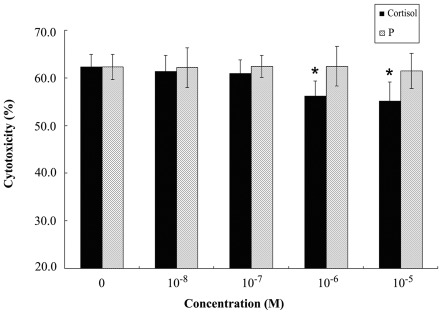
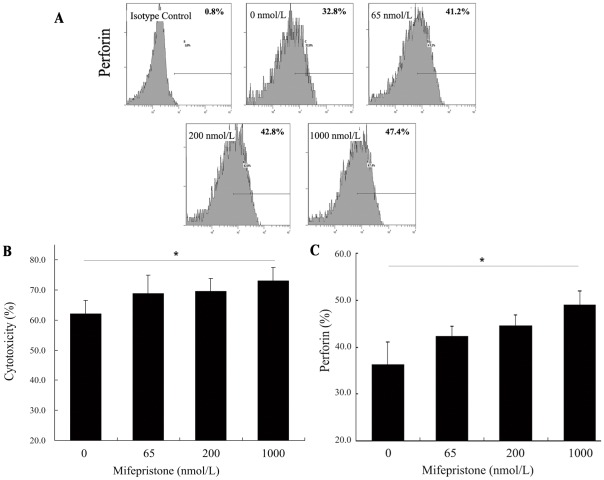
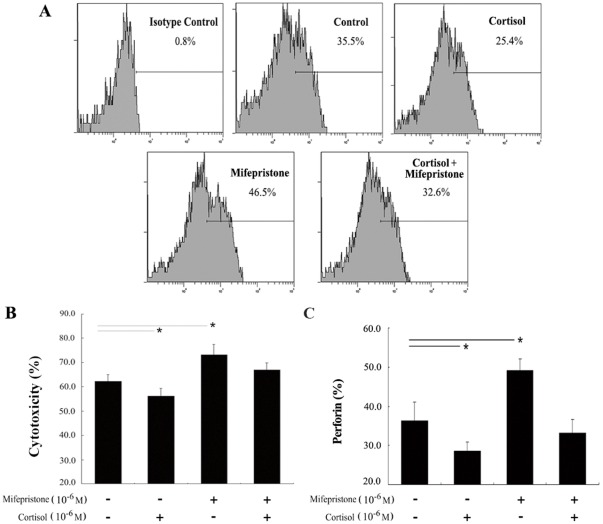
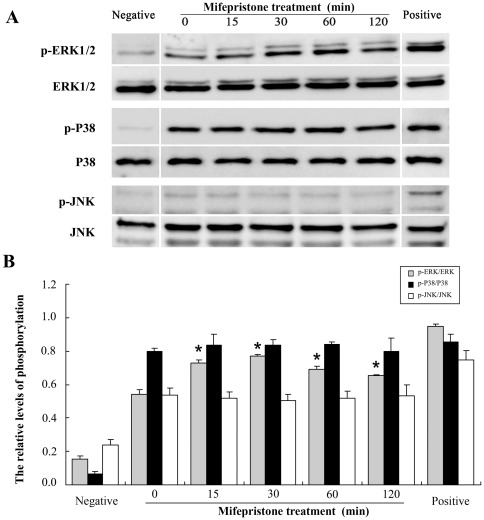
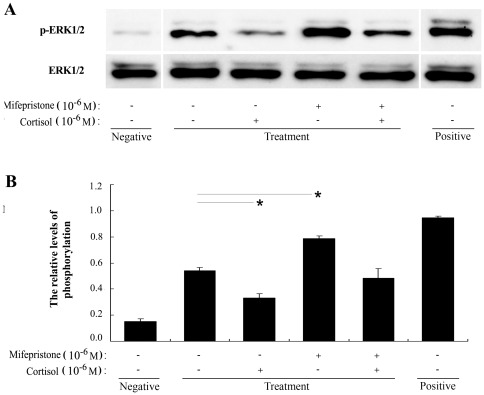
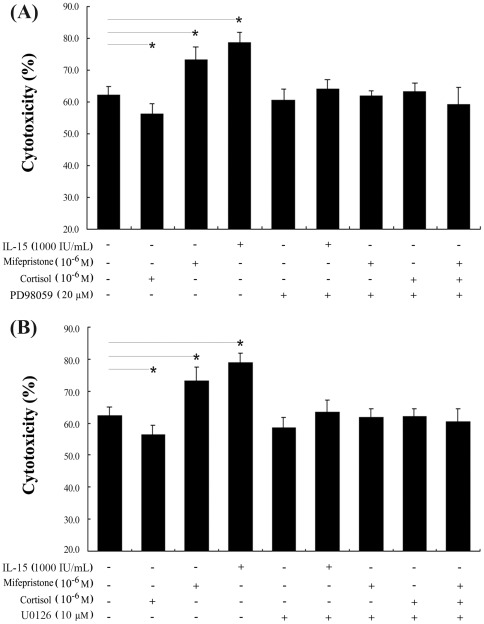
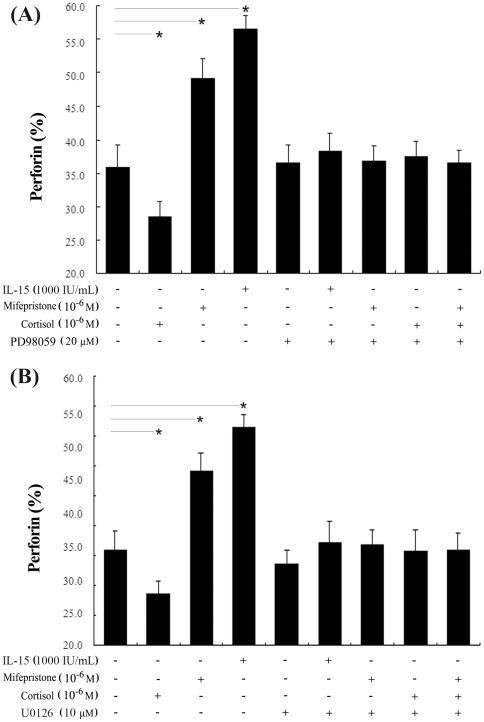
Methodology/principal findings: Uterine NK cells were isolated from decidual samples and incubated with different concentrations of progesterone, cortisol, or mifepristone. The cytotoxicity and perforin expression of uNK cells were detected by mitochondrial lactate dehydrogenase-based MTS staining and flow cytometry assays, respectively. Phosphorylation of components of the MAPK signaling pathway was detected by Western blot. Cortisol attenuated uNK cell-mediated cytotoxicity in a concentration-dependent manner whereas progesterone had no effect. Mifepristone alone increased the cytotoxicity and perforin expression of uNK cells; these effects were blocked by cortisol. Furthermore, mifepristone increased the phosphorylation of ERK1/2 in a cortisol-reversible manner. Specific ERK1/2 inhibitor PD98059 or U0126 blocked cortisol- and mifepristone-induced responses in uNK cells.
Conclusions/significance: These results suggest that mifepristone acts as a glucocorticoid antagonist to augment uNK cell-mediated cytotoxicity via ERK activation, which may be caused by increased perforin expression. These observations may reveal an important mechanism by which mifepristone upregulates the cytotoxicity of uNK cells.
Conflict of interest statement
Figures
References
-
- Spitz IM. Progesterone receptor antagonists. Curr Opin Investig Drugs. 2006;7:882–890. - PubMed
-
- Li A, Felix JC, Minoo P, Amezcua CA, Jain JK. Effect of mifepristone on proliferation and apoptosis of Ishikawa endometrial adenocarcinoma cells. Fertil Steril. 2005;84:202–211. - PubMed
-
- Lin MF, Kawachi MH, Stallcup MR, Grunberg SM, Lin FF. Growth inhibition of androgen-insensitive human prostate carcinoma cells by a 19-norsteroid derivative agent, mifepristone. Prostate. 1995;26:194–204. - PubMed
-
- Check JH, Sansoucie L, Chern J, Dix E. Mifepristone treatment improves length and quality of survival of mice with spontaneous lung cancer. Anticancer Res. 2010;30:119–122. - PubMed
-
- Chien CH, Lai JN, Liao CF, Wang OY, Lu LM, et al. Mifepristone acts as progesterone antagonist of non-genomic responses but inhibits phytohemagglutinin-induced proliferation in human T cells. Hum Reprod. 2009;24:1968–1975. - PubMed
Publication types
MeSH terms
Substances
LinkOut - more resources
Full Text Sources
Medical
Miscellaneous
