


Cryptosporidium spp. in calves and cows from organic and conventional dairy herds
- PMID: 22564291
- PMCID: PMC9196992
- DOI: 10.1017/S0950268812000830
Cryptosporidium spp. in calves and cows from organic and conventional dairy herds
Abstract
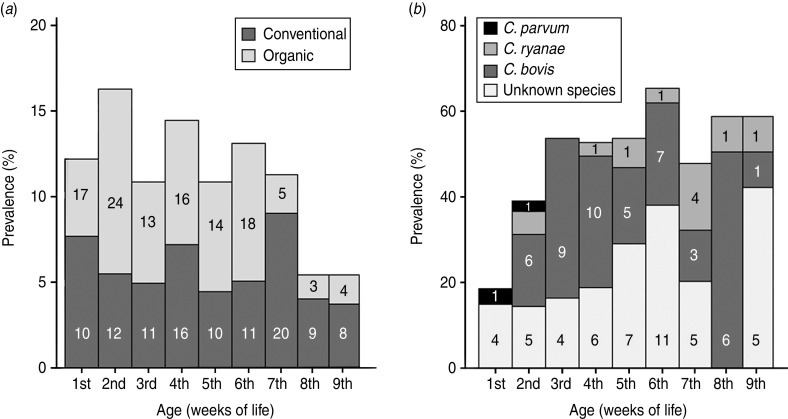
A cohort study was performed to investigate cryptosporidial prevalence and species distribution in 13 organic and 13 conventional dairy herds. Faecal samples were collected from 221 calves and 259 cows. Management routines were recorded at farm inspection and through a questionnaire. Samples were concentrated using sodium chloride flotation and cryptosporidial oocysts were detected by epifluorescence microscopy. Molecular analysis was used to determine species and subtypes. A multivariable model for factors associated with calves being Cryptosporidium spp. positive was built. Cryptosporidium spp.-positive animals were identified in all herds. Prevalences were similar in organic and conventional calves (44·7% vs. 52·3%), as well as in cows (3·1% vs. 3·8%), P > 0·05. Cryptosporidium bovis, C. ryanae and C. parvum were identified. C. ryanae was identified in a calf younger than the described prepatent period. The multivariable model included four significant variables; calf age, cleanliness of bedding, cleaning routines for group pens and farmers' attitudes towards biosecurity.
Figures

References
-
- Hamnes IS, Gjerde B, Robertson L. Prevalence of Giardia and Cryptosporidium in dairy calves in three areas of Norway. Veterinary Parasitology 2006; 140: 204–216. - PubMed
-
- Silverlås C, et al. Prevalence and associated management factors of Cryptosporidium shedding in 50 Swedish dairy herds. Preventive Veterinary Medicine 2009; 90: 242–253. - PubMed
-
- Fayer R, Santin M, Trout JM. Prevalence of cryptosporidium species and genotypes in mature dairy cattle on farms in eastern United States compared with younger cattle from the same locations. Veterinary Parasitology 2007; 145: 260–266. - PubMed
-
- Feng Y, et al. Wide geographic distribution of Cryptosporidium bovis and the deer-like genotype in bovines. Veterinary Parasitology 2007; 144: 1–9. - PubMed
Publication types
MeSH terms
LinkOut - more resources
Full Text Sources
Medical
Miscellaneous
