


Linking caregiver strain to diabetes illness management and health outcomes in a sample of adolescents in chronically poor metabolic control
- PMID: 22566030
- PMCID: PMC4444779
- DOI: 10.1097/DBP.0b013e31824eaac8
Linking caregiver strain to diabetes illness management and health outcomes in a sample of adolescents in chronically poor metabolic control
Abstract
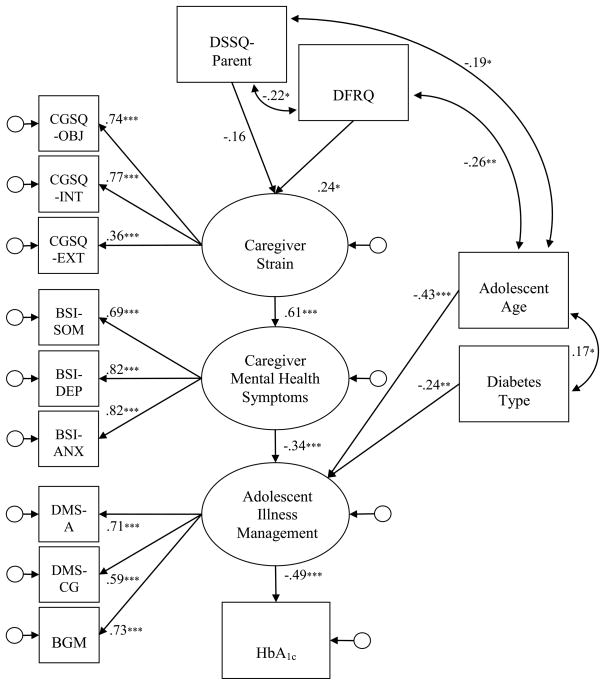
Objective: This study examined a multivariate model of the relationship between caregiver strain and adolescent diabetes illness outcomes in a sample of caregivers of adolescents in chronically poor metabolic control (hemoglobin A1c ≥8.0% at enrollment and for previous 12 mo). Caregiver mental health symptoms were hypothesized to mediate the relationship between caregiver strain and adolescent illness management behavior and metabolic control. Caregivers' perceptions of social support and their level of responsibility for diabetes care tasks were hypothesized to be directly related to caregiver strain and indirectly to caregiver mental health symptoms.
Methods: One hundred forty-six caregiver-adolescent dyads completed baseline measures of caregiver strain, responsibility for diabetes care, social support, mental health symptoms, and illness management behavior. Adolescent metabolic control was also assessed.
Results: Findings from structural equation modeling suggested that caregiver strain was directly and positively associated with caregiver mental health symptoms which mediated the relationship to adolescent diabetes management behavior and metabolic control. Caregivers' responsibility for diabetes care tasks was directly related to caregiver strain and indirectly to caregiver mental health, but caregivers' perception of social support was not.
Conclusions: These findings suggest that caregiver strain is an important dimension of the caregiving context of diabetes. Clinicians and researchers should consider how caregiving strain, responsibility for illness management, and mental health symptoms might be impacting children's diabetes care behavior and diabetes health when working with and designing interventions for adolescents with diabetes.
Conflict of interest statement
Conflicts of Interest
None of the authors have conflicts of interest related to the work described in the manuscript.
Figures
References
-
- Lee JM, Herman WH, McPheeters ML, et al. An epidemiologic profile of children with diabetes in the U.S. Diabetes Care. 2006;29:420. - PubMed
-
- Dovey-Pearce G, Doherty Y, May C. The influence of diabetes upon adolescent and young adult development: A qualitative study. British Journal of Health Psychology. 2007;12:75. - PubMed
-
- Wysocki T, Greco P. Social support and diabetes management in childhood and adolescence: Influence of parents and friends. Current Diabetes Reports. 2006;6:117. - PubMed
-
- Amiel S, Sherwin R, Simonson D, et al. Impaired insulin action in puberty. A contributing factor to poor glycemic control in adolescents with diabetes. N Eng J Med. 1986;315:215. - PubMed
-
- Moran A, Jacobs DRJ, Steinberger J, et al. Insulin resistance during puberty: Results from clamp studies in 357 children. Diabetes. 1999;48:2039. - PubMed
Publication types
MeSH terms
Substances
Grants and funding
LinkOut - more resources
Full Text Sources
Medical
