. 2011:2011:128318.
doi: 10.4061/2011/128318. Epub 2011 May 26.

Schizophrenia: a pathogenetic autoimmune disease caused by viruses and pathogens and dependent on genes

Affiliations

Schizophrenia: a pathogenetic autoimmune disease caused by viruses and pathogens and dependent on genes

C J Carter. J Pathog. 2011.

Abstract

Many genes have been implicated in schizophrenia as have viral prenatal or adult infections and toxoplasmosis or Lyme disease. Several autoantigens also target key pathology-related proteins. These factors are interrelated. Susceptibility genes encode for proteins homologous to those of the pathogens while the autoantigens are homologous to pathogens' proteins, suggesting that the risk-promoting effects of genes and risk factors are conditional upon each other, and dependent upon protein matching between pathogen and susceptibility gene products. Pathogens' proteins may act as dummy ligands, decoy receptors, or via interactome interference. Many such proteins are immunogenic suggesting that antibody mediated knockdown of multiple schizophrenia gene products could contribute to the disease, explaining the immune activation in the brain and lymphocytes in schizophrenia, and the preponderance of immune-related gene variants in the schizophrenia genome. Schizophrenia may thus be a "pathogenetic" autoimmune disorder, caused by pathogens, genes, and the immune system acting together, and perhaps preventable by pathogen elimination, or curable by the removal of culpable antibodies and antigens.


Figures
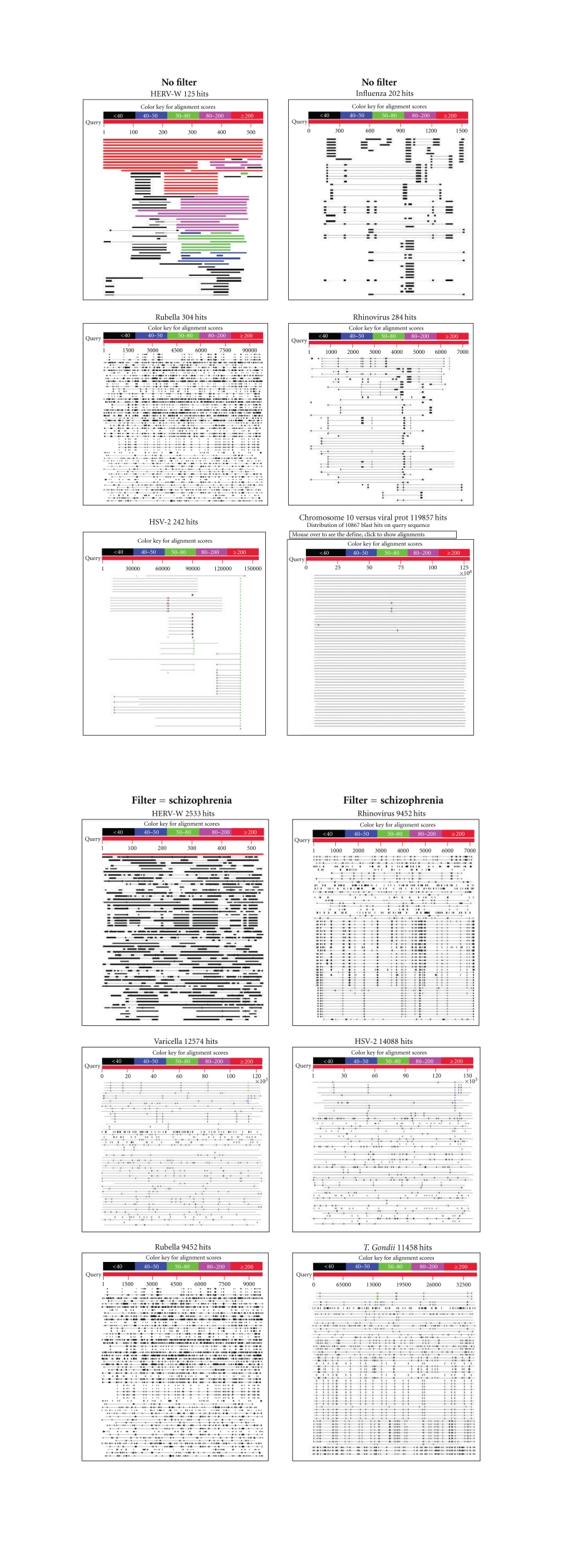
Figure 1
Figure 1
Screenshots of the pictorial representation of the viral BLAST results against the human proteome. The streaks dotted throughout the human genome/proteome represent the areas of homology, some with contiguous sequences of 5 or more amino acids. The number of hits is shown for each virus or pathogen. The figure also shows the total coverage of human chromosome 10 by viral gene homologues. The top set of figures were from unfiltered blasts while the bottom set of 6 figures represent filtered blasts using the query “schizophrenia”.
Figure 2
Figure 2
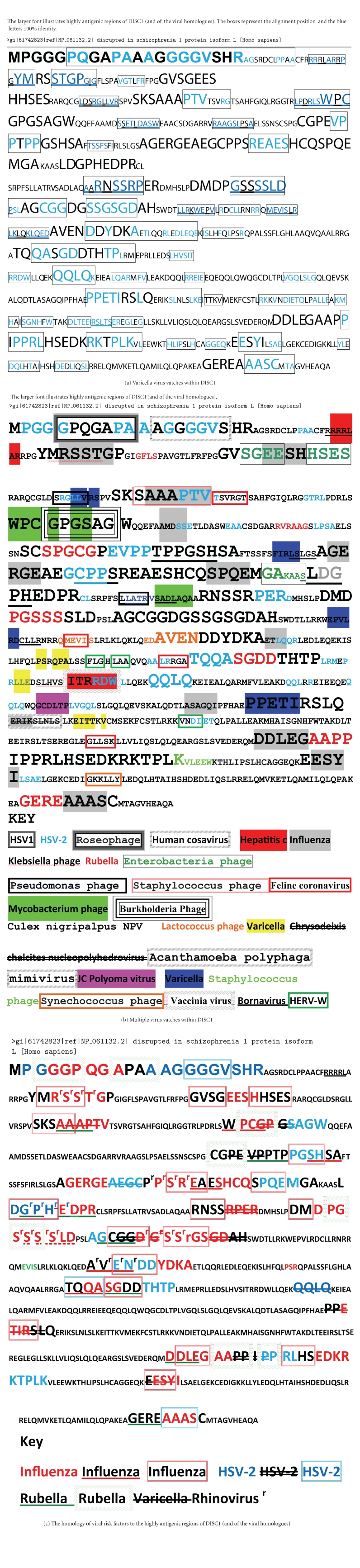
(a) Varicella protein alignments within DISC1: the boxed regions show the region of alignment, and the blue letters denote 100% identity. This is not an alignment of the whole Varicella proteome but represents fragments of the same or different Varicella proteins that align with DISC1 fragments (vatches). The larger font delineates highly antigenic regions of DISC1 with an antigenicity index of >0.8 (Figure 4). (b) Other viral vatches within the DISC1 protein. The vatches are colour or format coded in relation to the different viruses. (c) Viral vatches for the risk factors implicated in schizophrenia in relation to the highly immunogenic regions of DISC1.
Figure 3
Figure 3
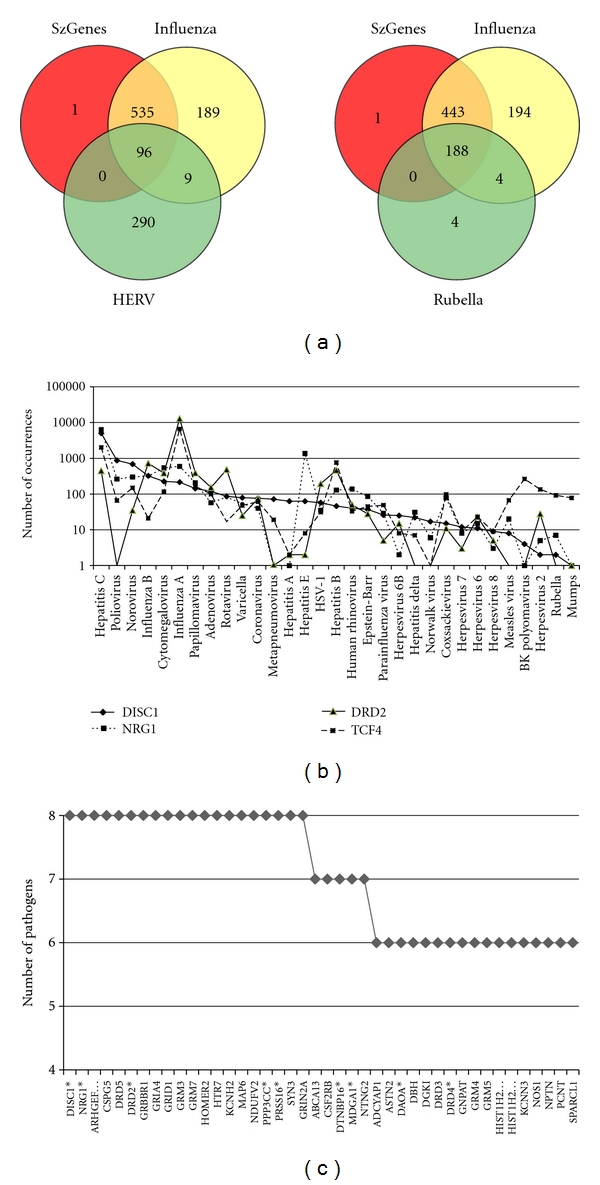
(a) Venn diagrams of the number of Schizophrenia gene products (N = 632) with homology to the rubella, HERV-W and influenza viruses. The singleton in SZ-genes was different on each occasion: Thus, all genes are covered. (b) The viral matching spectra of DISC1, neuregulin, the dopamine D2 receptor and transcription factor 4. The Y-axis depicts the number of word occurrences on the original BLAST results page. Note the logarithmic axis. (c) The number of pathogens expressing proteins with homology to the protein products of schizophrenia susceptibility genes. Those marked by an asterisk are within the 30 top-ranked genes in SZ-gene http://www.szgene.org/.
Figure 4
Figure 4
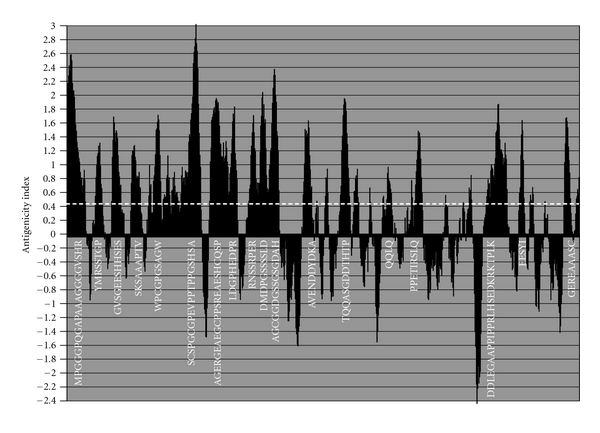
The antigenicity (B-cell epitope prediction) of DISC1: the amino acid sequences with an index of  >0.35 are considered as epitopes. A value of 0.8 was chosen to define highly antigenic regions as seen in Figure 2. The amino acid sequences of these highly antigenic regions are shown.
Figure 5
Figure 5
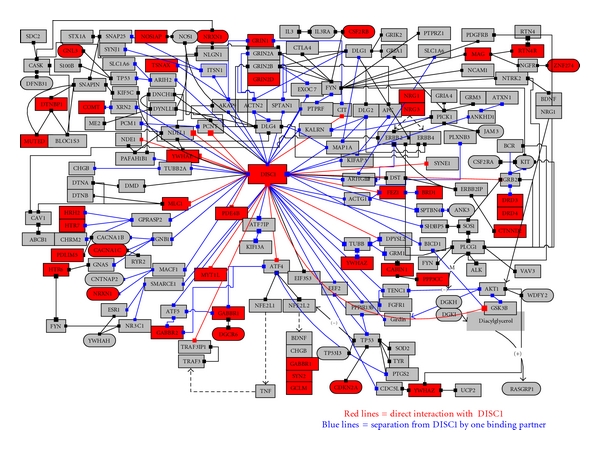
The DISC1 interactome see http://www.polygenicpathways.co.uk/discforum.htm. Proteins in red are homologous to Rubella proteins.
Figure 6
Figure 6
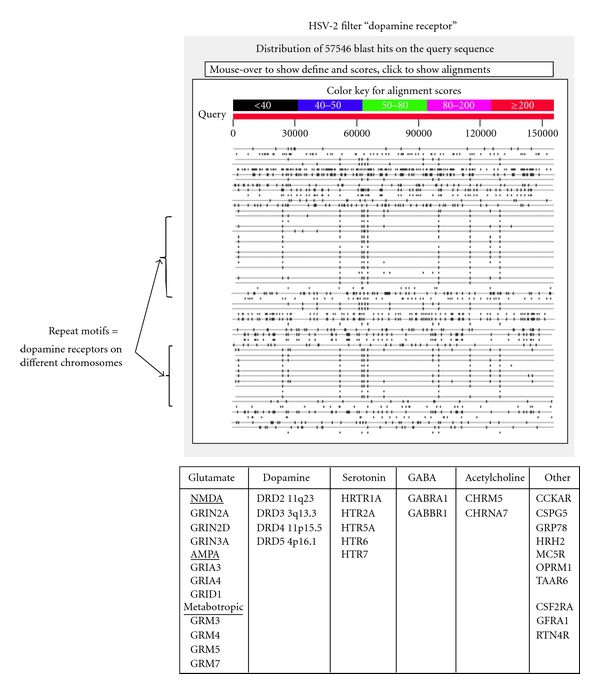
A screen shot of the HSV-2 BLAST results using the filter “dopamine receptor”. The repeated patterns correspond to dopamine receptors on different chromosomes as shown in Table 1. Homology with glutamate, serotonin, GABA, acetylcholine and other receptors is also noted.

References

    1. Crow TJ. How and why genetic linkage has not solved the problem of psychosis: review and hypothesis. American Journal of Psychiatry. 2007;164(1):13–21. - PubMed
    1. Owen MJ, Craddock N, O’Donovan MC. Schizophrenia: genes at last? Trends in Genetics. 2005;21(9):518–525. - PubMed
    1. Carter CJ. Schizophrenia susceptibility genes converge on interlinked pathways related to glutamatergic transmission and long-term potentiation, oxidative stress and oligodendrocyte viability. Schizophrenia Research. 2006;86(1–3):1–14. - PubMed
    1. Carter CJ. eIF2B and oligodendrocyte survival: where nature and nurture meet in bipolar disorder and schizophrenia? Schizophrenia Bulletin. 2007;33(6):1343–1353. - PMC - PubMed
    1. Khler AK, Djurovic S, Rimol LM, et al. Candidate gene analysis of the human natural killer-1 carbohydrate pathway and perineuronal nets in schizophrenia: B3GAT2 Is associated with disease risk and cortical surface area. Biological Psychiatry. 2011;69(1):90–96. - PubMed

LinkOut - more resources