


The role of the myofibroblast in tumor stroma remodeling
- PMID: 22568985
- PMCID: PMC3427235
- DOI: 10.4161/cam.20377
The role of the myofibroblast in tumor stroma remodeling
Abstract
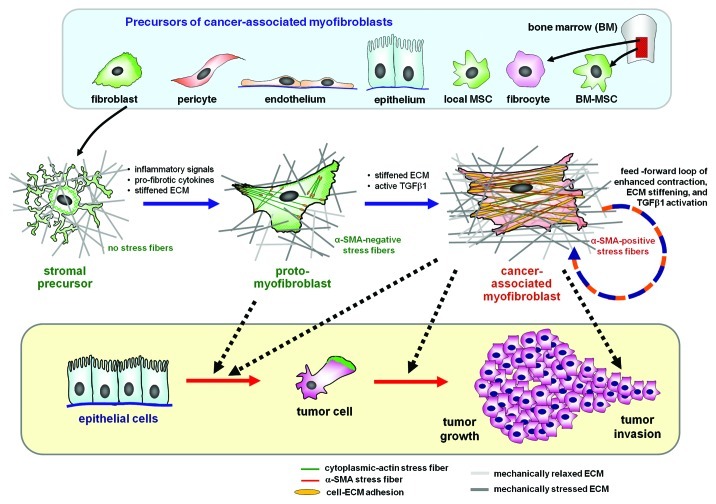
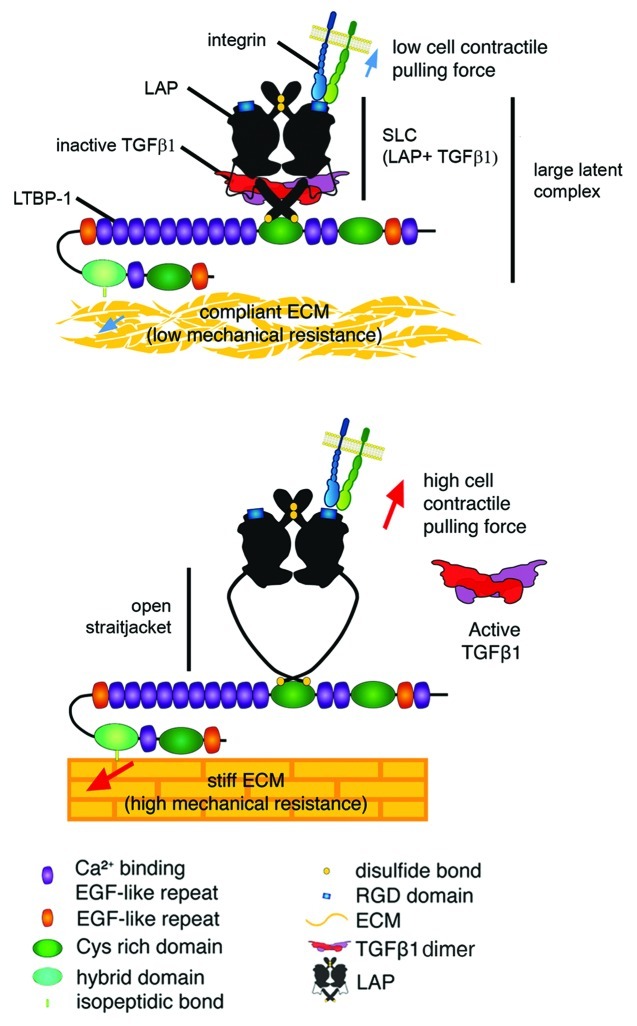
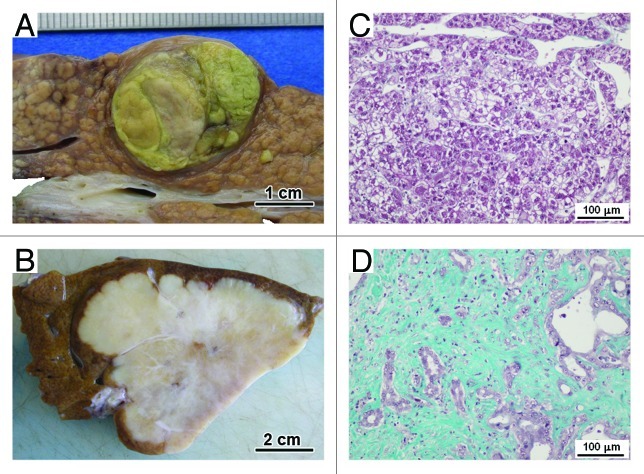
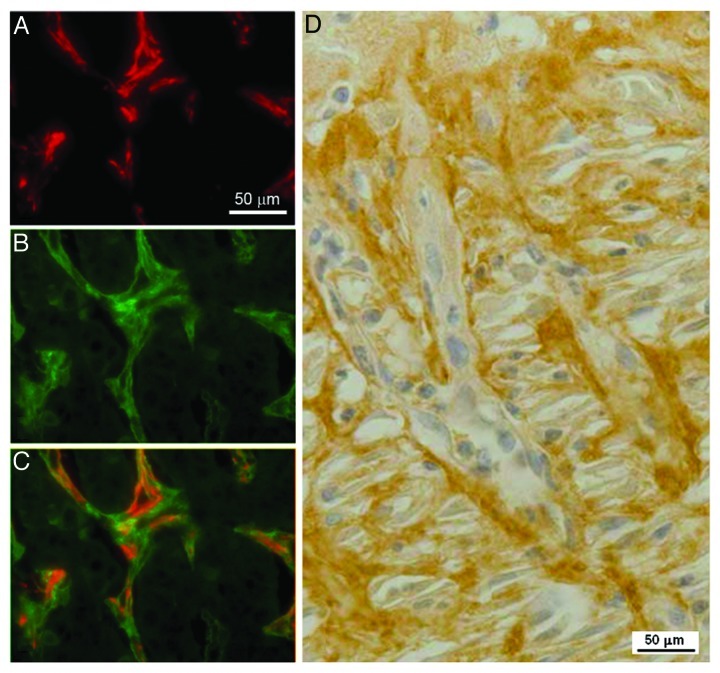
Since its first description in wound granulation tissue, the myofibroblast has been recognized to be a key actor in the epithelial-mesenchymal cross-talk that plays a crucial role in many physiological and pathological situations, such as regulation of prostate development, ventilation-perfusion in lung alveoli or organ fibrosis. The presence of myofibroblasts in the stroma reaction to epithelial tumors is well established and many data are accumulating which suggest that the stroma compartment is an active participant in tumor onset and/or evolution. In this review we summarize the evidence in favor of this concept, the main mechanisms that regulate myofibroblast differentiation and function, as well as the biophysical and biochemical factors possibly involved in epithelial-stroma interactions, using liver carcinoma as main model, in view of achieving a better understanding of tumor progression mechanisms and of tools directed toward stroma as eventual therapeutic target.
Figures
References
-
- Dvorak HF. Tumors: wounds that do not heal. Similarities between tumor stroma generation and wound healing. N Engl J Med. 1986;315:1650–9. - PubMed
Publication types
MeSH terms
Substances
Grants and funding
LinkOut - more resources
Full Text Sources
Other Literature Sources
