


Recent advances in imaging of dopaminergic neurons for evaluation of neuropsychiatric disorders
- PMID: 22570524
- PMCID: PMC3335602
- DOI: 10.1155/2012/259349
Recent advances in imaging of dopaminergic neurons for evaluation of neuropsychiatric disorders
Abstract
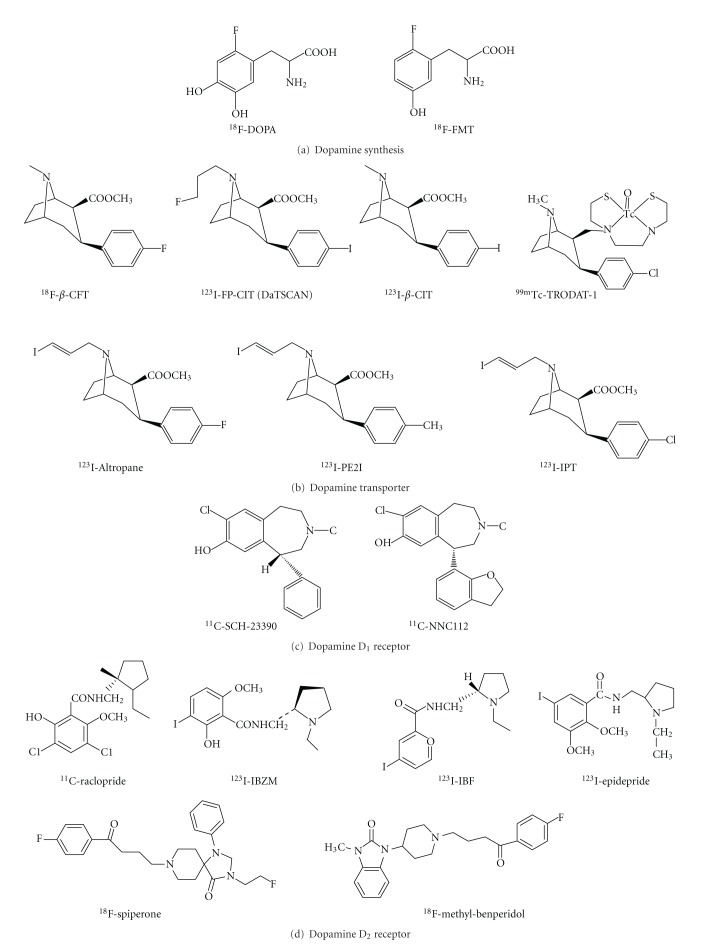
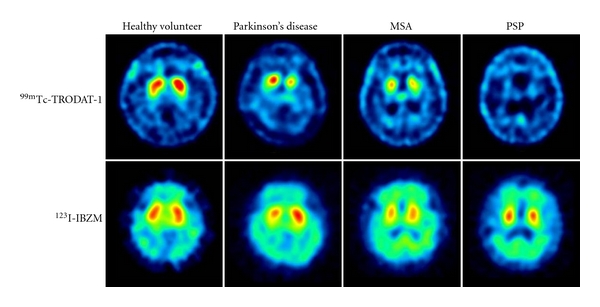
Dopamine is the most intensely studied monoaminergic neurotransmitter. Dopaminergic neurotransmission plays an important role in regulating several aspects of basic brain function, including motor, behavior, motivation, and working memory. To date, there are numerous positron emission tomography (PET) and single photon emission computed tomography (SPECT) radiotracers available for targeting different steps in the process of dopaminergic neurotransmission, which permits us to quantify dopaminergic activity in the living human brain. Degeneration of the nigrostriatal dopamine system causes Parkinson's disease (PD) and related Parkinsonism. Dopamine is the neurotransmitter that has been classically associated with the reinforcing effects of drug abuse. Abnormalities within the dopamine system in the brain are involved in the pathophysiology of attention deficit hyperactivity disorder (ADHD). Dopamine receptors play an important role in schizophrenia and the effect of neuroleptics is through blockage of dopamine D(2) receptors. This review will concentrate on the radiotracers that have been developed for imaging dopaminergic neurons, describe the clinical aspects in the assessment of neuropsychiatric disorders, and suggest future directions in the diagnosis and management of such disorders.
Figures

References
-
- Wong DF, Gründer G, Brasic JR. Brain imaging research: does the science serve clinical practice? International Review of Psychiatry. 2007;19(5):541–558. - PubMed
-
- Metter FA, Guiberteau MJ. Essentials of Nuclear Medicine Imaging. 5th edition. chapter 1. Saunders, Elsevier; 2006. Radioactivity, radionuclides, and radiopharmaceuticals; pp. 1–13.
-
- Metter FA, Guiberteau MJ. Essentials of Nuclear Medicine Imaging. 5th edition. chapter 13. Saunders, Elsevier; 2006. Positron emission tomography (PET) imaging; pp. 359–423.
-
- Weissleder R, Mahmood U. Molecular imaging. Radiology. 2001;219(2):316–333. - PubMed
-
- Fumita M, Innis RB. Neuropsychopharmacology: The Fifth Generation of Progress. 1st edition. Philadelphia, Pa, USA: Lippincott Williams & Wilkins; 2002.
Publication types
MeSH terms
Substances
LinkOut - more resources
Full Text Sources
Other Literature Sources
Medical
