


Viral findings in adult hematological patients with neutropenia
- PMID: 22570724
- PMCID: PMC3343003
- DOI: 10.1371/journal.pone.0036543
Viral findings in adult hematological patients with neutropenia
Abstract
Background: Until recently, viral infections in patients with hematological malignancies were concerns primarily in allogeneic hematopoietic stem cell transplant (HSCT) recipients. During the last years, changed treatment regimens for non-transplanted patients with hematological malignancies have had potential to increase the incidence of viral infections in this group. In this study, we have prospectively investigated the prevalence of a broad range of respiratory viruses in nasopharyngeal aspirate (NPA) as well as viruses that commonly reactivate after allogeneic HSCT.
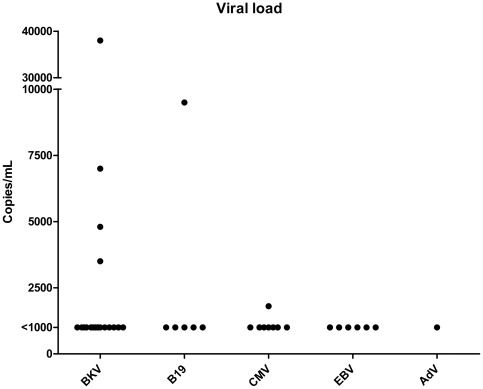
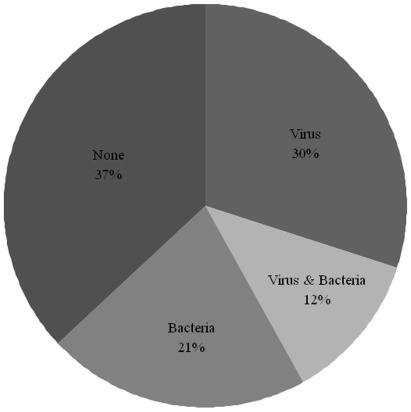
Methodology/principal findings: Patients with hematological malignancies and therapy induced neutropenia (n = 159) were screened regarding a broad range of common respiratory viruses in the nasopharynx and for viruses commonly detected in severely immunosuppressed patients in peripheral blood. Quantitative PCR was used for detection of viruses. A viral pathogen was detected in 35% of the patients. The detection rate was rather similar in blood (22%) and NPA (18%) with polyoma BK virus and rhinovirus as dominating pathogens in blood and NPA, respectively. Patients with chronic lymphocytic leukemia (CLL) (p<0.01) and patients with fever (p<0.001) were overrepresented in the virus-positive group. Furthermore, viral findings in NPA were associated with upper respiratory symptoms (URTS) (p<0.0001).
Conclusions/significance: Both respiratory viral infections and low titers of viruses in blood from patients with neutropenia were common. Patients with CLL and patients with fever were independently associated to these infections, and viral findings in NPA were associated to URTS indicating active infection. These findings motivate further studies on viruses' impact on this patient category and their potential role as causative agents of fever during neutropenia.
Conflict of interest statement
Figures
References
-
- Arola M, Ruuskanen O, Ziegler T, Salmi TT. Respiratory virus infections during anticancer treatment in children. Pediatr Infect Dis J. 1995;14:690–694. - PubMed
-
- Koskenvuo M, Mottonen M, Rahiala J, Saarinen-Pihkala UM, Riikonen P, et al. Respiratory viral infections in children with leukemia. Pediatr Infect Dis J. 2008;27:974–980. - PubMed
Publication types
MeSH terms
LinkOut - more resources
Full Text Sources
Medical
