


Evaluation of developmental toxicants and signaling pathways in a functional test based on the migration of human neural crest cells
- PMID: 22571897
- PMCID: PMC3440079
- DOI: 10.1289/ehp.1104489
Evaluation of developmental toxicants and signaling pathways in a functional test based on the migration of human neural crest cells
Abstract
Background: Information on the potential developmental toxicity (DT) of the majority of chemicals is scarce, and test capacities for further animal-based testing are limited. Therefore, new approaches with higher throughput are required. A screening strategy based on the use of relevant human cell types has been proposed by the U.S. Environmental Protection Agency and others. Because impaired neural crest (NC) function is one of the known causes for teratologic effects, testing of toxicant effects on NC cells is desirable for a DT test battery.
Objective: We developed a robust and widely applicable human-relevant NC function assay that would allow for sensitive screening of environmental toxicants and defining toxicity pathways.
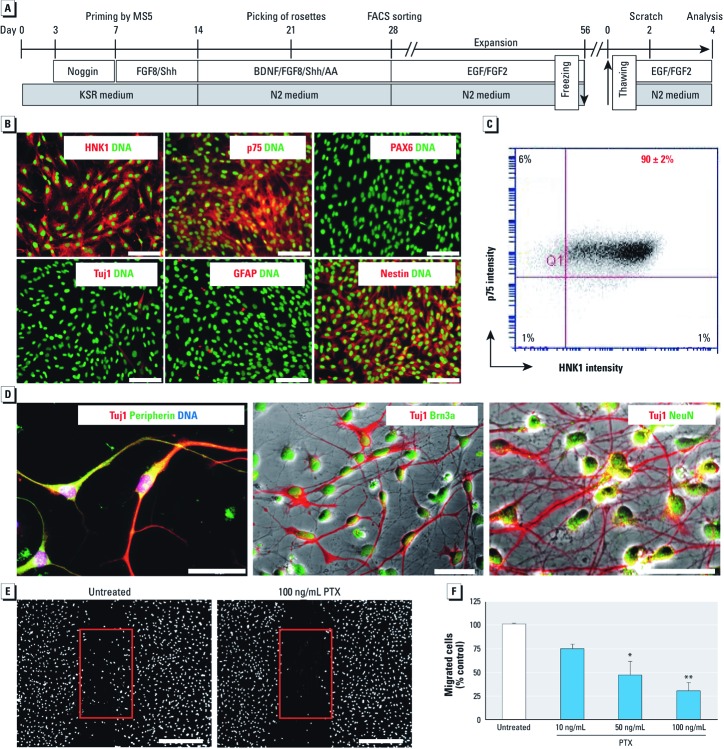
Methods: We generated NC cells from human embryonic stem cells, and after establishing a migration assay of NC cells (MINC assay), we tested environmental toxicants as well as inhibitors of physiological signal transduction pathways.
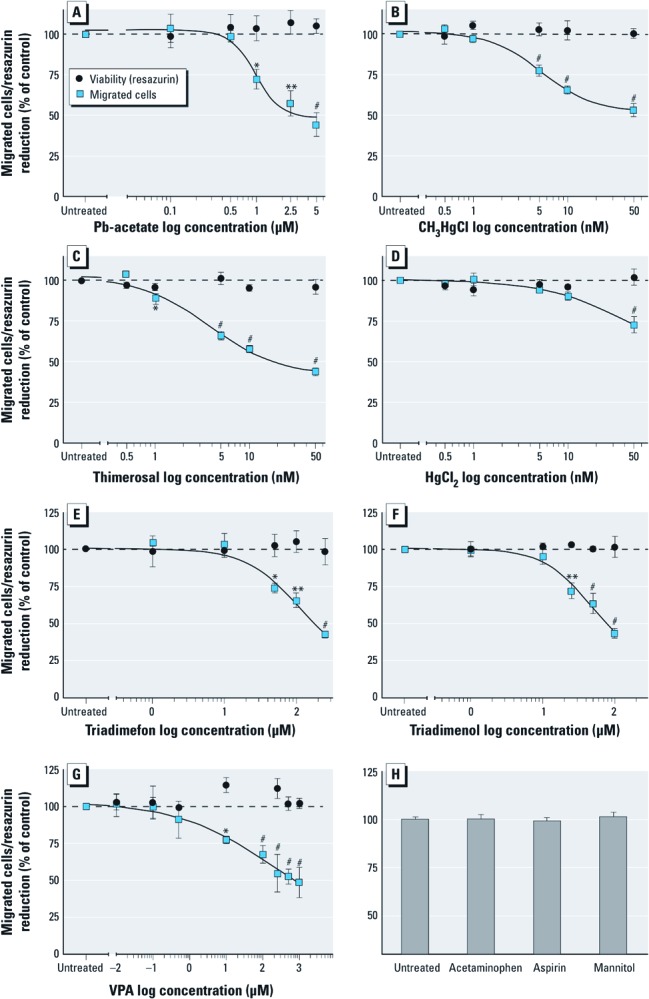
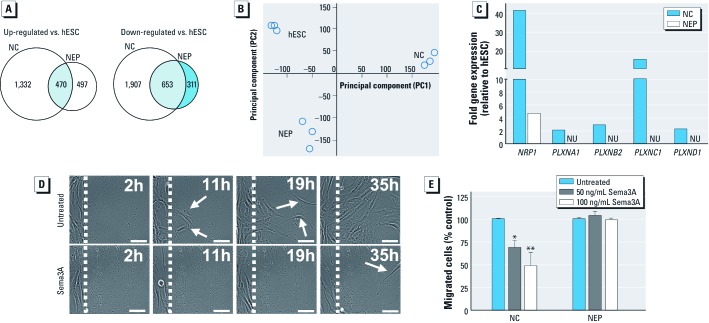
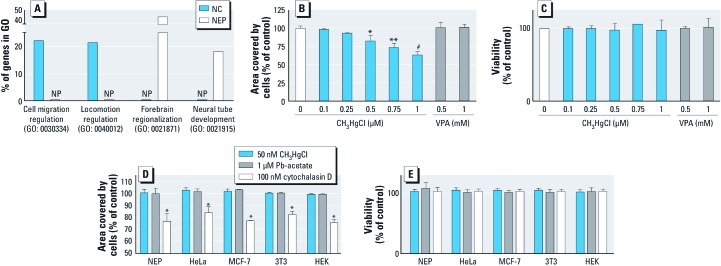
Results: Methylmercury (50 nM), valproic acid (> 10 µM), and lead-acetate [Pb(CH3CO2)4] (1 µM) affected the migration of NC cells more potently than migration of other cell types. The MINC assay correctly identified the NC toxicants triadimefon and triadimenol. Additionally, it showed different sensitivities to various organic and inorganic mercury compounds. Using the MINC assay and applying classic pharmacologic inhibitors and large-scale microarray gene expression profiling, we found several signaling pathways that are relevant for the migration of NC cells.
Conclusions: The MINC assay faithfully models human NC cell migration, and it reveals impairment of this function by developmental toxicants with good sensitivity and specificity.
Conflict of interest statement
The authors declare they have no actual or potential competing financial interests.
Figures
Comment in
-
Filling a gap in developmental toxicity testing: neural crest cells offer faster, cheaper, animal-free testing.Environ Health Perspect. 2012 Aug;120(8):a320. doi: 10.1289/ehp.120-a320b. Environ Health Perspect. 2012. PMID: 22853892 Free PMC article. No abstract available.
References
-
- Cowden J, Padnos B, Hunter D, MacPhail R, Jensen K, Padilla S. Developmental exposure to valproate and ethanol alters locomotor activity and retino-tectal projection area in zebrafish embryos. Reprod Toxicol. 2012;33(2):165–173. - PubMed
-
- Crofton KM, Mundy WR, Lein PJ, Bal-Price A, Coecke S, Seiler AE, et al. Developmental neurotoxicity testing: recommendations for developing alternative methods for the screening and prioritization of chemicals. Altex. 2011;28(1):9–15. - PubMed
-
- Di Renzo F, Broccia ML, Giavini E, Menegola E. Antifungal triazole derivative triadimefon induces ectopic maxillary cartilage by altering the morphogenesis of the first branchial arch. Birth Defects Res B Dev Reprod Toxicol. 2007;80(1):2–11. - PubMed
Publication types
MeSH terms
Substances
LinkOut - more resources
Full Text Sources
Other Literature Sources