


Five-year results of a randomized clinical trial comparing a polypropylene mesh with a poliglecaprone and polypropylene composite mesh for inguinal hernioplasty
- PMID: 22573261
- PMCID: PMC3465551
- DOI: 10.1007/s10029-012-0916-3
Five-year results of a randomized clinical trial comparing a polypropylene mesh with a poliglecaprone and polypropylene composite mesh for inguinal hernioplasty
Abstract
Background: The aim of this study was to assess whether partially absorbable monofilament mesh could influence postoperative pain and recurrence after Lichtenstein hernioplasty over the long term.
Methods: Patients were randomized into two groups that were treated with lightweight (LW) or heavyweight (HW) mesh in 15 centers in Poland. A modified suture technique was used in the lightweight mesh group. Clinical examination was performed. A pain questionnaire was completed five years after the surgery.
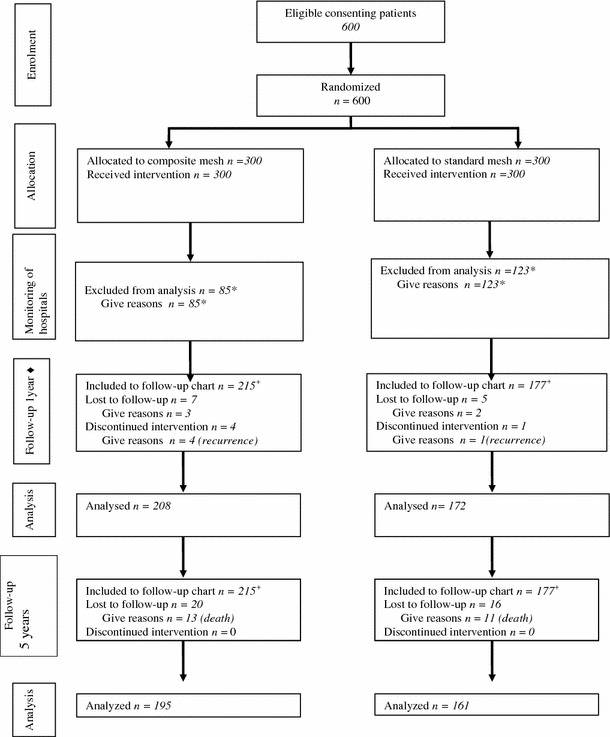
Results: Of the 392 patients who underwent surgery, 161 (90.81 %) of 177 in the HW group and 195 (90.69 %) of 215 in the LW group were examined according to protocol, a median of 62 (range 57-66) months after hernia repair. There was no difference in the recurrence rate (1.9 % LW vs. 0.6 % HW; P = 0.493). There were 24 deaths in the follow-up period, but these had no connection to the surgery. The patients treated with LW mesh reported less pain in the early postoperative period. After five years of follow-up, the intensity and the presence of pain did not differ between groups (5 patients in the LW and 4 patients in the HW group). Average pain, (VAS score), was also similar in the LW and HW group (2.25 vs. 2.4) at the fifth year postoperatively.
Conclusion: The use of partially absorbable mesh reduced postoperative pain during the short-term postoperative period. No difference in pain or recurrence rate was observed at 60 months.
Figures
References
Publication types
MeSH terms
Substances
LinkOut - more resources
Full Text Sources
