


Functional differences in visceral and subcutaneous fat pads originate from differences in the adipose stem cell
- PMID: 22574183
- PMCID: PMC3344924
- DOI: 10.1371/journal.pone.0036569
Functional differences in visceral and subcutaneous fat pads originate from differences in the adipose stem cell
Abstract
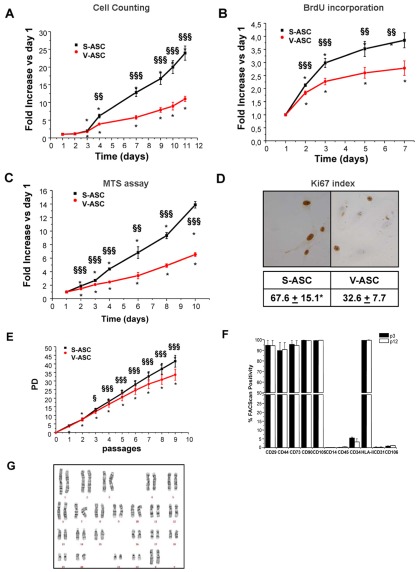
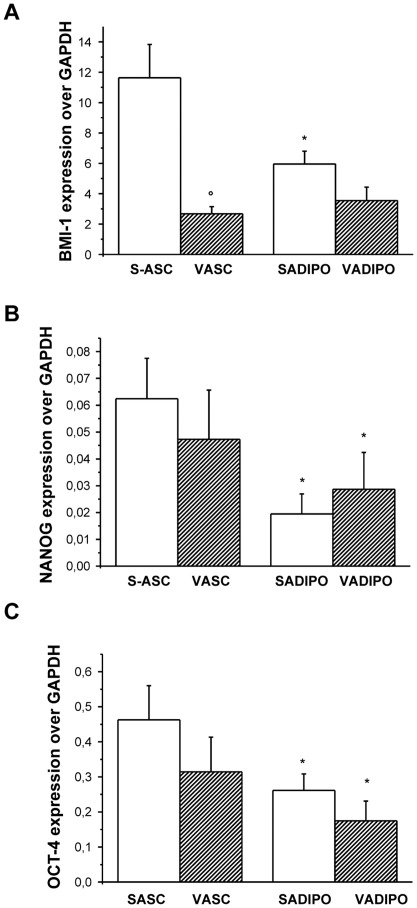
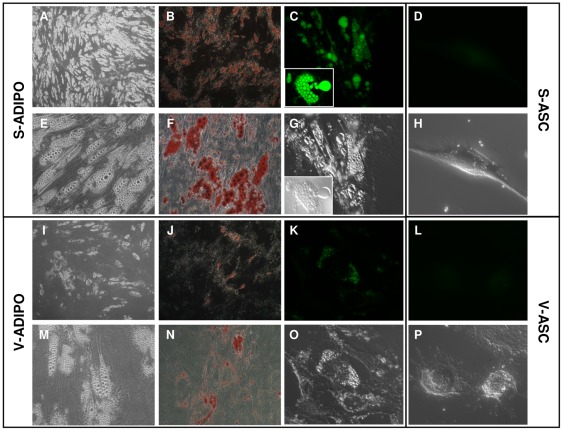
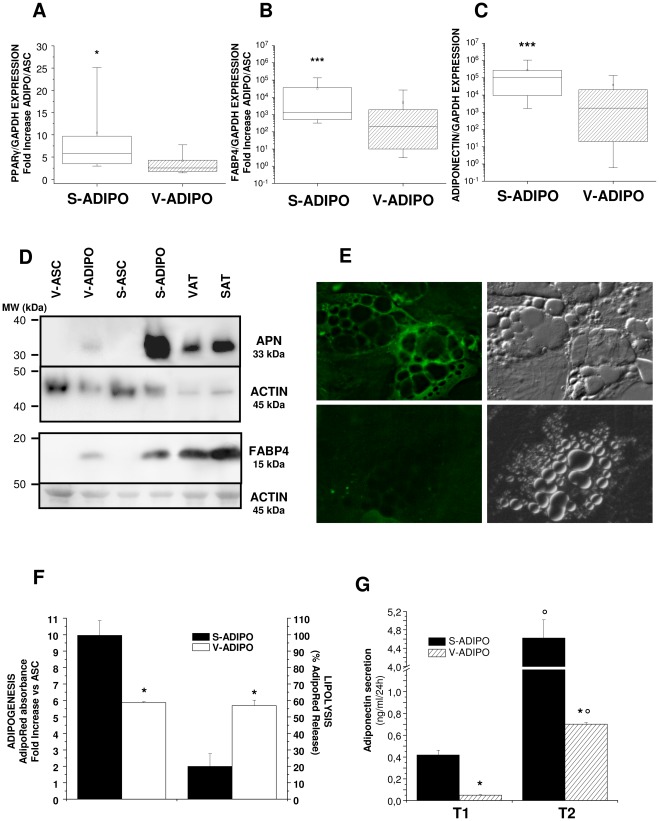
Metabolic pathologies mainly originate from adipose tissue (AT) dysfunctions. AT differences are associated with fat-depot anatomic distribution in subcutaneous (SAT) and visceral omental (VAT) pads. We address the question whether the functional differences between the two compartments may be present early in the adipose stem cell (ASC) instead of being restricted to the mature adipocytes. Using a specific human ASC model, we evaluated proliferation/differentiation of ASC from abdominal SAT-(S-ASC) and VAT-(V-ASC) paired biopsies in parallel as well as the electrophysiological properties and functional activity of ASC and their in vitro-derived adipocytes. A dramatic difference in proliferation and adipogenic potential was observed between the two ASC populations, S-ASC having a growth rate and adipogenic potential significantly higher than V-ASC and giving rise to more functional and better organized adipocytes. To our knowledge, this is the first comprehensive electrophysiological analysis of ASC and derived-adipocytes, showing electrophysiological properties, such as membrane potential, capacitance and K(+)-current parameters which confirm the better functionality of S-ASC and their derived adipocytes. We document the greater ability of S-ASC-derived adipocytes to secrete adiponectin and their reduced susceptibility to lipolysis. These features may account for the metabolic differences observed between the SAT and VAT. Our findings suggest that VAT and SAT functional differences originate at the level of the adult ASC which maintains a memory of its fat pad of origin. Such stem cell differences may account for differential adipose depot susceptibility to the development of metabolic dysfunction and may represent a suitable target for specific therapeutic approaches.
Conflict of interest statement
Figures
References
-
- Wajchenberg BL. Subcutaneous and visceral adipose tissue: their relation to the metabolic syndrome. Endocr Rev. 2000;21:697–738. - PubMed
-
- Pischon T, Boeing H, Hoffmann K, Bergmann M, Schulze MB et al. General and abdominal adiposity and risk of death in Europe. N Engl J Med. 2008;359:2105–20. - PubMed
-
- Pou KM, Massaro JM, Hoffmann U, Vasan RS, Maurovich-Horvat P et al. Visceral and subcutaneous adipose tissue volumes are cross-sectionally related to markers of inflammation and oxidative stress: the Framingham Heart Study. Circulation. 2007;116:1234–41. - PubMed
-
- Misra A, Garg A, Abate N, Peshock RM, Stray-Gundersen J et al. Relationship of anterior and posterior subcutaneous abdominal fat to insulin sensitivity in nondiabetic men. Obes Res. 1997;5:93–9. - PubMed
Publication types
MeSH terms
Substances
LinkOut - more resources
Full Text Sources
Other Literature Sources
Medical
Research Materials
Miscellaneous
