


Review
doi: 10.1016/j.ecl.2012.01.001.
Epub 2012 Feb 17.
Insulin therapy for the management of hyperglycemia in hospitalized patients
Affiliations
- PMID: 22575413
- PMCID: PMC3738170
- DOI: 10.1016/j.ecl.2012.01.001
Item in Clipboard
Review
Insulin therapy for the management of hyperglycemia in hospitalized patients
Endocrinol Metab Clin North Am.
2012 Mar.
Abstract
It has long been established that hyperglycemia with or without a prior diagnosis of diabetes increases both mortality and disease-specific morbidity in hospitalized patients and that goal-directed insulin therapy can improve outcomes. This article reviews the pathophysiology of hyperglycemia during illness, the mechanisms for increased complications and mortality due to hyperglycemia and hypoglycemia, and beneficial mechanistic effects of insulin therapy and provides updated recommendations for the inpatient management of diabetes in the critical care setting and in the general medicine and surgical settings.
Copyright © 2012 Elsevier Inc. All rights reserved.
Figures
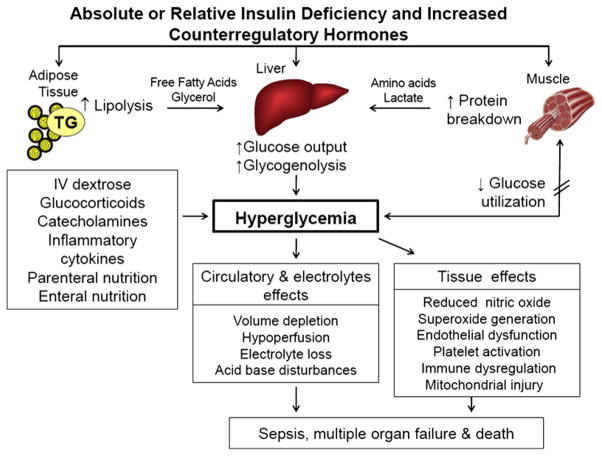
Pathogenesis of hyperglycemia. Hyperglycemia during acute illness results from increased hepatic glucose production and impaired glucose use in peripheral tissues. Excess counterregulatory hormones (glucagon, cortisol, catecholamines, and growth hormone) increase lipolysis and protein breakdown (proteolysis) and impaired glucose use by peripheral tissues. Hyperglycemia causes osmotic diuresis that leads to hypovolemia decreased glomerular filtration rate and worsening hyperglycemia. At the cellular level, increased BG levels results in mitochondrial injury by generating reaction oxygen species and endothelial dysfunction by inhibiting nitric oxide production. Hyperglycemia increases levels of inflammatory cytokines, such as TNF-α; IL-6, leading to immune system dysfunction; and plasminogen activator inhibitor-1 and fibrinogen, causing platelet aggregation and hyper-coagulable state. These changes can eventually lead to increased risk of infection, impaired wound healing, multiple organ failure, prolonged hospital stay, and death.
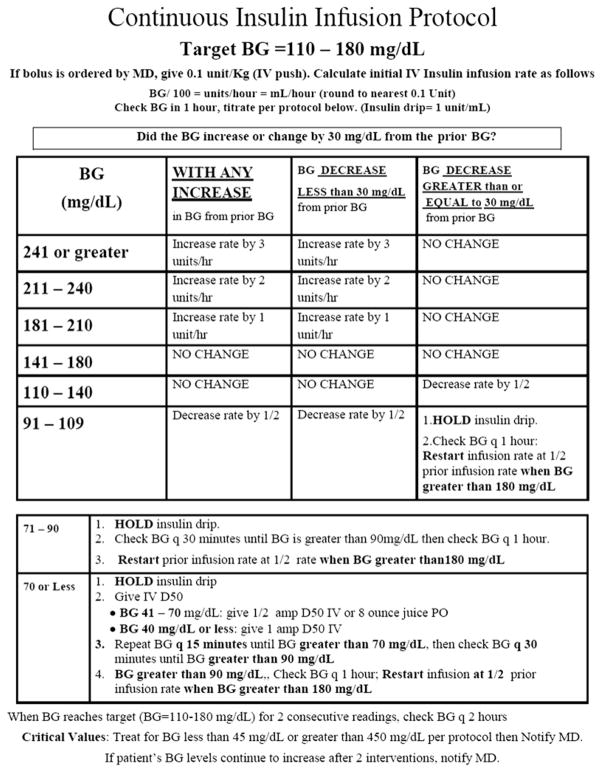
Example of insulin infusion protocol. Essential elements that increase protocol success of CII are (1) rate adjustment considers the current and previous glucose value and the current rate of insulin infusion, (2) rate adjustment considers the rate of change (or lack of change) from the previous reading, and (3) frequent glucose monitoring.
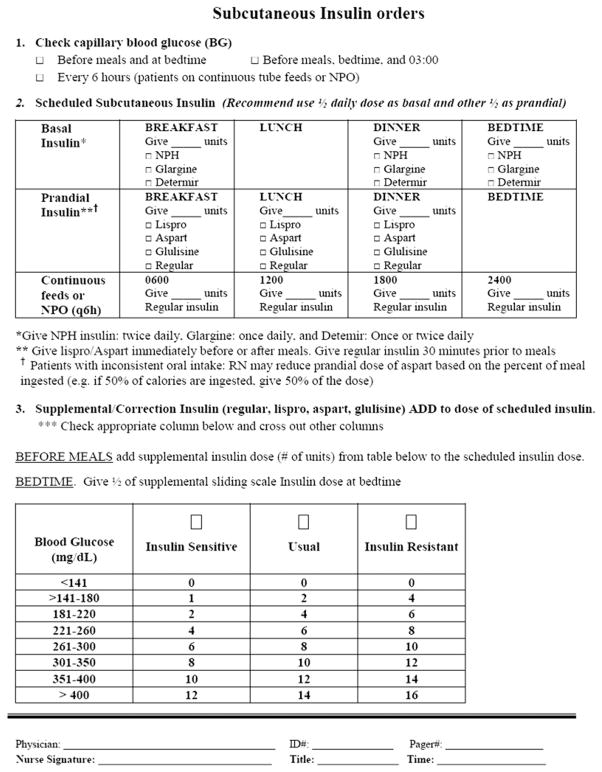
Use of insulin ordering forms to prescribe basal/bolus insulin programs. Insulin order forms are useful to illustrate and encourage the use of the 3 components of a patient-tailored insulin program (eg, basal, nutritional, and supplemental/correction).
References
-
- Capes SE, Hunt D, Malmberg K, et al. Stress hyperglycaemia and increased risk of death after myocardial infarction in patients with and without diabetes: a systematic overview. Lancet. 2000;355(9206):773–8. - PubMed
-
- Furnary AP, Zerr KJ, Grunkemeier GL, et al. Continuous intravenous insulin infusion reduces the incidence of deep sternal wound infection in diabetic patients after cardiac surgical procedures. Ann Thorac Surg. 1999;67(2):352–60. [discussion: 360–2] - PubMed
-
- Krinsley JS. Association between hyperglycemia and increased hospital mortality in a heterogeneous population of critically ill patients. Mayo Clin Proc. 2003;78(12):1471–8. - PubMed
-
- Umpierrez GE, Isaacs SD, Bazargan N, et al. Hyperglycemia: an independent marker of in-hospital mortality in patients with undiagnosed diabetes. J Clin Endocrinol Metab. 2002;87(3):978–82. - PubMed
-
- van den Berghe G, Wouters P, Weekers F, et al. Intensive insulin therapy in critically ill patients. N Engl J Med. 2001;345(19):1359–67. - PubMed
Publication types
MeSH terms
Substances
Grants and funding
LinkOut - more resources
Full Text Sources
Medical
