


Plasticity of PDZ domains in ligand recognition and signaling
- PMID: 22576124
- PMCID: PMC7094393
- DOI: 10.1016/j.febslet.2012.04.015
Plasticity of PDZ domains in ligand recognition and signaling
Abstract
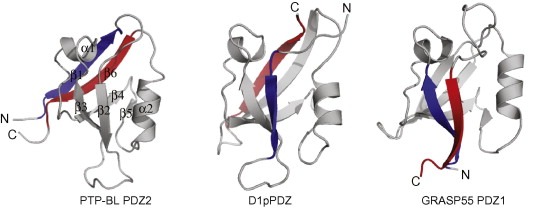
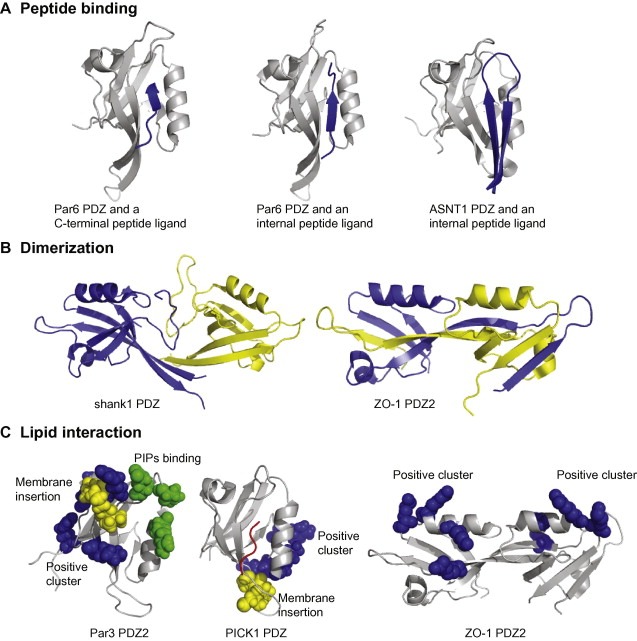
The PDZ domain is a protein-protein interacting module that plays an important role in the organization of signaling complexes. The recognition of short intrinsically disordered C-terminal peptide motifs is the archetypical PDZ function, but the functional repertoire of this versatile module also includes recognition of internal peptide sequences, dimerization and phospholipid binding. The PDZ function can be tuned by various means such as allosteric effects, changes of physiological buffer conditions and phosphorylation of PDZ domains and/or ligands, which poses PDZ domains as dynamic regulators of cell signaling. This review is focused on the plasticity of the PDZ interactions.
Copyright © 2012 Federation of European Biochemical Societies. Published by Elsevier B.V. All rights reserved.
Figures
References
-
- Cho K.O., Hunt C.A., Kennedy M.B., The rat brain postsynaptic density fraction contains a homolog of the Drosophila discs-large tumor suppressor protein. Neuron, 9, (1992), 929– 942. - PubMed
-
- Woods D.F., Bryant P.J., ZO-1, DlgA and PSD-95/SAP90: homologous proteins in tight, septate and synaptic cell junctions. Mech. Dev., 44, (1993), 85– 89. - PubMed
-
- Kim E., Niethammer M., Rothschild A., Jan Y.N., Sheng M., Clustering of Shaker-type K+ channels by interaction with a family of membrane-associated guanylate kinases. Nature, 378, (1995), 85– 88. - PubMed
Publication types
MeSH terms
Substances
LinkOut - more resources
Full Text Sources
Other Literature Sources
