


Mesenchymal stem cells for cardiac therapy: practical challenges and potential mechanisms
- PMID: 22577007
- PMCID: PMC5868420
- DOI: 10.1007/s12015-012-9375-6
Mesenchymal stem cells for cardiac therapy: practical challenges and potential mechanisms
Abstract
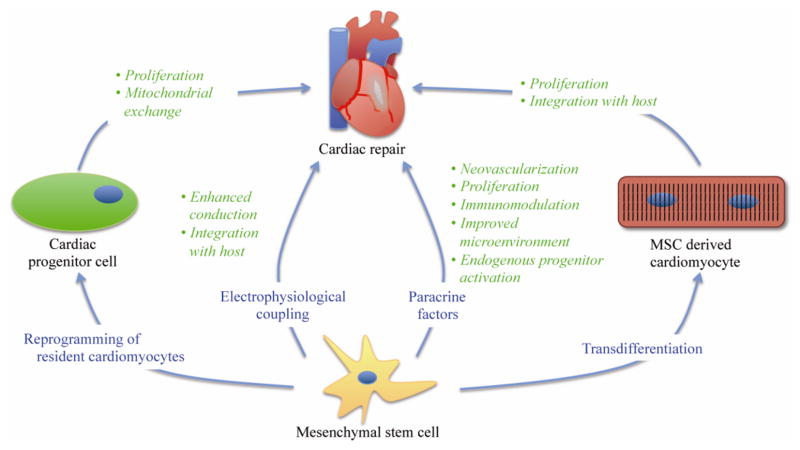
Cell based treatments for myocardial infarction have demonstrated efficacy in the laboratory and in phase I clinical trials, but the understanding of such therapies remains incomplete. Mesenchymal stem cells (MSCs) are classically defined as maintaining the ability to generate mesenchyme-derived cell types, namely adipocytes, chondrocytes and osteocytes. Recent evidence suggests these cells may in fact harbor much greater potency than originally realized, as several groups have found that MSCs can form cardiac lineage cells in vitro. Additionally, experimental coculture of MSCs with cardiomyocytes appears to improve contractile function of the latter. Bolstered by such findings, several clinical trials have begun to test MSC transplantation for improving post-infarct cardiac function in human patients. The results of these trials have been mixed, underscoring the need to develop a deeper understanding of the underlying stem cell biology. To help synthesize the breadth of studies on the topic, this paper discusses current challenges in the field of MSC cellular therapies for cardiac repair, including methods of cell delivery and the identification of molecular markers that accurately specify the therapeutically relevant mesenchymal cell types. The various possible mechanisms of MSC mediated cardiac improvement, including somatic reprogramming, transdifferentiation, paracrine signaling, and direct electrophysiological coupling are also reviewed. Finally, we consider the traditional cell culture microenvironment, and the promise of cardiac tissue engineering to provide biomimetic in vitro model systems to more faithfully investigate MSC biology, helping to safely and effectively translate exciting discoveries in the laboratory to meaningful therapies in the clinic.
Conflict of interest statement
Figures
References
-
- Pittenger MF, Mackay AM, Beck SC, et al. Multilineage potential of adult human mesenchymal stem cells. Science. 1999;284:143–147. - PubMed
-
- Song L, Tuan RS. Transdifferentiation potential of human mesenchymal stem cells derived from bone marrow. The FASEB Journal. 2004;18:980–982. - PubMed
-
- Jiang Y, Jahagirdar BN, Reinhardt RL, et al. Pluripotency of mesenchymal stem cells derived from adult marrow. Nature. 2002;418:41–49. - PubMed
Publication types
MeSH terms
Grants and funding
LinkOut - more resources
Full Text Sources
Other Literature Sources
Medical
