


An N-terminal mutation of the Foxp3 transcription factor alleviates arthritis but exacerbates diabetes
- PMID: 22579475
- PMCID: PMC3386606
- DOI: 10.1016/j.immuni.2012.04.007
An N-terminal mutation of the Foxp3 transcription factor alleviates arthritis but exacerbates diabetes
Abstract
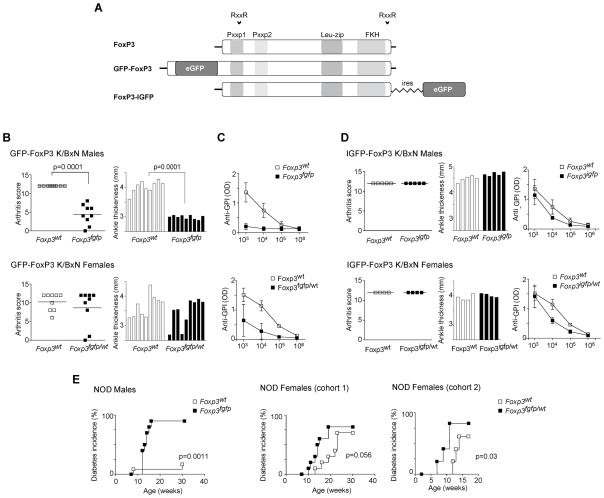
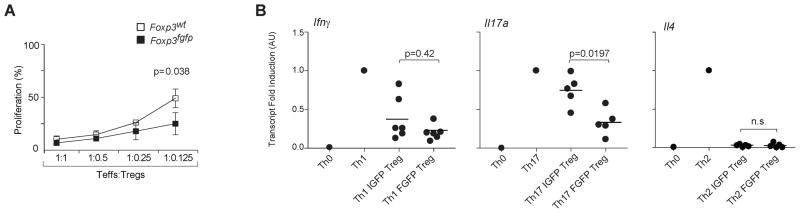
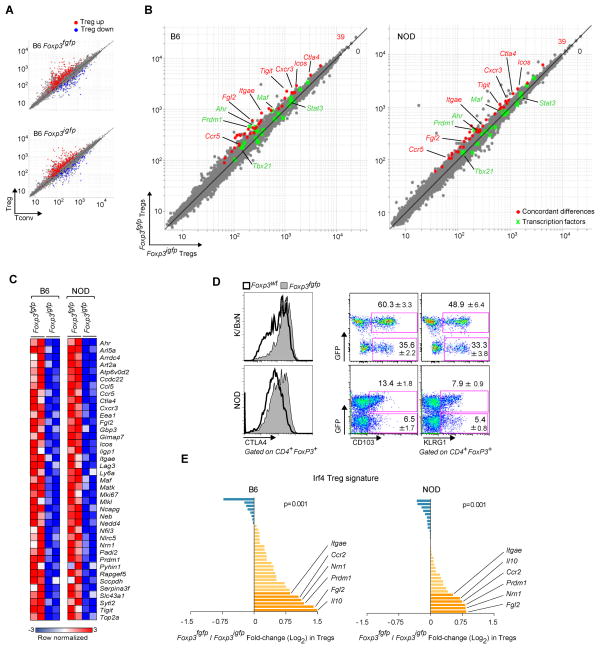
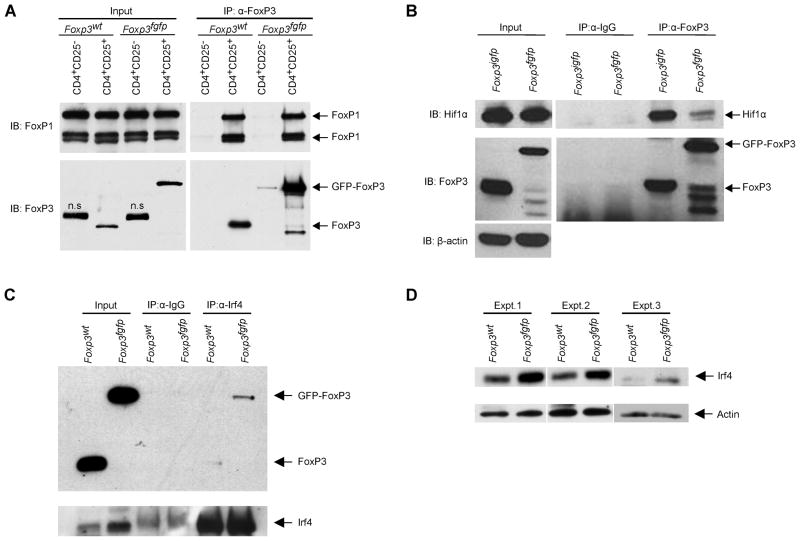
Maintenance of lymphoid homeostasis in a number of immunological and inflammatory contexts is served by a variety of regulatory T (Treg) cell subtypes and depends on interaction of the transcription factor FoxP3 with specific transcriptional cofactors. We report that a commonly used insertional mutant of FoxP3 (GFP-Foxp3) modified its molecular interactions, blocking HIF-1α but increasing IRF4 interactions. The transcriptional profile of these Treg cells was subtly altered, with an overrepresentation of IRF4-dependent transcripts. In keeping with IRF4-dependent function of Treg cells to preferentially suppress T cell help to B cells and Th2 and Th17 cell-type differentiation, GFP-FoxP3 mice showed a divergent susceptibility to autoimmune disease: protection against antibody-mediated arthritis in the K/BxN model, but greater susceptibility to diabetes on the NOD background. Thus, specific subfunctions of Treg cells and the immune diseases they regulate can be influenced by FoxP3's molecular interactions, which result in divergent immunoregulation.
Copyright © 2012 Elsevier Inc. All rights reserved.
Figures
Comment in
-
Foxp3: shades of tolerance.Immunity. 2012 May 25;36(5):693-4. doi: 10.1016/j.immuni.2012.05.011. Immunity. 2012. PMID: 22633453 Free PMC article.
References
-
- Barnes MJ, Powrie F. Regulatory T cells reinforce intestinal homeostasis. Immunity. 2009;31:401–411. - PubMed
-
- Bettelli E, Carrier Y, Gao W, Korn T, Strom TB, Oukka M, Weiner HL, Kuchroo VK. Reciprocal developmental pathways for the generation of pathogenic effector TH17 and regulatory T cells. Nature. 2006;441:235–238. - PubMed
Publication types
MeSH terms
Substances
Associated data
- Actions
Grants and funding
LinkOut - more resources
Full Text Sources
Other Literature Sources
Medical
Molecular Biology Databases
