


Anti-thymocyte globulin for conditioning in matched unrelated donor hematopoietic cell transplantation provides comparable outcomes to matched related donor recipients
- PMID: 22580767
- PMCID: PMC4912115
- DOI: 10.1038/bmt.2012.81
Anti-thymocyte globulin for conditioning in matched unrelated donor hematopoietic cell transplantation provides comparable outcomes to matched related donor recipients
Abstract
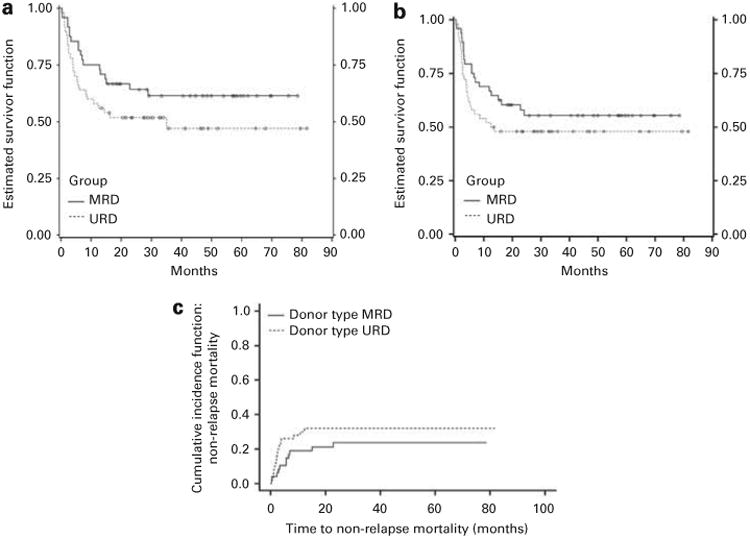
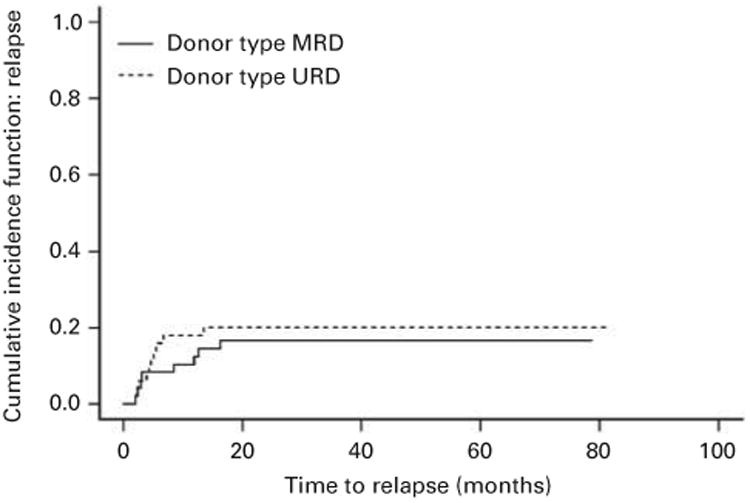
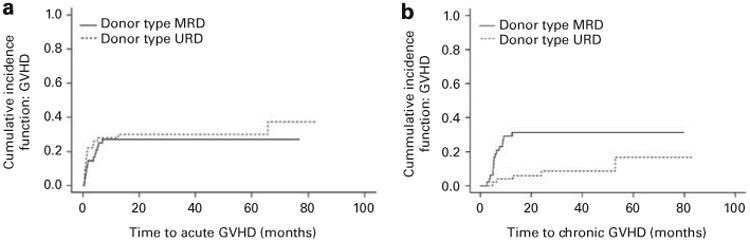
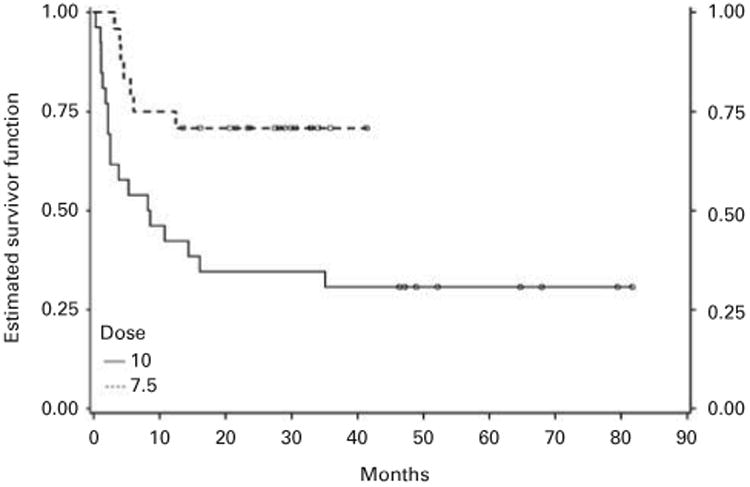
Rabbit anti-thymocyte globulin (ATG) is used as prophylaxis against GVHD following allogeneic hematopoietic cell transplantation (HCT). At our institution, ATG is exclusively used in the conditioning of matched unrelated donor (URD) transplant recipients. A total of 50 URD HCT recipients who received ATG (ATG group) were retrospectively compared with 48 matched related donor (MRD) HCT recipients who did not receive ATG (no ATG group). There were no significant differences between the groups in rates of day 100 mortality, acute GVHD or relapse. Chronic GVHD incidence was significantly lower in the ATG group (P = 0.007). At a median follow-up of 36 months in the entire cohort, 50% patients are alive in the ATG group and 63% of the patients are alive in the no ATG group (P = 0.13). We conclude that the administration of ATG to patients undergoing URD HCT preserves the anti-leukemia benefit of the transplant, while reducing the risk of developing GVHD, resulting in OS rates that are comparable to MRD HCT recipients.
Conflict of interest statement
Figures
References
-
- de Witte T, Hagemeijer A, Suciu S, Belhabri A, Delforge M, Kobbe G, et al. Value of allogeneic versus autologous stem cell transplantation and chemotherapy in patients with myelodysplastic syndromes and secondary acute myeloid leukemia. Final results of a prospective randomized European Intergroup Trial. Haematologica. 2010;95:1754–1761. - PMC - PubMed
-
- Basara N, Schulze A, Wedding U, Mohren M, Gerhardt A, Junghanss C, et al. Early related or unrelated haematopoietic cell transplantation results in higher overall survival and leukaemia-free survival compared with conventional chemotherapy in high-risk acute myeloid leukaemia patients in first complete remission. Leukemia. 2009;23:635–640. - PubMed
-
- Schlenk RF, Dohner K, Krauter J, Frohling S, Corbacioglu A, Bullinger L, et al. Mutations and treatment outcome in cytogenetically normal acute myeloid leukemia. N Engl J Med. 2008;358:1909–1918. - PubMed
-
- Grimwade D, Walker H, Oliver F, Wheatley K, Harrison C, Harrison G, et al. The importance of diagnostic cytogenetics on outcome in AML: analysis of 1,612 patients entered into the MRC AML 10 trial. The Medical Research Council Adult and Children's Leukaemia Working Parties. Blood. 1998;92:2322–2333. - PubMed
MeSH terms
Substances
Grants and funding
LinkOut - more resources
Full Text Sources
