


Neonatal exposure to antiepileptic drugs disrupts striatal synaptic development
- PMID: 22581672
- PMCID: PMC3421036
- DOI: 10.1002/ana.23600
Neonatal exposure to antiepileptic drugs disrupts striatal synaptic development
Abstract
Objective: Drug exposure during critical periods of brain development may adversely affect nervous system function, posing a challenge for treating infants. This is of particular concern for treating neonatal seizures, as early life exposure to drugs such as phenobarbital is associated with adverse neurological outcomes in patients and induction of neuronal apoptosis in animal models. The functional significance of the preclinical neurotoxicity has been questioned due to the absence of evidence for functional impairment associated with drug-induced developmental apoptosis.
Methods: We used patch-clamp recordings to examine functional synaptic maturation in striatal medium spiny neurons from neonatal rats exposed to antiepileptic drugs with proapoptotic action (phenobarbital, phenytoin, lamotrigine) and without proapoptotic action (levetiracetam). Phenobarbital-exposed rats were also assessed for reversal learning at weaning.
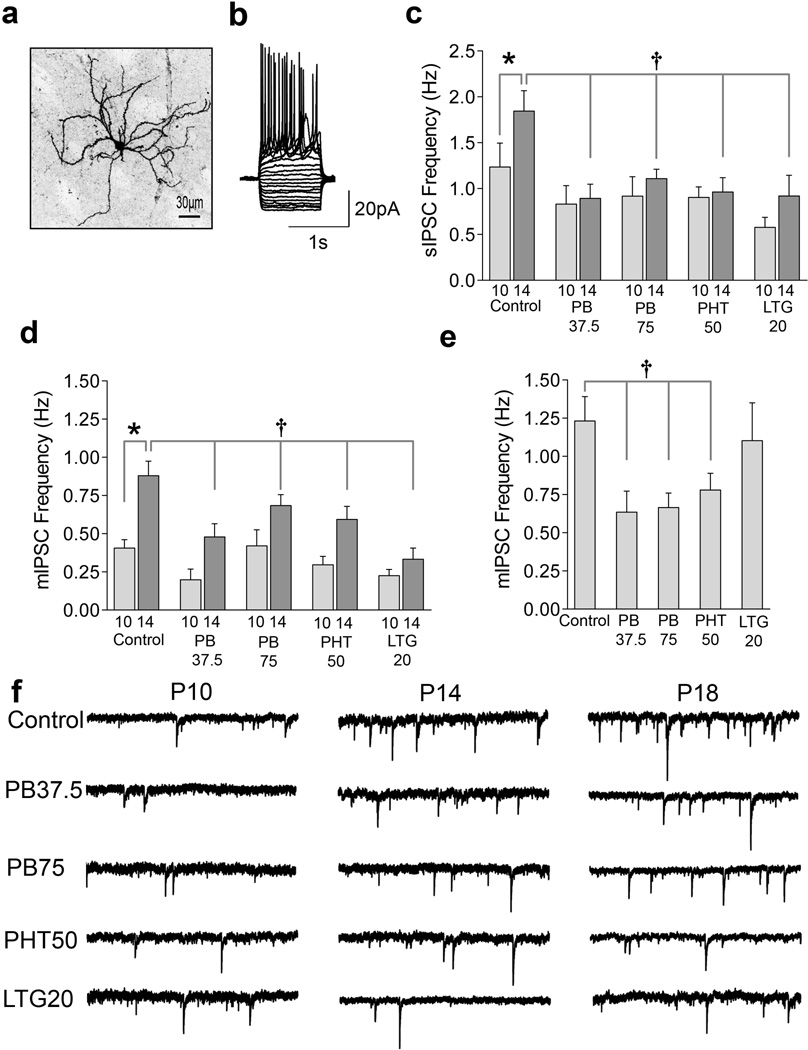
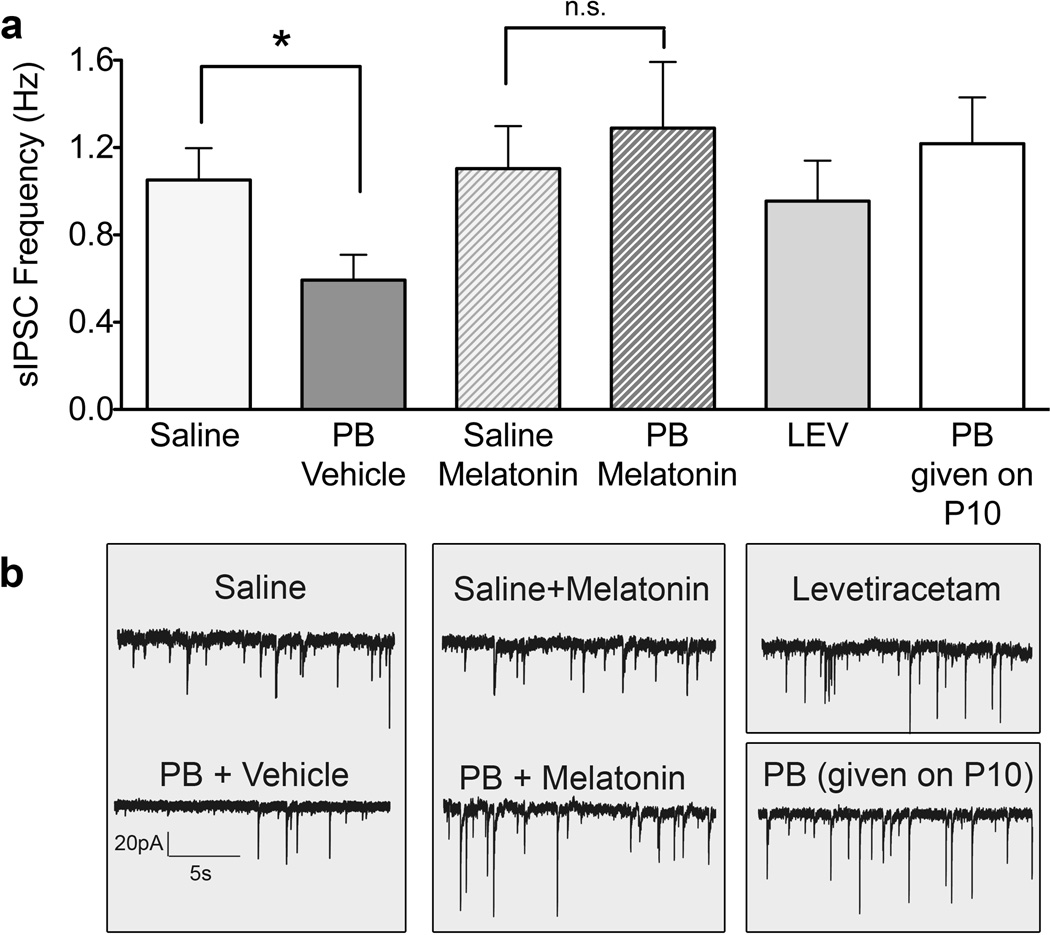
Results: Recordings from control animals revealed increased inhibitory and excitatory synaptic connectivity between postnatal day (P)10 and P18. This maturation was absent in rats exposed at P7 to a single dose of phenobarbital, phenytoin, or lamotrigine. Additionally, phenobarbital exposure impaired striatal-mediated behavior on P25. Neuroprotective pretreatment with melatonin, which prevents drug-induced neurodevelopmental apoptosis, prevented the drug-induced disruption in maturation. Levetiracetam was found not to disrupt synaptic development.
Interpretation: Our results provide the first evidence that exposure to antiepileptic drugs during a sensitive postnatal period impairs physiological maturation of synapses in neurons that survive the initial drug insult. These findings suggest a mechanism by which early life exposure to antiepileptic drugs can impact cognitive and behavioral outcomes, underscoring the need to identify therapies that control seizures without compromising synaptic maturation.
Copyright © 2012 American Neurological Association.
Figures

References
-
- Hauser WA. The prevalence and incidence of convulsive disorders in children. Epilepsia. 1994;35(Suppl 2):S1–S6. - PubMed
-
- Parisi P, Francia A, Vanacore N, et al. Psychomotor development and general movements in offspring of women with epilepsy and anticonvulsant therapy. Early Hum. Dev. 2003;74(2):97–108. [cited 2011 Jun 10] - PubMed
-
- Reinisch JM, Sanders SA, Mortensen EL, Rubin DB. In utero exposure to phenobarbital and intelligence deficits in adult men. JAMA. 1995;274(19):1518–1525. [cited 2011 Jun 10] - PubMed
-
- Farwell JR, Lee YJ, Hirtz DG, et al. Phenobarbital for febrile seizures--effects on intelligence and on seizure recurrence. N. Engl. J. Med. 1990;322(6):364–369. [cited 2011 Jun 10] - PubMed
-
- Ikonomidou C, Scheer I, Wilhelm T, et al. Brain morphology alterations in the basal ganglia and the hypothalamus following prenatal exposure to antiepileptic drugs. Eur. J. Paediatr. Neurol. 2007;11(5):297–301. - PubMed
Publication types
MeSH terms
Substances
Grants and funding
LinkOut - more resources
Full Text Sources
