


Targeting ALK in neuroblastoma--preclinical and clinical advancements
- PMID: 22585002
- PMCID: PMC3683972
- DOI: 10.1038/nrclinonc.2012.72
Targeting ALK in neuroblastoma--preclinical and clinical advancements
Abstract
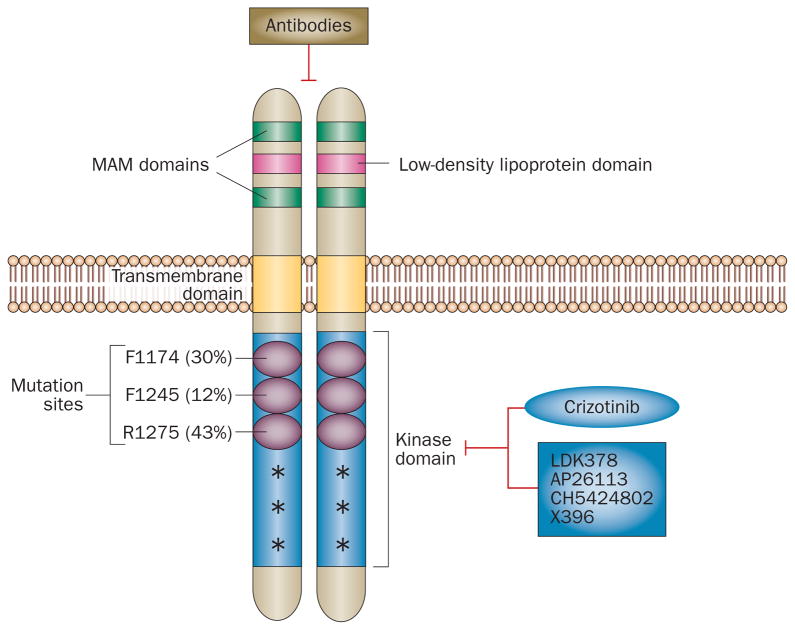
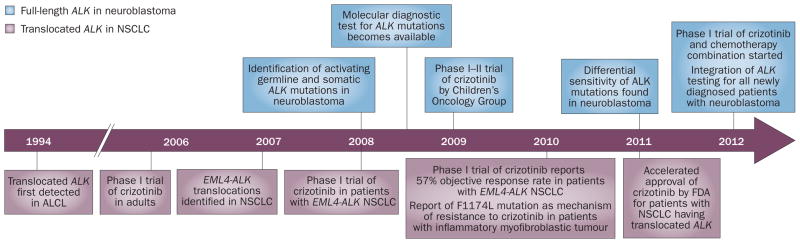
Despite improvements in cancer therapies in the past 50 years, neuroblastoma remains a devastating clinical problem and a leading cause of childhood cancer deaths. Advances in treatments for children with high-risk neuroblastoma have, until recently, involved addition of cytotoxic therapy to dose-intensive regimens. In this era of targeted therapies, substantial efforts have been made to identify optimal targets for different types of cancer. The discovery of hereditary and somatic activating mutations in the oncogene ALK has now placed neuroblastoma among other cancers, such as melanoma and non-small-cell lung cancer (NSCLC), which benefit from therapies with oncogene-specific small-molecule tyrosine kinase inhibitors. Crizotinib, a small-molecule inhibitor of ALK, has transformed the landscape for the treatment of NSCLC harbouring ALK translocations and has demonstrated activity in preclinical models of ALK-driven neuroblastomas. However, inhibition of mutated ALK is complex when compared with translocated ALK and remains a therapeutic challenge. This Review discusses the biology of ALK in the development of neuroblastoma, preclinical and clinical progress with the use of ALK inhibitors and immunotherapy, challenges associated with resistance to such therapies and the steps being taken to overcome some of these hurdles.
Conflict of interest statement
Y. P. Mossé declares an association with the following company: Pfizer. See the article online for full details of the relationship. E. L. Carpenter declares no competing interests.
Figures
References
-
- Brodeur GM. Neuroblastoma: biological insights into a clinical enigma. Nat Rev Cancer. 2003;3:203–216. - PubMed
-
- Everson TC, Cole WH. Spontaneous regression of neuroblastoma. W. B. Saunders Co; Philadelphia: 1966. pp. 88–163.
Publication types
MeSH terms
Substances
Grants and funding
LinkOut - more resources
Full Text Sources
Other Literature Sources
Medical
Molecular Biology Databases
Miscellaneous
