


Group-based trajectory modeling of caregiver psychological distress over time
- PMID: 22585179
- PMCID: PMC3880564
- DOI: 10.1007/s12160-012-9371-8
Group-based trajectory modeling of caregiver psychological distress over time
Abstract
Background: Competing theories of adaptation and wear-and-tear describe psychological distress patterns among family caregivers.
Purpose: This study seeks to characterize psychological distress patterns in family caregivers and identify predictors.
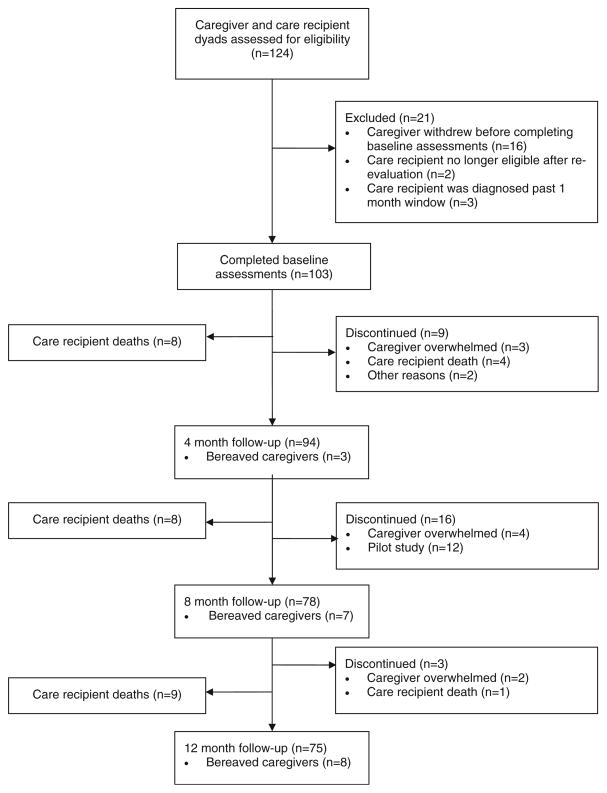
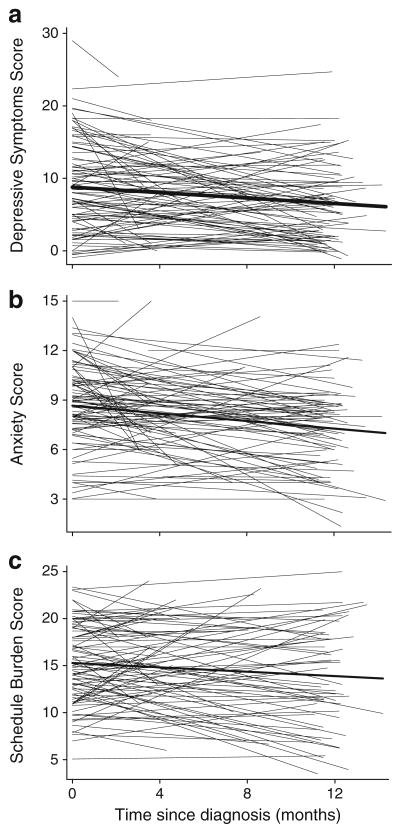
Methods: One hundred three caregivers of care recipients with primary malignant brain tumors were interviewed within 1, 4, 8, and 12 months post-diagnosis regarding psychological distress; care recipients were interviewed regarding clinical/functional characteristics. Group-based trajectory modeling identified longitudinal distress patterns, and weighted logistic/multinomial regression models identified predictors of distress trajectories.
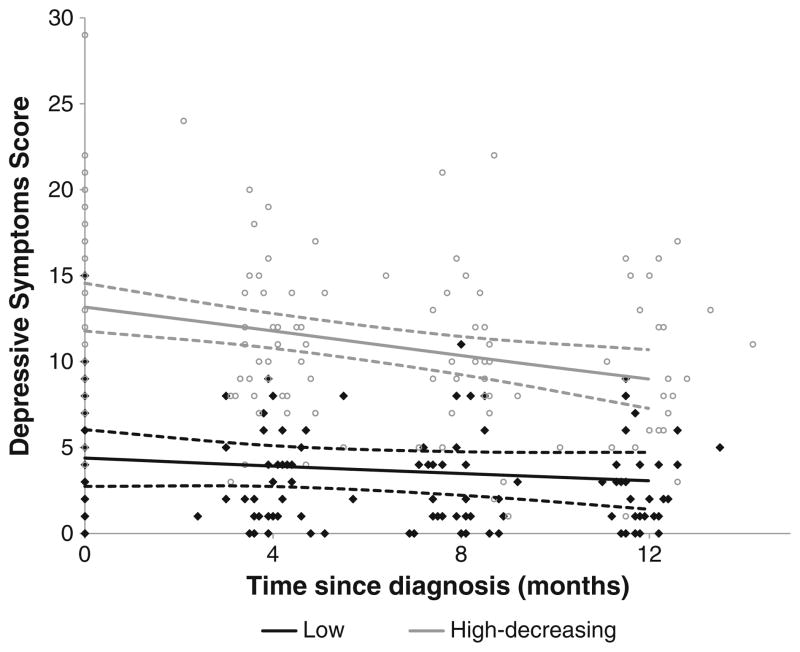
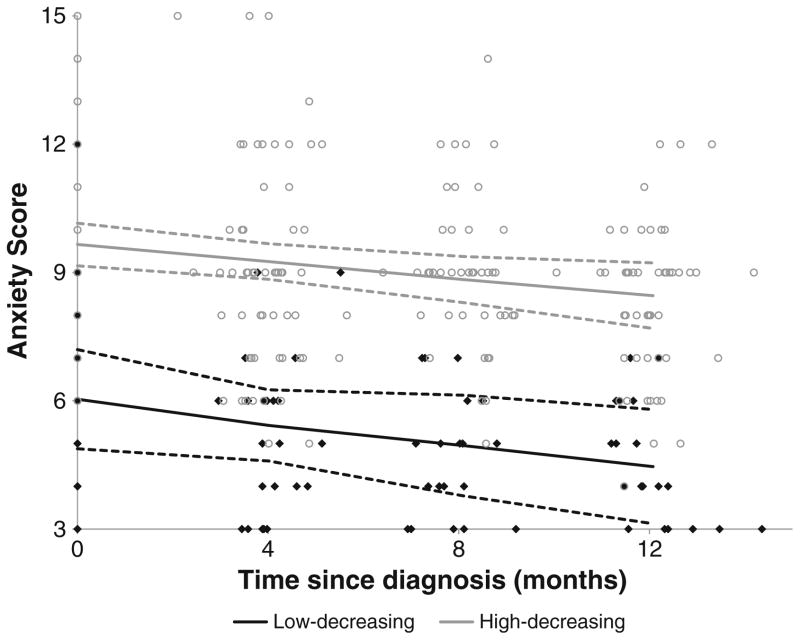
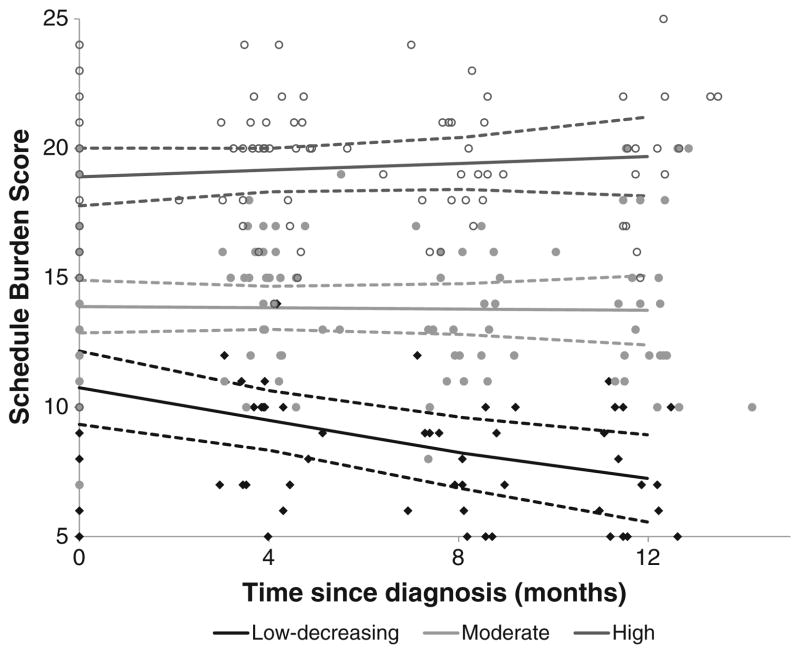
Results: Group-based trajectory modeling identified high-decreasing (51.1 % of caregivers) and consistently low (48.9 %) depressive symptom trajectories, high-decreasing (75.5 %) and low-decreasing (24.5 %) anxiety trajectories, and high (37.5 %), moderate (40.9 %), and low-decreasing (21.6 %) caregiver burden trajectories. High depressive symptoms were associated with high trajectories for both anxiety and burden, lower caregivers age, income, and social support, and lower care recipient functioning.
Conclusions: Our data support the adaptation hypothesis; interventions should target those at risk for persistent distress.
Conflict of interest statement
Figures
References
-
- The National Alliance for Caregiving. AARP: Caregiving in the US. Washington, DC: NAC and AARP; 2005.
-
- Pinquart M, Sorensen S. Associations of stressors and uplifts of caregiving with caregiver burden and depressive mood: A meta-analysis. J Gerontol B Psychol Sci Soc Sci. 2003;58:112–128. - PubMed
-
- Carter PA. Caregivers’ descriptions of sleep changes and depressive symptoms. Oncol Nurs Forum. 2002;29:1277–1283. - PubMed
-
- Picot SJ, Genet CA. Behavior upset in hypertensive and normotensive black female caregivers. Clin Excell Nurse Pract. 1998;2:23–29. - PubMed
-
- Schulz R, Beach SR. Negative and positive health effects of caring for a disabled spouse: Longitudinal findings from the caregiver health effects study. Psychology & Aging. 2000;15:607–616. - PubMed
