A20 ubiquitin ligase-mediated polyubiquitination of RIP1 inhibits caspase-8 cleavage and TRAIL-induced apoptosis in glioblastoma
- PMID: 22585859
- PMCID: PMC3354650
- DOI: 10.1158/2159-8290.CD-11-0172
A20 ubiquitin ligase-mediated polyubiquitination of RIP1 inhibits caspase-8 cleavage and TRAIL-induced apoptosis in glioblastoma
Abstract
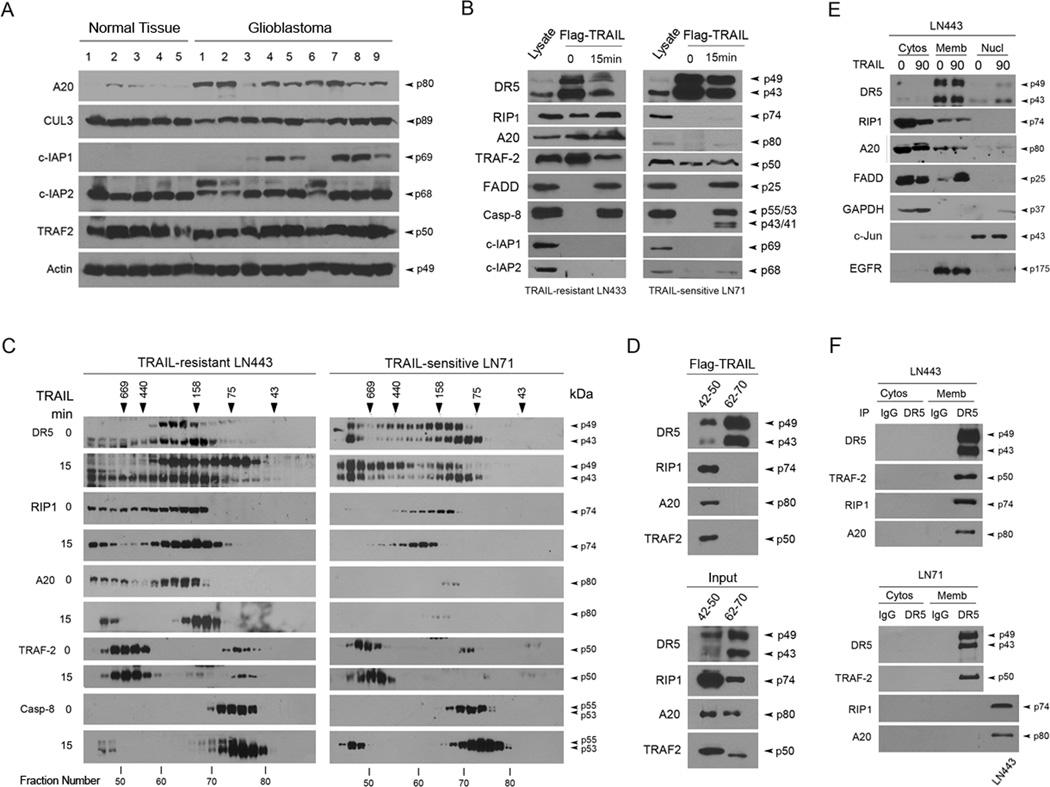
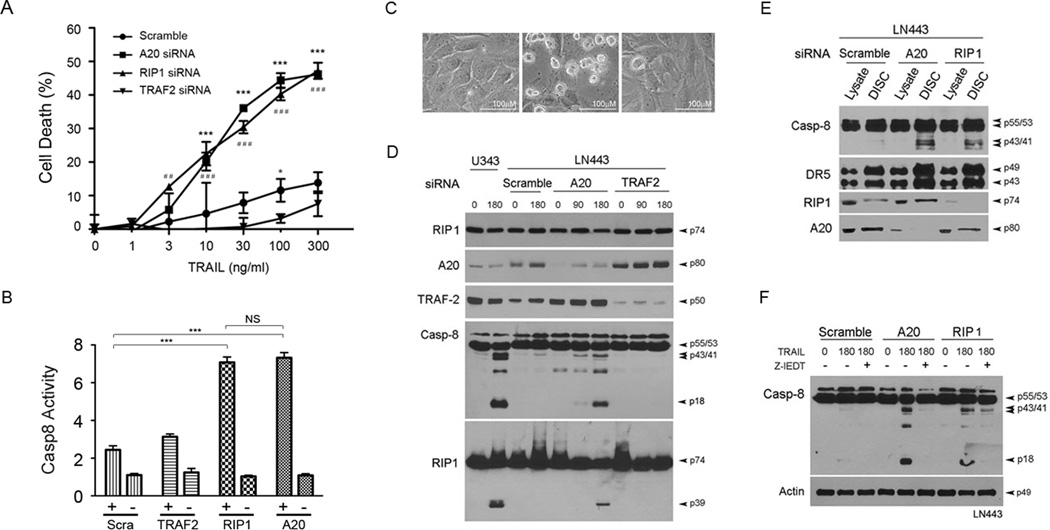
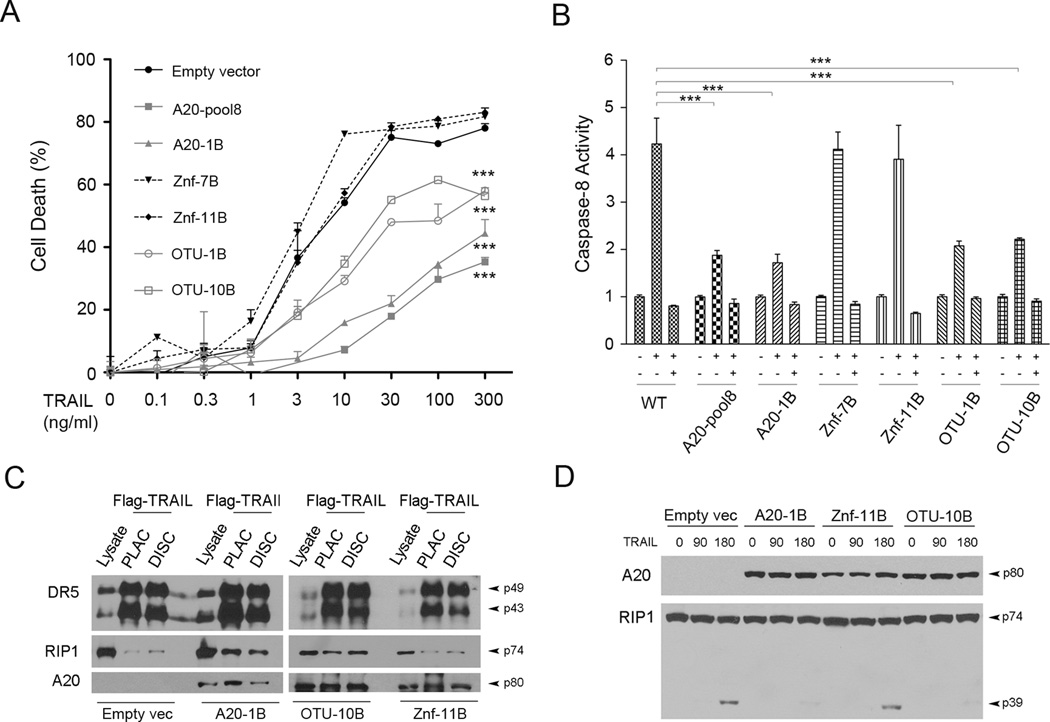
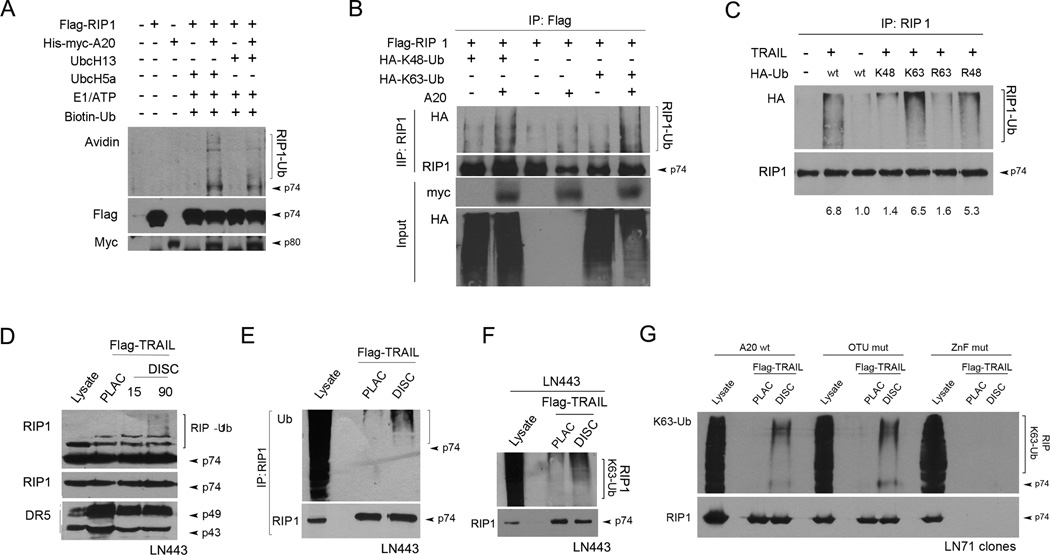
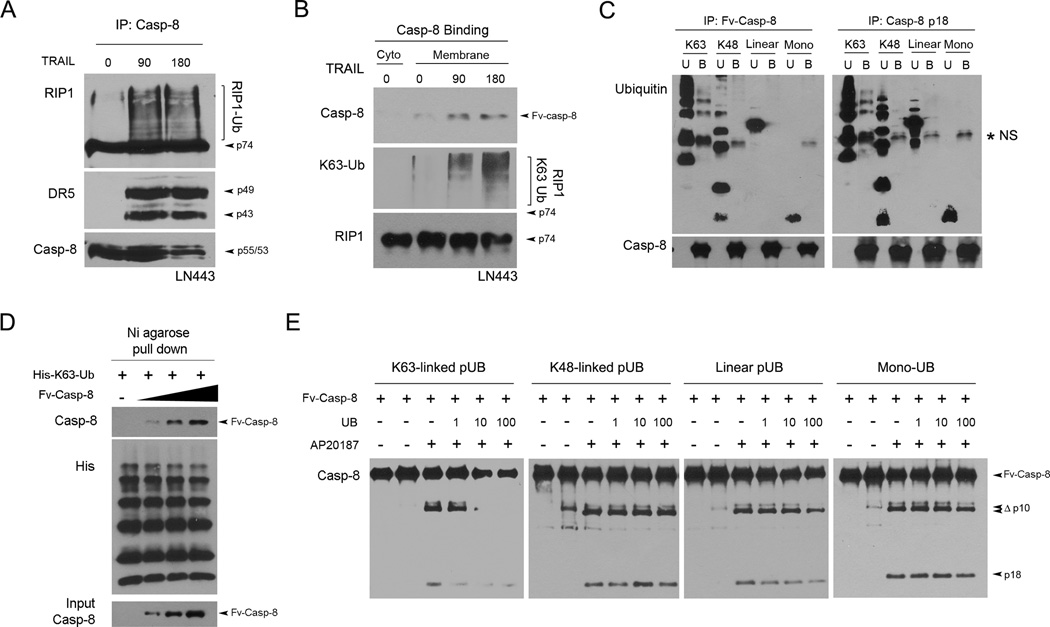
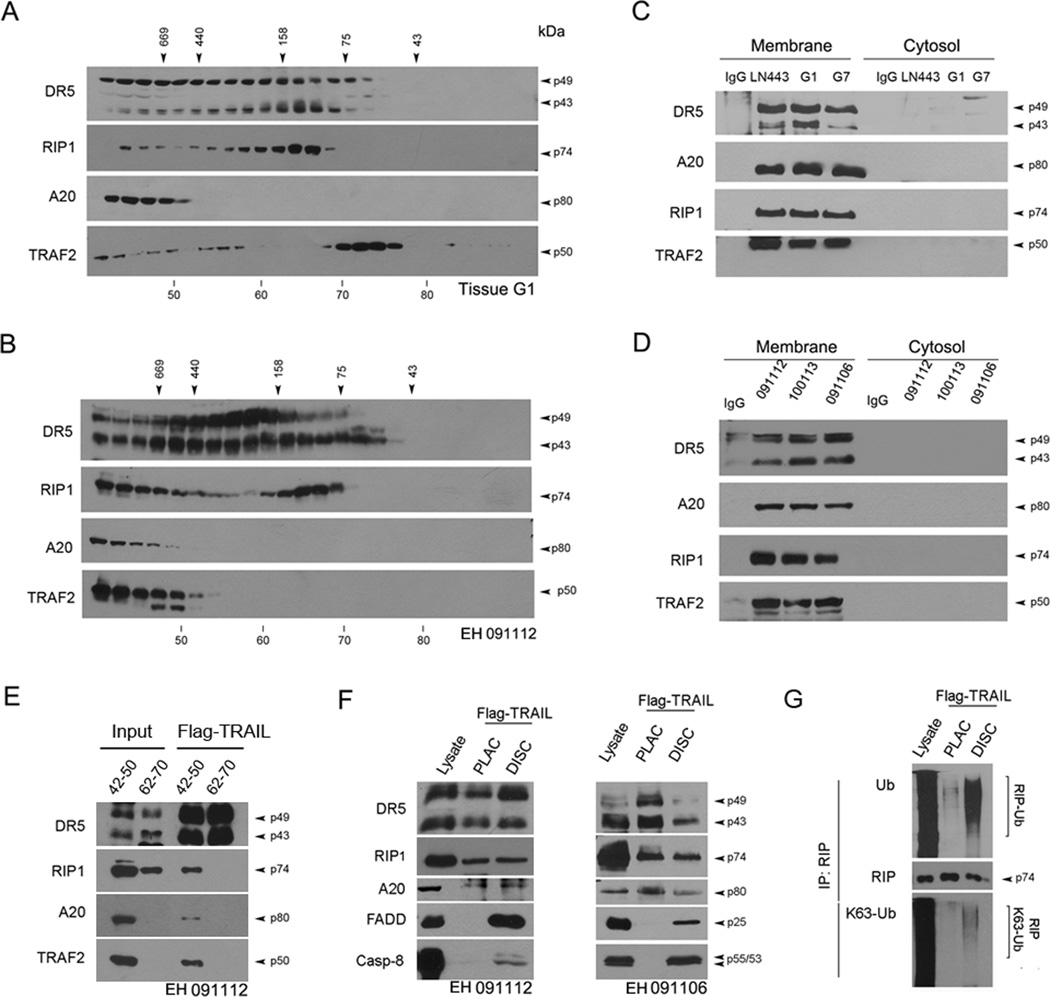
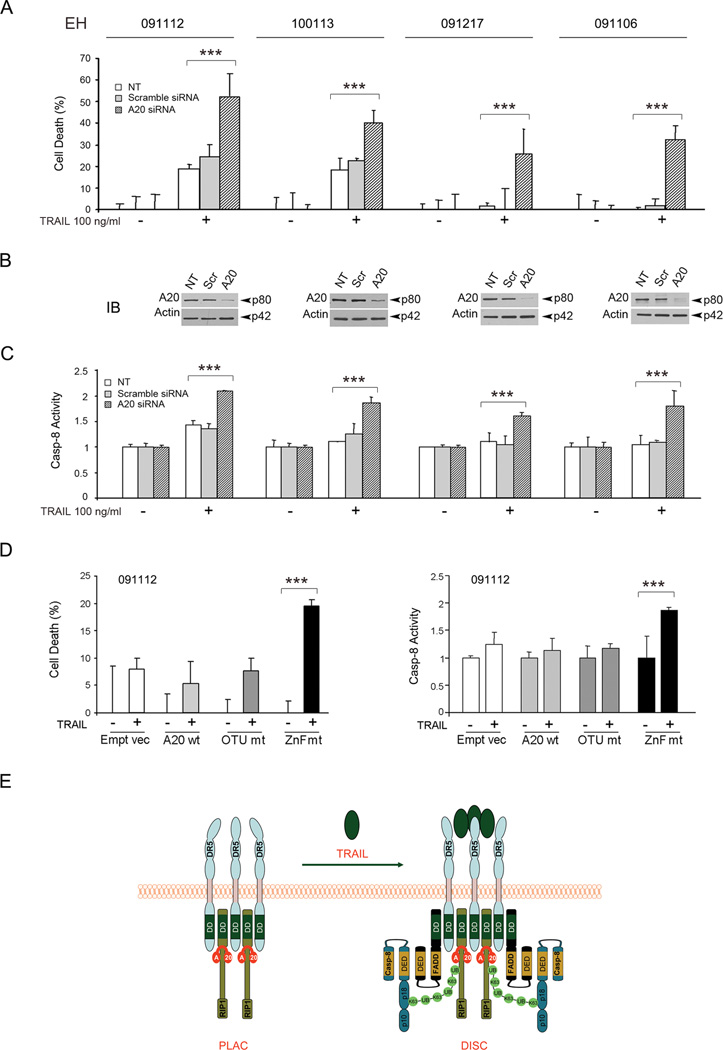
The TNF-related apoptosis-inducing ligand (TRAIL) apoptotic pathway has emerged as a therapeutic target for the treatment of cancer. However, clinical trials have proven that the vast majority of human cancers are resistant to TRAIL apoptotic pathway-targeted therapies. We show that A20-mediated ubiquitination inhibits caspase-8 cleavage and TRAIL-induced apoptosis in glioblastoma through 2 signaling complexes. A20 is highly expressed in glioblastomas and, together with the death receptor 5 and receptor-interacting protein 1, forms a plasma membrane-bound preligand assembly complex under physiologic conditions. Treatment with TRAIL leads to the recruitment of caspase-8 to the plasma membrane-bound preligand assembly complex for the assembly of a death-inducing signaling complex. In the death-inducing signaling complex, the C-terminal zinc finger (Znf) domain of the A20 ubiquitin ligase mediates receptor-interacting protein 1 polyubiquitination through lysine-63-linked polyubiquitin chains, which bind to the caspase-8 protease domain and inhibit caspase-8 dimerization, cleavage, and the initiation of TRAIL-induced apoptosis in glioblastoma-derived cell lines and tumor-initiating cells.
Significance: These results identify A20 E3 ligase as a therapeutic target whose inhibition can overcome TNF-related apoptosis-inducing ligand resistance in glioblastoma and thus have an impact on ongoing clinical trials of TNF-related apoptosis-inducing ligand-targeted combination cancer therapies.
©2012 AACR.
Conflict of interest statement
Figures
Comment in
-
Regulating the TRAIL of destruction: how A20 protects glioblastomas from TRAIL-mediated death.Cancer Discov. 2012 Feb;2(2):112-4. doi: 10.1158/2159-8290.CD-11-0350. Cancer Discov. 2012. PMID: 22585854
References
-
- Wiley SR, Schooley K, Smolak PJ, Din WS, Huang CP, Nicholl JK, et al. Identification and characterization of a new member of the TNF family that induces apoptosis. Immunity. 1995;3:673–682. - PubMed
-
- Pitti RM, Marsters SA, Ruppert S, Donahue CJ, Moore A, Ashkenazi A. Induction of apoptosis by Apo-2 ligand, a new member of the tumor necrosis factor cytokine family. J Biol Chem. 1996;271:12687–12690. - PubMed
-
- Vesely MD, Kershaw MH, Schreiber RD, Smyth MJ. Natural innate and adaptive immunity to cancer. Annu Rev Immunol. 2011;29:235–271. - PubMed
-
- Johnstone RW, Frew AJ, Smyth MJ. The TRAIL apoptotic pathway in cancer onset, progression and therapy. Nat Rev Cancer. 2008;8:782–798. - PubMed
-
- Bellail AC, Qi L, Mulligan P, Chhabra V, Hao C. TRAIL agonists on clinical trials for cancer therapy: the promises and the challenges. Rev Recent Clin Trials. 2009;4:34–41. - PubMed
Publication types
MeSH terms
Substances
Grants and funding
LinkOut - more resources
Full Text Sources
Medical
Research Materials
Miscellaneous