


Molecular tracing of the emergence, adaptation, and transmission of hospital-associated methicillin-resistant Staphylococcus aureus
- PMID: 22586109
- PMCID: PMC3384211
- DOI: 10.1073/pnas.1202869109
Molecular tracing of the emergence, adaptation, and transmission of hospital-associated methicillin-resistant Staphylococcus aureus
Abstract
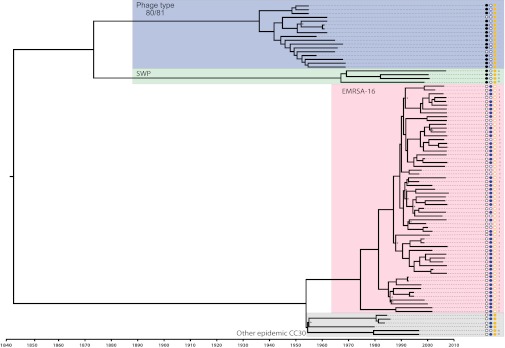
Hospital-associated infections caused by methicillin-resistant Staphylococcus aureus (MRSA) are a global health burden dominated by a small number of bacterial clones. The pandemic EMRSA-16 clone (ST36-II) has been widespread in UK hospitals for 20 y, but its evolutionary origin and the molecular basis for its hospital association are unclear. We carried out a Bayesian phylogenetic reconstruction on the basis of the genome sequences of 87 S. aureus isolates including 60 EMRSA-16 and 27 additional clonal complex 30 (CC30) isolates, collected from patients in three continents over a 53-y period. The three major pandemic clones to originate from the CC30 lineage, including phage type 80/81, Southwest Pacific, and EMRSA-16, shared a most recent common ancestor that existed over 100 y ago, whereas the hospital-associated EMRSA-16 clone is estimated to have emerged about 35 y ago. Our CC30 genome-wide analysis revealed striking molecular correlates of hospital- or community-associated pandemics represented by mobile genetic elements and nonsynonymous mutations affecting antibiotic resistance and virulence. Importantly, phylogeographic analysis indicates that EMRSA-16 spread within the United Kingdom by transmission from hospitals in large population centers in London and Glasgow to regional health-care settings, implicating patient referrals as an important cause of nationwide transmission. Taken together, the high-resolution phylogenomic approach used resulted in a unique understanding of the emergence and transmission of a major MRSA clone and provided molecular correlates of its hospital adaptation. Similar approaches for hospital-associated clones of other bacterial pathogens may inform appropriate measures for controlling their intra- and interhospital spread.
Conflict of interest statement
The authors declare no conflict of interest.
Figures

References
-
- Wertheim HFL, et al. The role of nasal carriage in Staphylococcus aureus infections. Lancet Infect Dis. 2005;5:751–762. - PubMed
-
- Robinson DA, et al. Re-emergence of early pandemic Staphylococcus aureus as a community-acquired meticillin-resistant clone. Lancet. 2005;365:1256–1258. - PubMed
-
- Altemeier WA, et al. Staphylococcus aureus associated with toxic shock syndrome: Phage typing and toxin capability testing. Ann Intern Med. 1982;96:978–982. - PubMed
-
- Nienaber JJC, et al. International Collaboration on Endocarditis-Microbiology Investigators Methicillin-susceptible Staphylococcus aureus endocarditis isolates are associated with clonal complex 30 genotype and a distinct repertoire of enterotoxins and adhesins. J Infect Dis. 2011;204:704–713. - PMC - PubMed
Publication types
MeSH terms
Grants and funding
LinkOut - more resources
Full Text Sources
Other Literature Sources
Medical
