


A multicenter international survey of renal supportive therapy during ECMO: the Kidney Intervention During Extracorporeal Membrane Oxygenation (KIDMO) group
- PMID: 22588147
- PMCID: PMC5486948
- DOI: 10.1097/MAT.0b013e3182579218
A multicenter international survey of renal supportive therapy during ECMO: the Kidney Intervention During Extracorporeal Membrane Oxygenation (KIDMO) group
Abstract
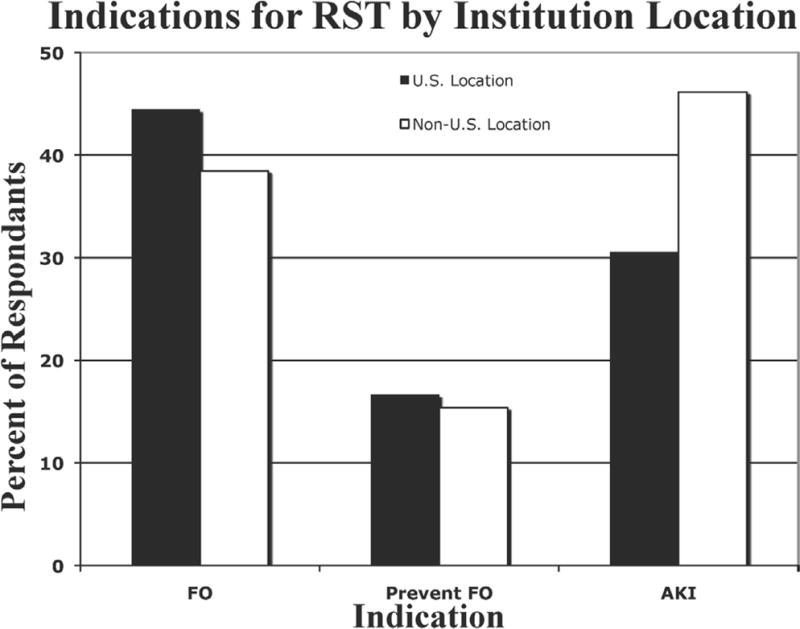
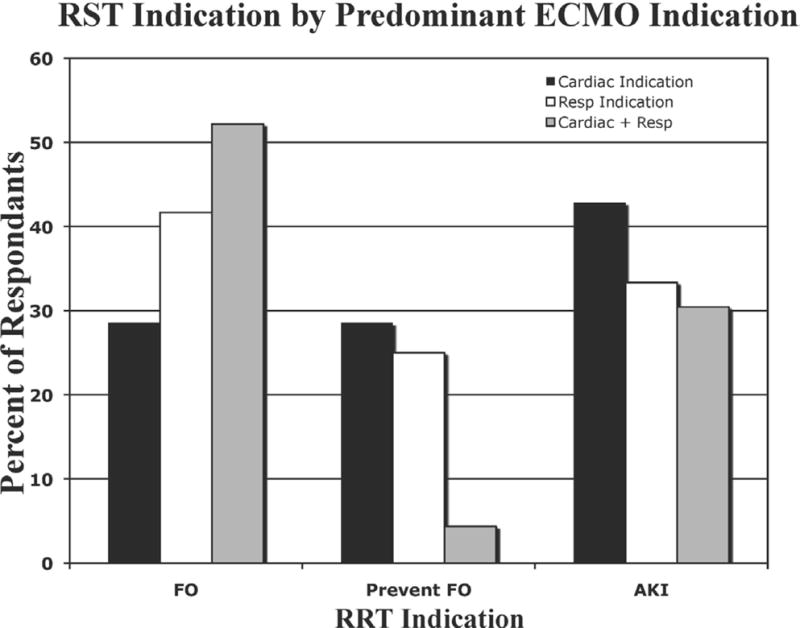
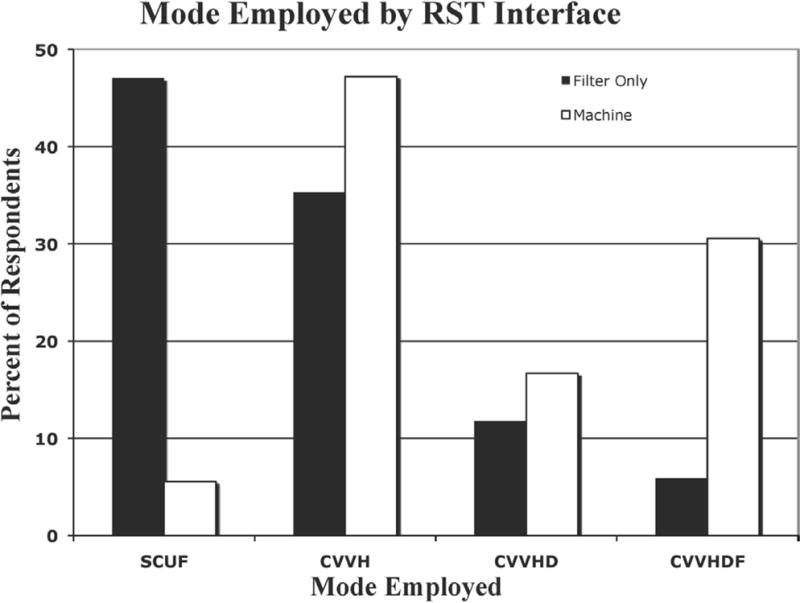
Acute kidney injury and fluid overload (FO) are associated with increased mortality in critically ill patients, including the subset supported with extracorporeal membrane oxygenation (ECMO). The indication for and method of application of renal support therapy (RST) during ECMO is largely unknown beyond single-center experiences. The current study uses a survey design to document practice variation regarding RST, including indication, method of interface with the ECMO circuit, and prescribing practices. Sixty-five international ECMO centers (31%) responded to an online electronic survey regarding RST during ECMO. Nearly a quarter of centers (23%) reported using no RST during ECMO. Among those using the therapy, the predominant mode of therapy applied was convection and included slow continuous ultrafiltration and continuous venovenous hemofiltration. The predominant indication for RST was the treatment (43%) or prevention (16%) of FO. Nephrology rather than critical care medicine is reported as the prescribing service in a majority of centers with a significant difference between US centers and non-US centers. The results of this study identify a wide variation in practice regarding RST during ECMO that will offer multiple important avenues for further research by this group and others regarding the interface of RST and ECMO.
Figures
References
-
- Bagshaw SM, George C, Bellomo R. ANZICS Database Management Committee: A comparison of the RIFLE and AKIN criteria for acute kidney injury in critically ill patients. Nephrol Dial Transplant. 2008;23:1569–1574. - PubMed
-
- Bailey D, Phan V, Litalien C, et al. Risk factors of acute renal failure in critically ill children: A prospective descriptive epidemiological study. Pediatr Crit Care Med. 2007;8:29–35. - PubMed
-
- Bunchman TE, McBryde KD, Mottes TE, Gardner JJ, Maxvold NJ, Brophy PD. Pediatric acute renal failure: outcome by modality and disease. Pediatr Nephrol. 2001;16:1067–1071. - PubMed
-
- Chang JW, Tsai HL, Wang HH, Yang LY. Outcome and risk factors for mortality in children with acute renal failure. Clin Nephrol. 2008;70:485–489. - PubMed
-
- D’Onofrio A, Cruz D, Bolgan I, et al. RIFLE criteria for cardiac surgery-associated acute kidney injury: risk factors and outcomes. Congest Heart Fail. 2010;16(Suppl 1):S32–S36. - PubMed
Publication types
MeSH terms
Grants and funding
LinkOut - more resources
Full Text Sources
