


Balanced placebo design with marijuana: pharmacological and expectancy effects on impulsivity and risk taking
- PMID: 22588253
- PMCID: PMC3829473
- DOI: 10.1007/s00213-012-2740-y
Balanced placebo design with marijuana: pharmacological and expectancy effects on impulsivity and risk taking
Abstract
Rationale: Marijuana is believed to increase impulsivity and risk taking, but the processes whereby it affects such behaviors are not understood. Indeed, either the pharmacologic effect of delta-9-tetrahydrocannabinol (THC) or the expectancy of receiving it may lead to deficits in cognitive processing and increases in risk taking.
Objectives and methods: We examined the relative effects of expecting to receive active marijuana and the pharmacological drug effects using a balanced placebo design. Young adult regular marijuana users (N = 136) were randomly assigned into one of four groups in a two × two instructional set (Told THC vs. Told no THC) by drug administration (smoked marijuana with 2.8 % THC vs. placebo) design. Dependent measures included subjective intoxication, behavioral impulsivity, and decision-making related to risky behaviors.
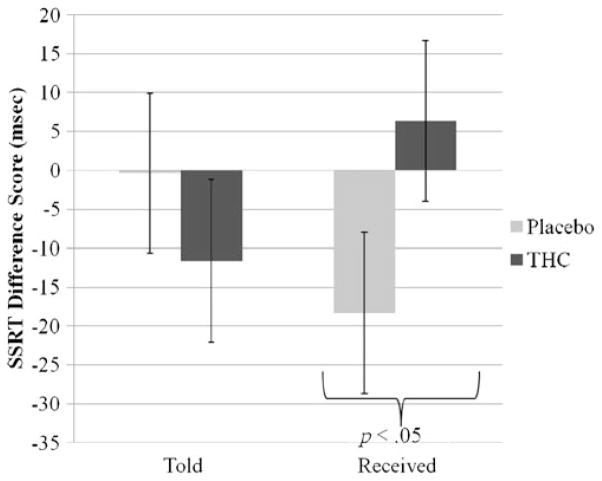
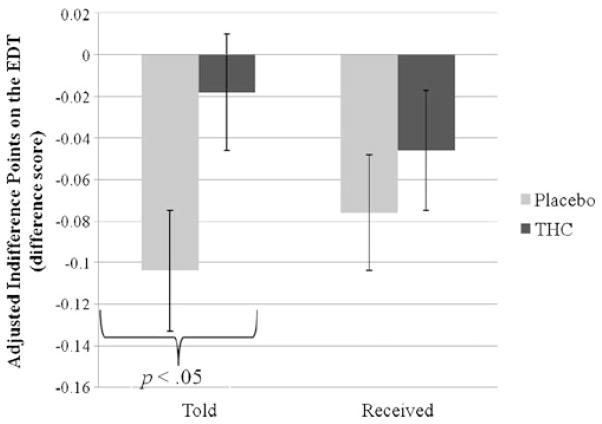
Results: Active THC, regardless of expectancy, impaired inhibition on the Stop Signal and Stroop Color-Word tasks. Expectancy of having smoked THC, regardless of active drug, decreased impulsive decision-making on a delay discounting task among participants reporting no deception and increased perception of sexual risk among women, consistent with a compensatory effect. Expectancy of smoking THC in combination with active THC increased negative perceptions from risky alcohol use. Active drug and expectancy independently increased subjective intoxication.
Conclusions: Results highlight the importance of marijuana expectancy effects as users believing they are smoking marijuana may compensate for expected intoxication effects when engaged in deliberate decision-making by making less impulsive and risky decisions. Effects of marijuana on impulsive disinhibition, by contrast, reflect direct pharmacologic effects for which participants did not compensate.
Figures
References
-
- Bates MN, Blakely TA. Role of cannabis in motor vehicle crashes. Epidemiologic Reviews. 1999;21:222–232. - PubMed
Publication types
MeSH terms
Substances
Grants and funding
LinkOut - more resources
Full Text Sources
Medical
