


A systematic review of the association between immunogenomic markers and cancer-related fatigue
- PMID: 22595751
- PMCID: PMC3398196
- DOI: 10.1016/j.bbi.2012.05.004
A systematic review of the association between immunogenomic markers and cancer-related fatigue
Abstract
Fatigue, which is one of the most commonly reported symptoms in cancer, can negatively impact the functional status and the health-related quality of life of individuals. This paper systematically reviews 34 studies to determine patterns of associations between immunogenomic markers and levels of cancer-related fatigue (CRF). Findings from the longitudinal studies revealed that elevated fatigue symptoms especially of women with early stages of breast cancer were associated with high levels of neutrophil/monocyte, IL-1ra, and IL-6 during radiation therapy; high levels of CD4+, IL-1β, and IL-6 with stressing stimuli; high levels of IL-1β during chemotherapy; low NK cell levels after chemotherapy; and presence of homozygous IL-6 and TNF alleles. In the cross-sectional studies, associations between levels of fatigue and immune/inflammatory markers were not consistently found, especially when covariates such as BMI, ethnicity, menopausal status, and educational level were controlled in the statistical analyses. However, a number of genomic markers were observed to be elevated mostly in fatigued breast cancer survivors in the cross-sectional studies. Gaps in knowledge and recommendations for future research are discussed.
Copyright © 2012 Elsevier Inc. All rights reserved.
Conflict of interest statement
The authors report no conflicts of interest.
Figures
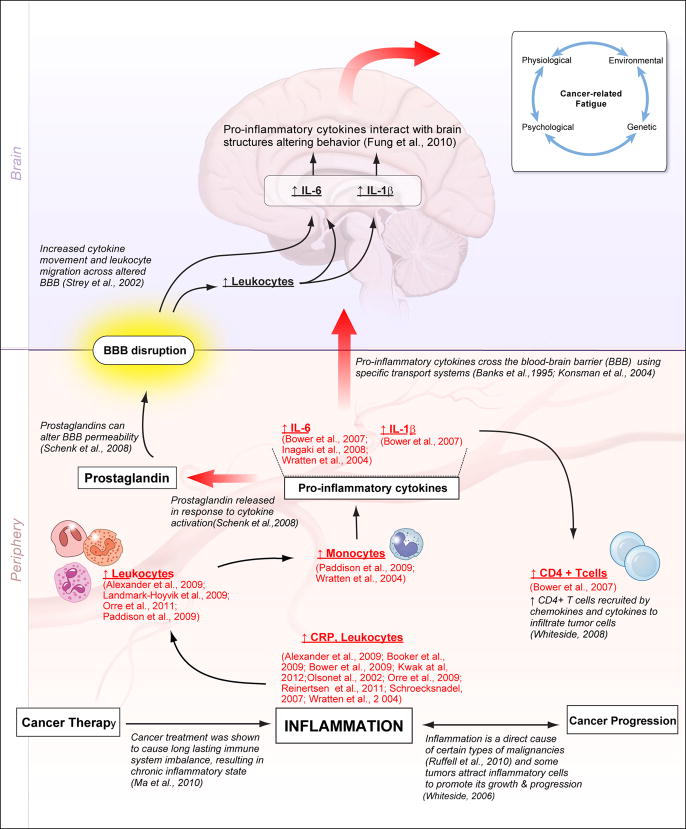
References
-
- Ahlberg K, Ekman T, Gaston-Johansson F. Levels of fatigue compared to levels of cytokines and hemoglobin during pelvic radiotherapy: a pilot study. Biol Res Nurs. 2004;5:203–210. - PubMed
-
- Aouizerat BE, Dodd M, Lee K, West C, Paul SM, Cooper BA, et al. Preliminary evidence of a genetic association between tumor necrosis factor alpha and the severity of sleep disturbance and morning fatigue. Biol Res Nurs. 2009;11:27–41. - PubMed
-
- Apte RN, Dotan S, Elkabets M, White MR, Reich E, Carmi Y, et al. The involvement of IL-1 in tumorigenesis, tumor invasiveness, metastasis and tumor-host interactions. Cancer Metastasis Rev. 2006;25:387–408. - PubMed
-
- Banks WA, Plotkin SR, Kastin AJ. Permeability of the blood-brain barrier to soluble cytokine receptors. Neuroimmunomodulation. 1995;2:161–165. - PubMed
Publication types
MeSH terms
Substances
Grants and funding
LinkOut - more resources
Full Text Sources
Medical
Research Materials
