


Mechanisms of cell death in heart disease
- PMID: 22596221
- PMCID: PMC3835661
- DOI: 10.1161/ATVBAHA.111.224915
Mechanisms of cell death in heart disease
Abstract
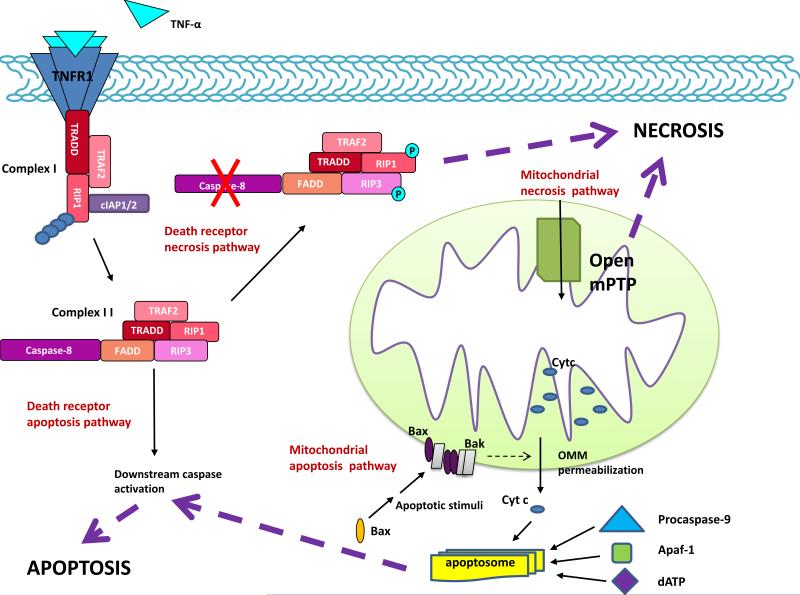
The major cardiac syndromes, myocardial infarction and heart failure, are responsible for a large portion of deaths worldwide. Genetic and pharmacological manipulations indicate that cell death is an important component in the pathogenesis of both diseases. Cells die primarily by apoptosis or necrosis, and autophagy has been associated with cell death. Apoptosis has long been recognized as a highly regulated process. Recent data indicate that a significant subset of necrotic deaths is also programmed. In the review, we discuss the molecular mechanisms that underlie these forms of cell death and their interconnections. The possibility is raised that small molecules aimed at inhibiting cell death may provide novel therapies for these common and lethal heart syndromes.
Figures
References
-
- Danial NN, Korsmeyer SJ. Cell death: Critical control points. Cell. 2004;116:205–219. - PubMed
-
- Hanahan D, Weinberg RA. Hallmarks of cancer: The next generation. Cell. 2011;144:646–674. - PubMed
-
- Cotter TG. Apoptosis and cancer: The genesis of a research field. Nat Rev Cancer. 2009;9:501–507. - PubMed
-
- Gurzov EN, Eizirik DL. Bcl-2 proteins in diabetes: Mitochondrial pathways of beta-cell death and dysfunction. Trends Cell Biol. 2011;21:424–431. - PubMed
Publication types
MeSH terms
Substances
Grants and funding
LinkOut - more resources
Full Text Sources
Other Literature Sources
Medical
