


Effects of disturbance intensity and frequency on bacterial community composition and function
- PMID: 22606316
- PMCID: PMC3351442
- DOI: 10.1371/journal.pone.0036959
Effects of disturbance intensity and frequency on bacterial community composition and function
Abstract
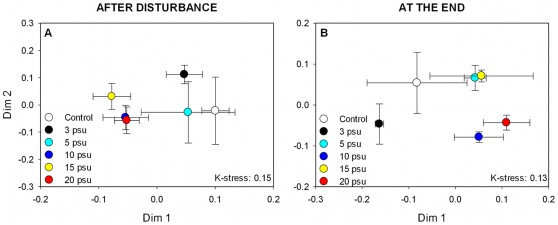
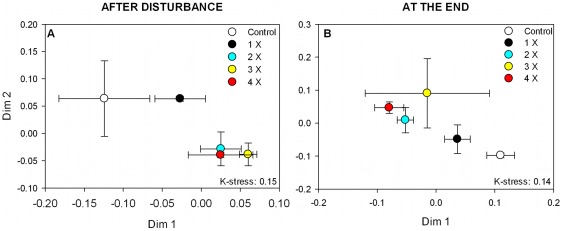
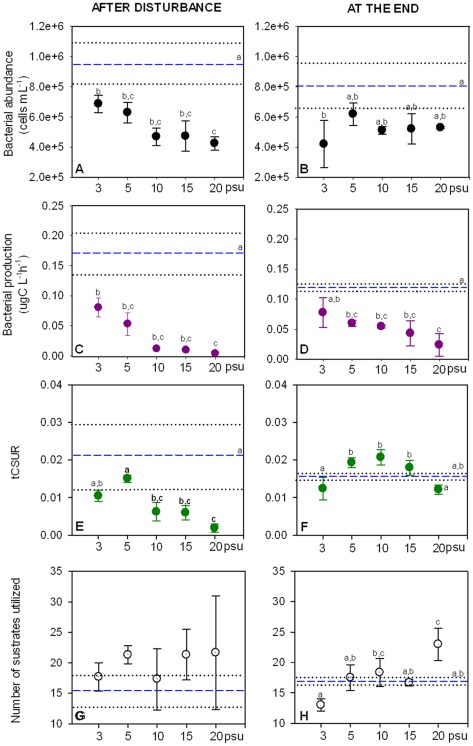
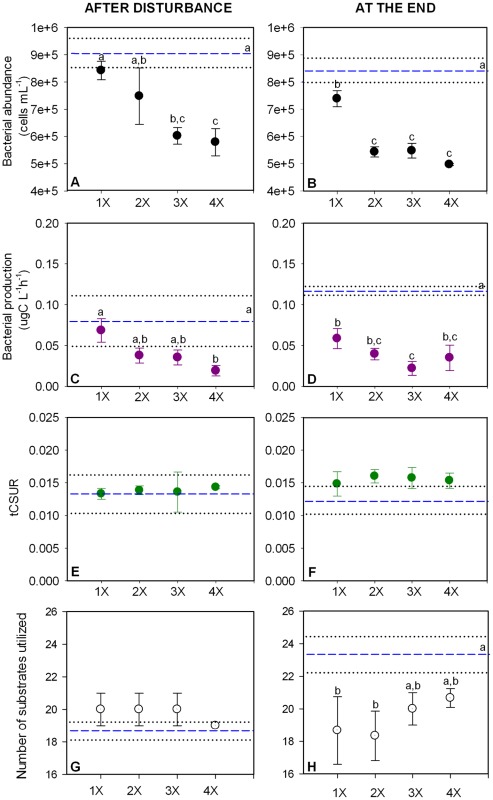
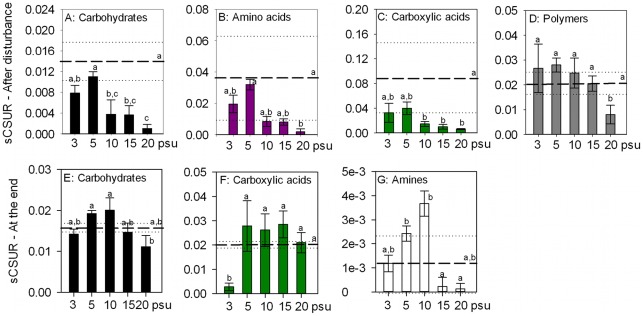
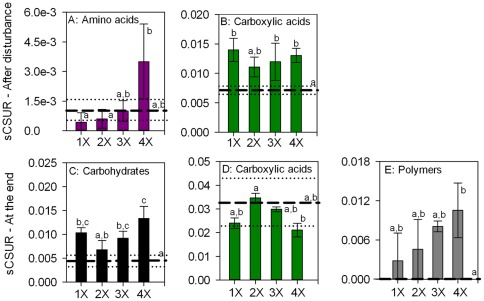
Disturbances influence community structure and ecosystem functioning. Bacteria are key players in ecosystems and it is therefore crucial to understand the effect of disturbances on bacterial communities and how they respond to them, both compositionally and functionally. The main aim of this study was to test the effect of differences in disturbance strength on bacterial communities. For this, we implemented two independent short-term experiments with dialysis bags containing natural bacterial communities, which were transplanted between ambient and 'disturbed' incubation tanks, manipulating either the intensity or the frequency of a salinity disturbance. We followed changes in community composition by terminal restriction fragment analysis (T-RFLP) and measured various community functions (bacterial production, carbon substrate utilization profiles and rates) directly after and after a short period of recovery under ambient conditions. Increases in disturbance strength resulted in gradually stronger changes in bacterial community composition and functions. In the disturbance intensity experiment, the sensitivity to the disturbance and the ability of recovery differed between different functions. In the disturbance frequency experiment, effects on the different functions were more consistent and recovery was not observed. Moreover, in case of the intensity experiment, there was also a time lag in the responses of community composition and functions, with functional responses being faster than compositional ones. To summarize, our study shows that disturbance strength has the potential to change the functional performance and composition of bacterial communities. It further highlights that the overall effects, rates of recovery and the degree of congruence in the response patterns of community composition and functioning along disturbance gradients depend on the type of function and the character of the disturbance.
Conflict of interest statement
Figures
References
-
- Mackey RL, Currie DJ. The diversity-disturbance relationship: Is it generally strong and peaked? Ecology. 2001;82:3479–3492.
-
- Svensson JR, Lindegarth M, Pavia H. Equal rates of disturbance cause different patterns of diversity. Ecology. 2009;90:496–505. - PubMed
-
- Naeem S, Thompson LJ, Lawler SP, Lawton JH, Woodfin RM. Declining biodiversity can alter the performance of ecosystems. Nature. 1994;368:734–737.
-
- Hooper DU, Chapin FS, Ewel JJ, Hector A, Inchausti P, et al. Effects of biodiversity on ecosystem functioning: A consensus of current knowledge. Ecological Monographs. 2005;75:3–35.
Publication types
MeSH terms
Substances
LinkOut - more resources
Full Text Sources
