


Ruthenium-106 plaque therapy for diffuse choroidal hemangioma in sturge-weber syndrome
- PMID: 22606475
- PMCID: PMC3350061
- DOI: 10.1155/2011/785686
Ruthenium-106 plaque therapy for diffuse choroidal hemangioma in sturge-weber syndrome
Abstract
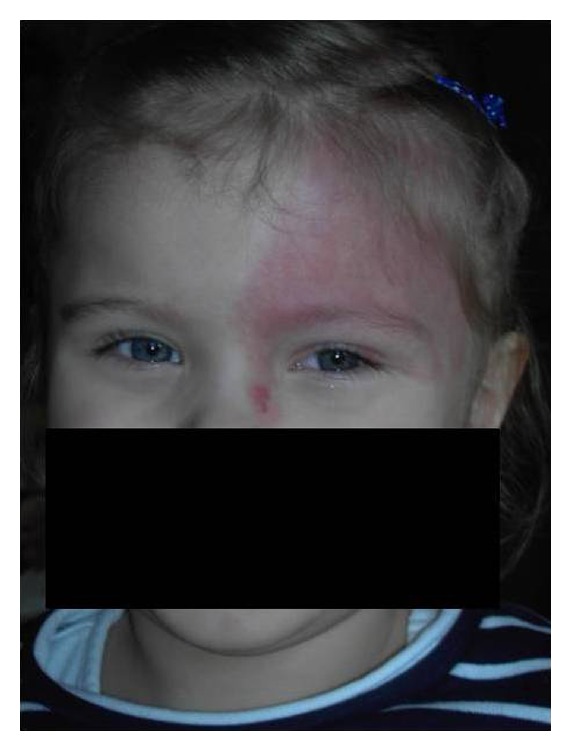
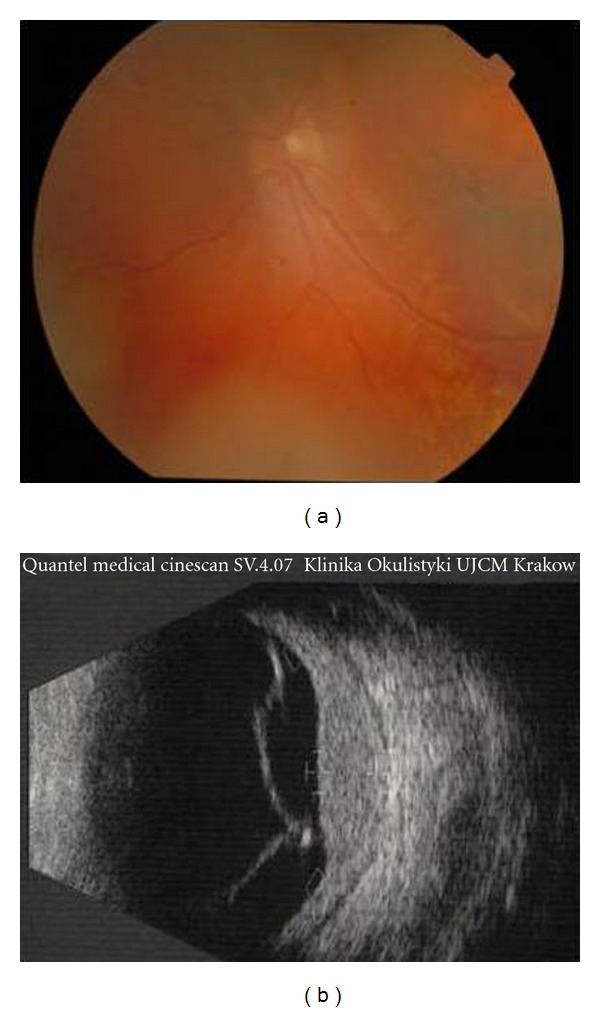
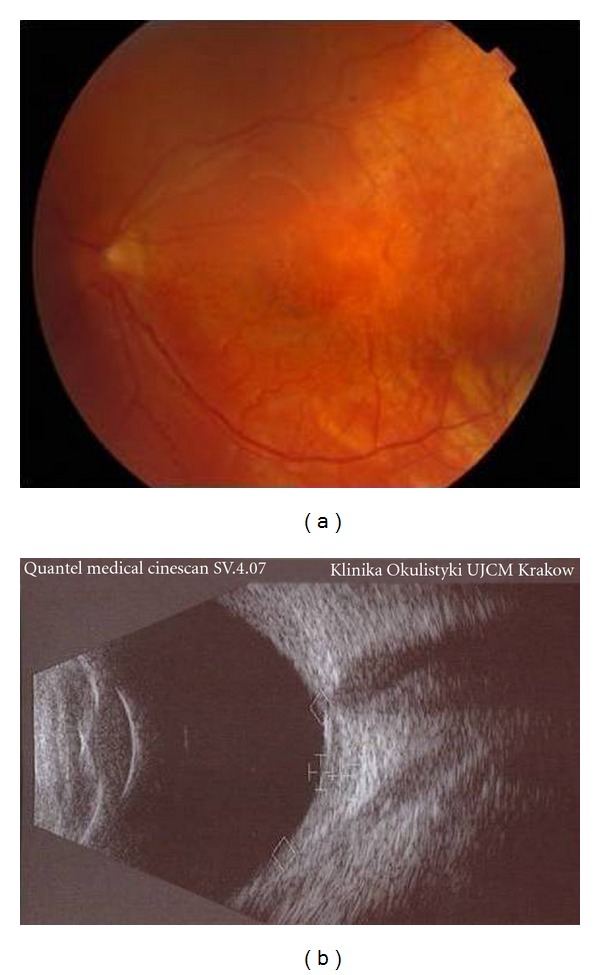
Diffuse choroidal hemangiomas associated with Sturge-Weber syndrome (SWS) are classically treated with external beam radiotherapy (EBR), but there are a few reports usually of single cases indicating the usefulness of plaque therapy. We present our observations on two cases of diffuse choroidal hemangiomas with exudative retinal detachment associated with SWS treated with Ruthenium-106 plaque therapy. Outcomes included best-corrected visual acuity (BCVA) and regression in tumor thickness measured by ultrasonography. The initial BCVA of the affected eyes was counting fingers at 1 meter and light projection. Pretreatment tumors thickness was 3.5 mm and 4.7 mm. In a follow-up period of 18-24 months, significant reduction in thickness of choroidal hemangiomas up to 1.2 mm and 1.4 mm with prompt resolution of exudative retinal detachment was observed. BCVA achieved 20/200 and 20/400, respectively. The findings in this paper indicate that Ruthenium-106 plaque therapy is effective in treatment of diffuse choroidal hemangiomas associated with SWS.
Figures
References
-
- Ch’ng S, Tan ST. Facial port-wine stains—clinical stratification and risks of neuro-ocular involvement. Journal of Plastic, Reconstructive and Aesthetic Surgery. 2008;61(8):889–893. - PubMed
-
- Witschel H, Font RL. Hemangioma of the choroid. A clinicopathologic study of 71 cases and a review of the literature. Survey of Ophthalmology. 1976;20(6):415–431. - PubMed
-
- Madreperla SA, Hungerford JL, Plowman PN, Laganowski HC, Gregory PTS, Finger PT. Choroidal hemangiomas: visual and anatomic results of treatment by photocoagulation or radiation therapy. Ophthalmology. 1997;104(11):1773–1778. - PubMed
-
- Gottlieb JL, Murray TG, Gass JDM. Low dose external beam irradiation for bilateral diffuse choroidal hemangioma. Archives of Ophthalmology. 1998;116(6):815–817. - PubMed
-
- Ritland JS, Eide N, Tausjø J. External beam irradiation therapy for choroidal haemangiomas. Visual and anatomical results after a dose of 20 to 25 Gy. Acta ophthalmologica Scandinavica. 2001;79:184–186. - PubMed
Publication types
LinkOut - more resources
Full Text Sources
