


Is non-union of tibial shaft fractures due to nonculturable bacterial pathogens? A clinical investigation using PCR and culture techniques
- PMID: 22607715
- PMCID: PMC3489544
- DOI: 10.1186/1749-799X-7-20
Is non-union of tibial shaft fractures due to nonculturable bacterial pathogens? A clinical investigation using PCR and culture techniques
Abstract
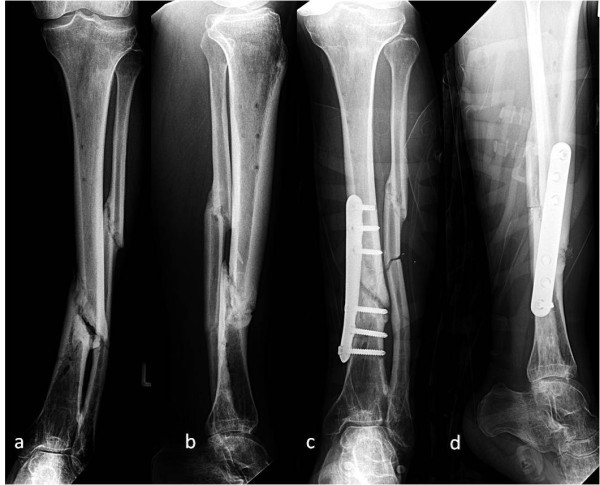
Background: Non-union continues to be one of the orthopedist's greatest challenges. Despite effective culture methods, the detection of low-grade infection in patients with non-union following tibial fracture still presents a challenge. We investigated whether "aseptic" tibial non-union can be the result of an unrecognized infection.
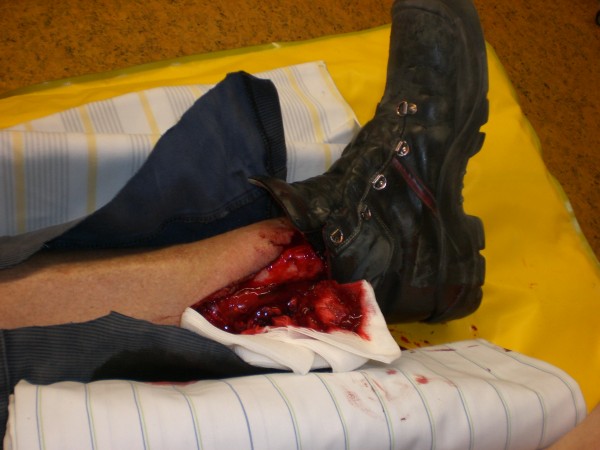
Methods: A total of 23 patients with non-union following tibial shaft fractures without clinical signs of infection were investigated. Intraoperative biopsy samples obtained from the non-union site were examined by means of routine culture methods and by polymerase chain reaction (PCR) for the detection of 16 S ribosomal RNA (rRNA). Control subjects included 12 patients with tibial shaft fractures.
Results: 23 patients (8 women and 15 men; mean age: 47.4 years) were included into this study. Preoperative C-reactive protein levels (mean: 20.8 mg/l) and WBC counts (mean: 8,359/μl) in the study group were not significantly higher than in the control group. None of the samples of non-union routine cultures yielded microorganism growth. Bacterial isolates were found by conventional culturing methods in only 1 case of an open fracture from the control group. In this case, PCR yielded negative results. 16 S rRNA was detected in tissue specimens from 2 patients (8.7%) with non-union. The analysis of these variable species-specific sequences enabled the identification of specific microorganisms (1x Methylobacterium species, 1x Staphylococcus species). Both PCR-positive patients were culture-negative.
Conclusions: The combination of microbiological culture and broad-range PCR seems to substantially add to the number of microbiological diagnoses obtained and may improve the clinician's ability to tailor therapy to the individual patient's needs.
Figures
References
-
- Littenberg B, Weinstein LP, McCarren M, Mead T, Swiontkowski MF, Rudicel SA, Heck D. Closed fractures of the tibial shaft. A meta-analysis of three methods of treatment. . J Bone Joint Surg Am. 1998;80:174–183. - PubMed
-
- Einhorn TA. The cell and molecular biology of fracture healing. Clin Orthop Relat Res. 1998;355:S7–S21. - PubMed
-
- Rothman RH, Klemek JS, Toton JJ. The effect of iron deficiency anemia on fracture healing. Clin Orthop Relat Res. 1971;77:276–283. - PubMed
MeSH terms
LinkOut - more resources
Full Text Sources
Medical
Research Materials
