


Trends in invasive infection with methicillin-resistant Staphylococcus aureus, Connecticut, USA, 2001-2010
- PMID: 22607942
- PMCID: PMC3358174
- DOI: 10.3201/eid1806.120182
Trends in invasive infection with methicillin-resistant Staphylococcus aureus, Connecticut, USA, 2001-2010
Abstract
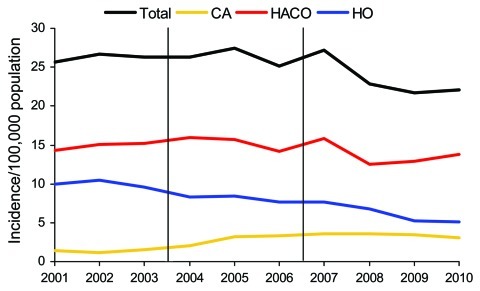
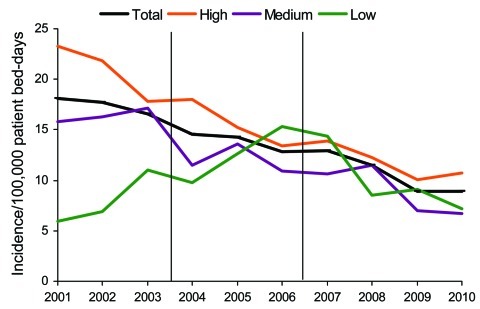
We examined trends in incidence of methicillin-resistant Staphylococcus aureus (MRSA) infections in Connecticut, with emphasis on 2007-2010, after legislation required reporting of hospital infections. A case was defined as isolation of MRSA from normally sterile body sites, classified after medical record review as hospital onset (HO), community onset, health care-associated community onset (HACO), or community-associated (CA). Blood isolates collected during 2005-2010 were typed and categorized as community- or health care-related strains. During 2001-2010, a total of 8,758 cases were reported (58% HACO, 31% HO, and 11% CA), and MRSA incidence decreased (p<0.05) for HACO and HO, but increased for CA. Significant 3- to 4-year period trends were decreases in all MRSA (-18.8%), HACO (-12.8%), HO (-33.2%), and CA (-12.7%) infections during 2007-2010, and an increase in CA infections during 2004-2006. Decreases in health care-related isolates accounted for all reductions. Hospital infections reporting may have catalyzed the decreases.
Figures
References
-
- Jevons MP. Celbenin-resistant staphylococci. BMJ. 1961;1:124–5. 10.1136/bmj.1.5219.124-a - DOI
MeSH terms
LinkOut - more resources
Full Text Sources
Medical