


Influence of pH and carbon to nitrogen ratio on mycotoxin production by Alternaria alternata in submerged cultivation
- PMID: 22608165
- PMCID: PMC3441619
- DOI: 10.1186/2191-0855-2-28
Influence of pH and carbon to nitrogen ratio on mycotoxin production by Alternaria alternata in submerged cultivation
Abstract
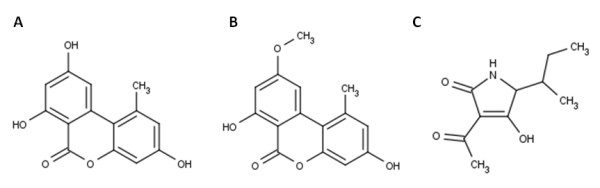
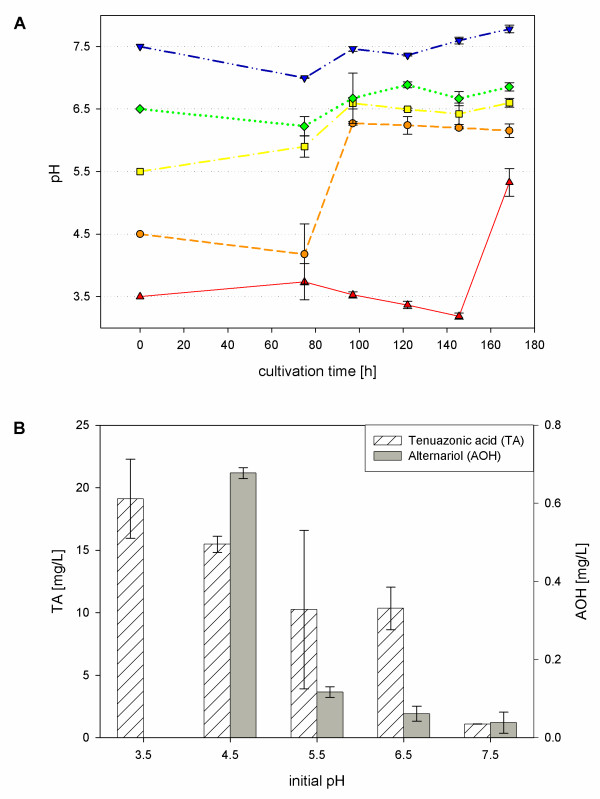
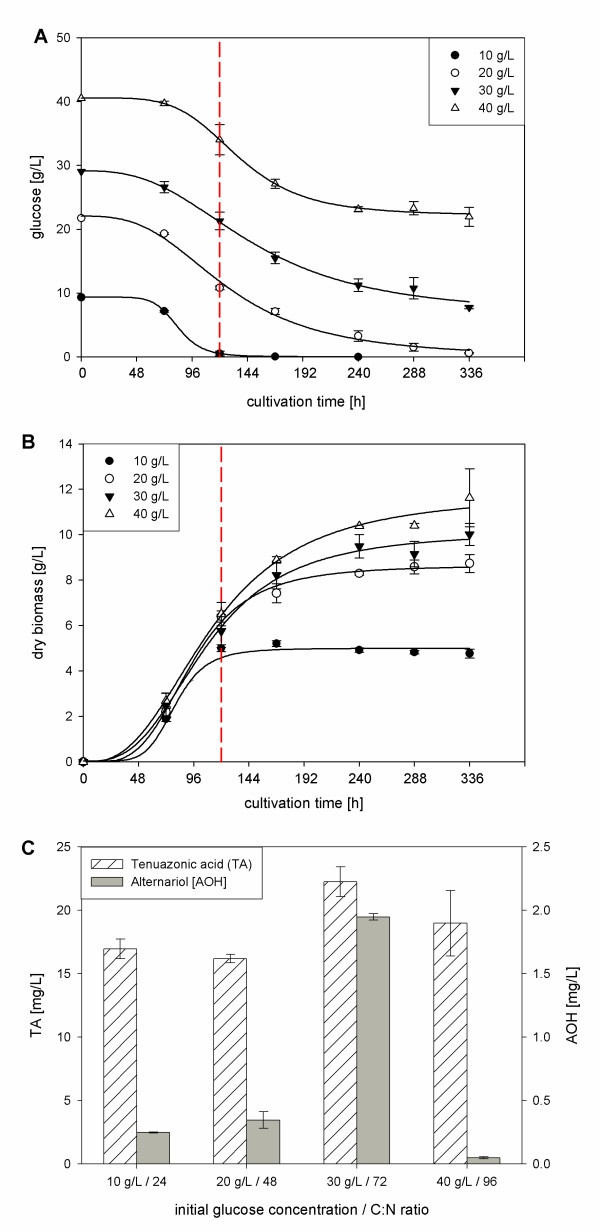
Production of the Alternaria mycotoxins alternariol (AOH), alternariol monomethylether (AME) and tenuazonic acid (TA) by Alternaria alternata DSM 12633 was influenced by pH and carbon to nitrogen (C:N) ratio of the growth medium both in shaking flasks and bioreactor cultivation. The impact of medium pH on mycotoxin production was studied in the range of pH 3.5 - 8. pH values above 5.5 led to a decreased mycotoxin production or inhibited mycotoxin formation completely whereas an acidic pH in the range of 4.0-4.5 was optimal for mycotoxin production. The influence of the C:N ratio was evaluated over the range of 24 to 96. Glucose was used as carbon source and its concentration was altered while nitrogen concentration was kept constant. Growth kinetics and mycotoxin production parameters were studied depending on different C:N ratios. With increasing initial glucose concentration fungal biomass did increase but the maximum specific growth rate was not influenced. The optimal initial C:N ratio for attaining highest mycotoxin concentrations was 72. A higher C:N ratio did not further enhance mycotoxin production.
Figures
References
-
- Casas Lopéz JL, Sánchez Pérez JA, Fernández Sevilla JM, Acién Fernández FG, Molina Grima E, Chisti Y. Production of lovastatin by Aspergillus terreus: effects of the C:N ratio and the principal nutrients on growth and metabolite production. Enzyme Microb Technol. 2003;33:270–277. doi: 10.1016/S0141-0229(03)00130-3. - DOI
LinkOut - more resources
Full Text Sources
