


Cannulation strategy for aortic arch reconstruction using deep hypothermic circulatory arrest
- PMID: 22608717
- PMCID: PMC3631598
- DOI: 10.1016/j.athoracsur.2012.03.053
Cannulation strategy for aortic arch reconstruction using deep hypothermic circulatory arrest
Abstract
Background: Aortic arch reconstruction in neonates is commonly performed using deep hypothermic circulatory arrest. However, concerns have arisen regarding potential adverse neurologic outcomes from this complex procedure, raising questions about the best arterial cannulation approach for cerebral perfusion and effective systemic hypothermia. In this study, we use computational fluid dynamics to investigate the effect of different cannulation strategies in neonates.
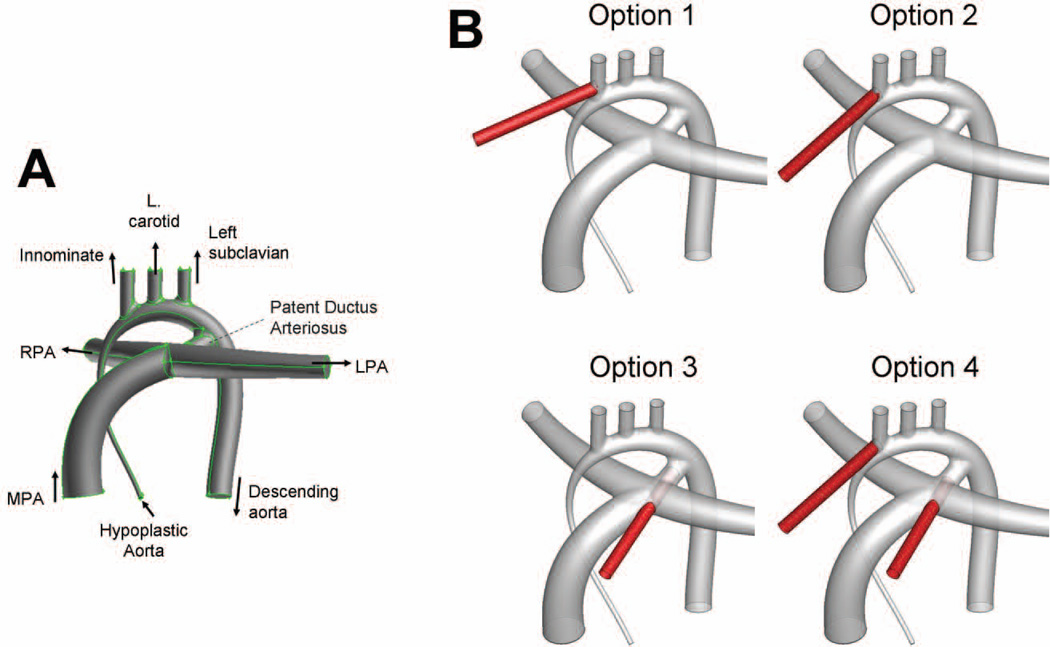
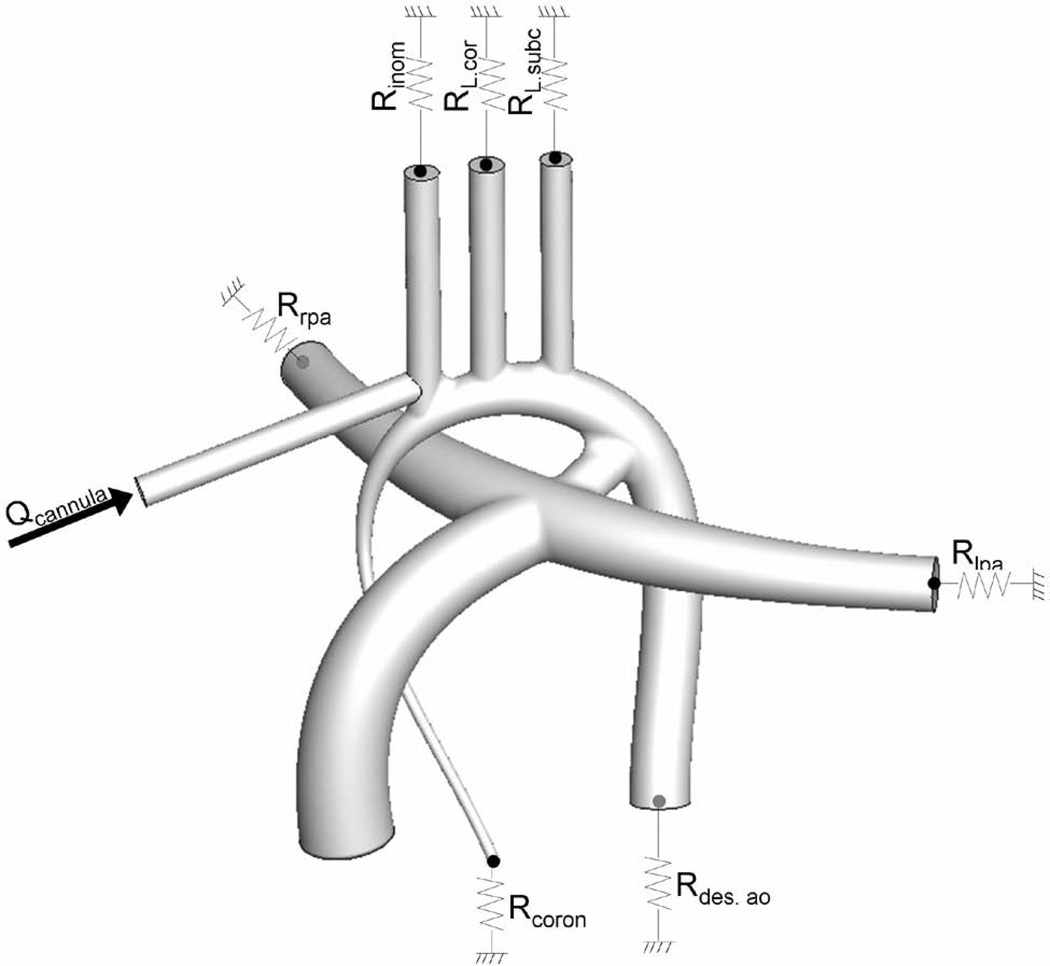
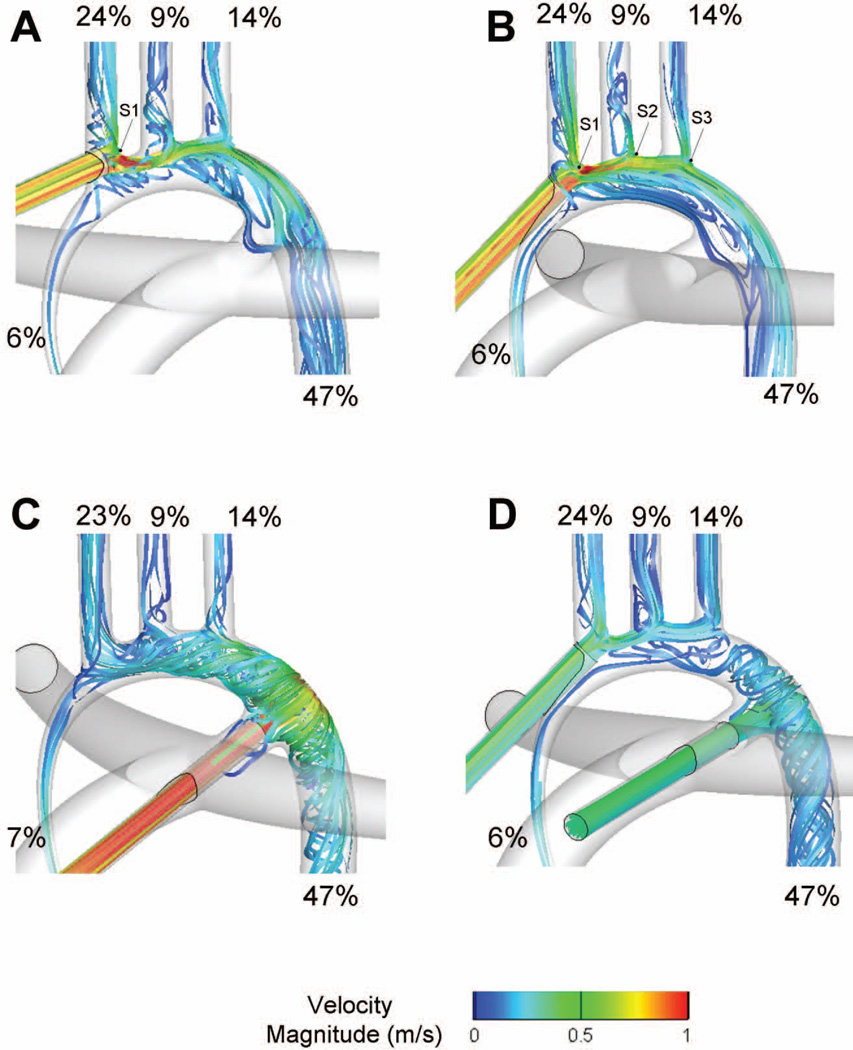
Methods: We used a realistic template of a hypoplastic neonatal aorta as the base geometry to investigate four cannulation options: (1) right innominate artery, (2) innominate root, (3) patent ductus arteriosus (PDA), or (4) innominate root and PDA. Performance was evaluated according to the numerically predicted cerebral and systemic flow distributions compared with physiologic perfusion under neonatal conditions.
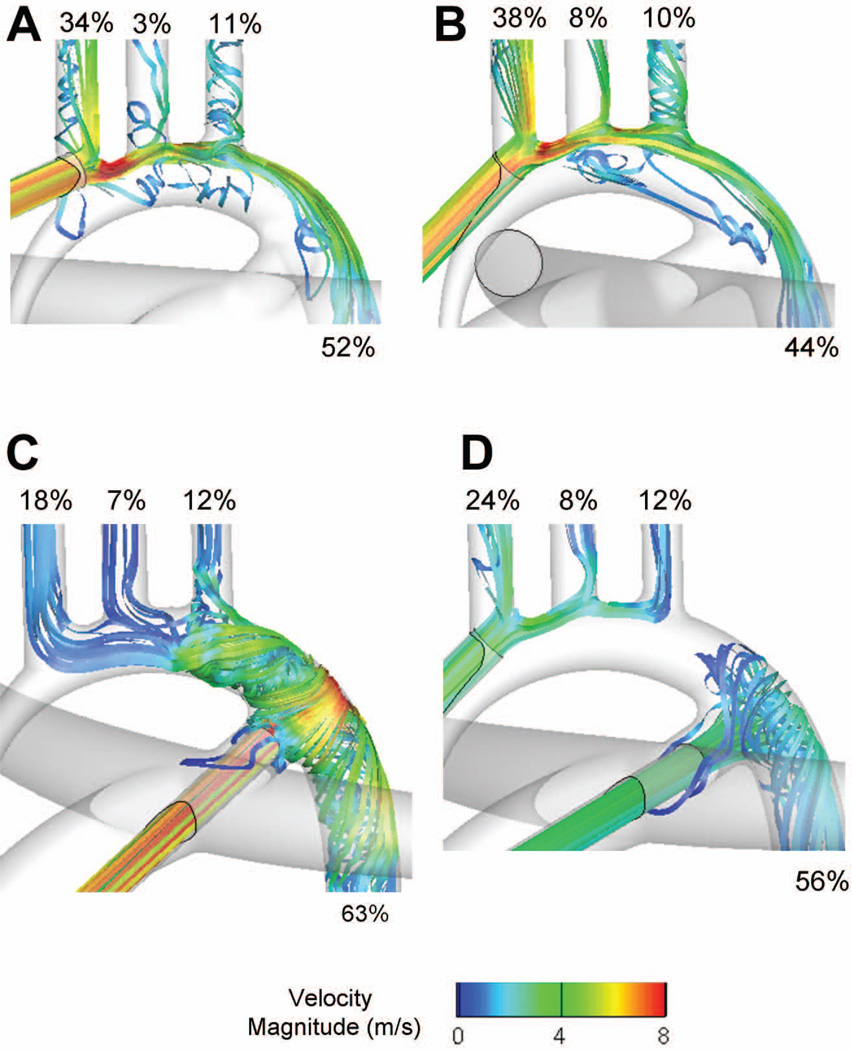
Results: The four cannulation strategies were associated with different local hemodynamics; however, this did not translate into any significant effect on the measured flow distributions. The largest difference only represented 0.8% of the cardiac output and was measured in the innominate artery, which received 23.2% of the cardiac output in option 3 vs 24% in option 4. Pulmonary artery snaring benefited all systemic vessels uniformly.
Conclusions: Because of the very high vascular resistances in neonates, downstream vascular resistances dictated flow distribution to the different vascular beds rather than the cannulation strategy, allowing the surgical team to choose their method of preference. However, patients with aortic coarctation warrant further investigation and will most likely benefit from a 2-cannulae approach (option 4).
Copyright © 2012 The Society of Thoracic Surgeons. Published by Elsevier Inc. All rights reserved.
Figures
Comment in
-
Invited commentary.Ann Thorac Surg. 2012 Aug;94(2):621. doi: 10.1016/j.athoracsur.2012.04.015. Ann Thorac Surg. 2012. PMID: 22818308 No abstract available.
References
-
- Wypij D, Newburger JW, Rappaport LA, duPlessis AJ, Jonas RA, Wernovsky G, Lin M, Bellinger DC. The effect of duration of deep hypothermic circulatory arrest in infant heart surgery on late neurodevelopment: The Boston Circulatory Arrest Trial. Journal of Thoracic and Cardiovascular Surgery. 2003;126(5):1397–1403. - PubMed
-
- Okita Y, Ando M, Minatoya K, Kitamura S, Takamoto S, Nakajima N. Predictive factors for mortality and cerebral complications in arteriosclerotic aneurysm of the aortic arch. Ann Thorac Surg. 1999;67(1):72–78. - PubMed
-
- Tchervenkov CI, Korkola SJ, Shum-Tim D. Surgical technique to avoid circulatory arrest and direct arch vessel cannulation during neonatal aortic arch reconstruction. Eur J Cardiothorac Surg. 2001;19(5):708–710. - PubMed
-
- Gerdes A, Joubert-Hubner E, Esders K, Sievers HH. Hydrodynamics of aortic arch vessels during perfusion through the right subclavian artery. Ann Thorac Surg. 2000;69(5):1425–1430. - PubMed
-
- Poirier NC, Drummond-Webb JJ, Hisamochi K, Imamura M, Harrison AM, Mee RB. Modified Norwood procedure with a high-flow cardiopulmonary bypass strategy results in low mortality without late arch obstruction. J Thorac Cardiovasc Surg. 2000;120(5):875–884. - PubMed
Publication types
MeSH terms
Grants and funding
LinkOut - more resources
Full Text Sources
