Review
. 2012 Sep;31(5):481-94.
doi: 10.1016/j.preteyeres.2012.04.005. Epub 2012 May 15.

Bone marrow-CNS connections: implications in the pathogenesis of diabetic retinopathy

Affiliations
Review

Bone marrow-CNS connections: implications in the pathogenesis of diabetic retinopathy

Jane Yellowlees Douglas et al. Prog Retin Eye Res. 2012 Sep.

Abstract

Diabetic retinopathy is the fourth most common cause of blindness in adults. Current therapies, including anti-VEGF therapy, have partial efficacy in arresting the progression of proliferative diabetic retinopathy and diabetic macular edema. This review provides an overview of a novel, innovative approach to viewing diabetic retinopathy as the result of an inflammatory cycle that affects the bone marrow (BM) and the central and sympathetic nervous systems. Diabetes associated inflammation may be the result of BM neuropathy which skews haematopoiesis towards generation of increased inflammatory cells but also reduces production of endothelial progenitor cells responsible for maintaining healthy endothelial function and renewal. The resulting systemic inflammation further impacts the hypothalamus, promoting insulin resistance and diabetes, and initiates an inflammatory cascade that adversely impacts both macrovascular and microvascular complications, including diabetic retinopathy (DR). This review examines the idea of using anti-inflammatory agents that cross not only the blood-retinal barrier to enter the retina but also have the capability to target the central nervous system and cross the blood-brain barrier to reduce neuroinflammation. This neuroinflammation in key sympathetic centers serves to not only perpetuate BM pathology but promote insulin resistance which is characteristic of type 2 diabetic patients (T2D) but is also seen in T1D. A case series of morbidly obese T2D patients with retinopathy and neuropathy treated with minocycline, a well-tolerated antibiotic that crosses both the blood-retina and blood-brain barrier is presented. Our results indicates that minocycine shows promise for improving visual acuity, reducing pain from peripheral neuropathy, promoting weight loss and improving blood pressure control and we postulate that these observed beneficial effects are due to a reduction of chronic inflammation.


Conflict of interest statement

None of the authors have any competing interests.

Figures
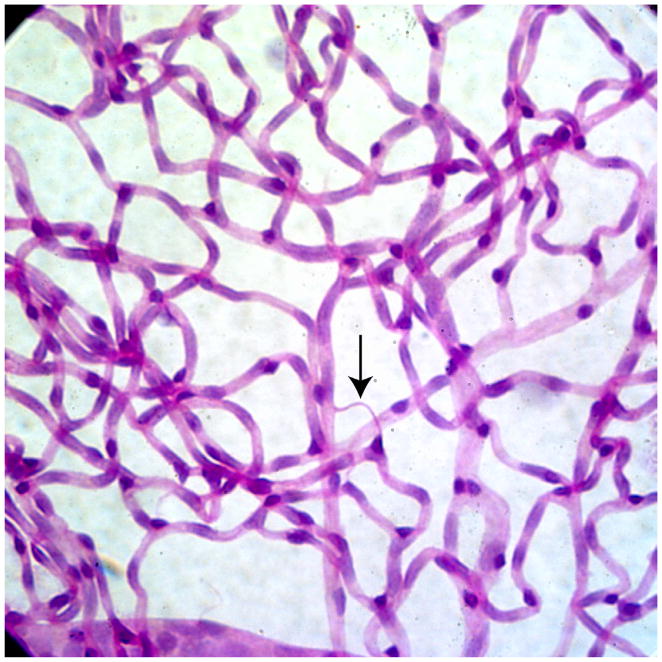
Figure 1
Figure 1. Acellular capillaries
Trypsin digested image of diabetic rat retina showing acellular capillary (red arrow) which is the result of loss of both pericytes and endothelial cells. Acellular capillaries are the pathologic hallmark of diabetic retinopathy and their quantification is a useful way to assess the extent of retinopathy.
Figure 2
Figure 2. EPC staining in rat retina
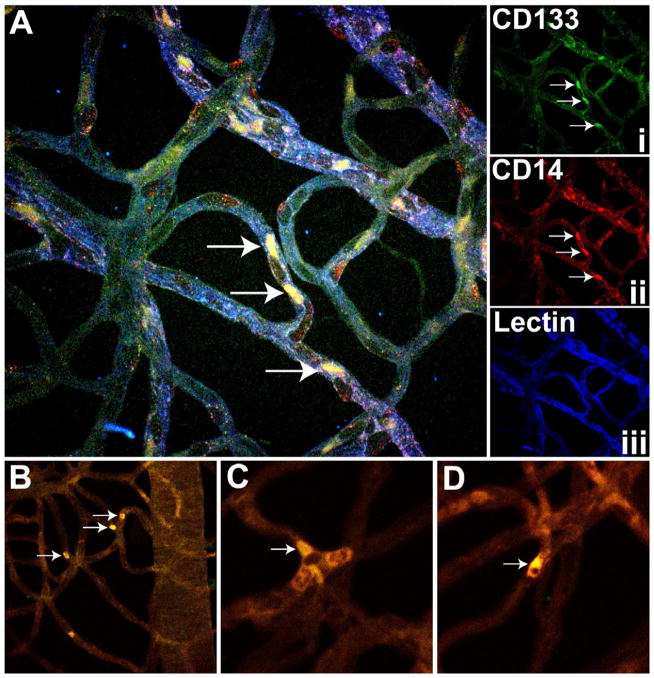
(A) Representative trypsin digested rat retina stained with CD133 i) CD14 (ii) and lectin (iii) showing presence of EPCs (white arrow) in the retinal vasculature of a diabetic rat. These cells appeared at the bifurcations of the retinal capillaries (B) with occasional clusters (white arrow) (C) or a single cell (D).
Figure 3
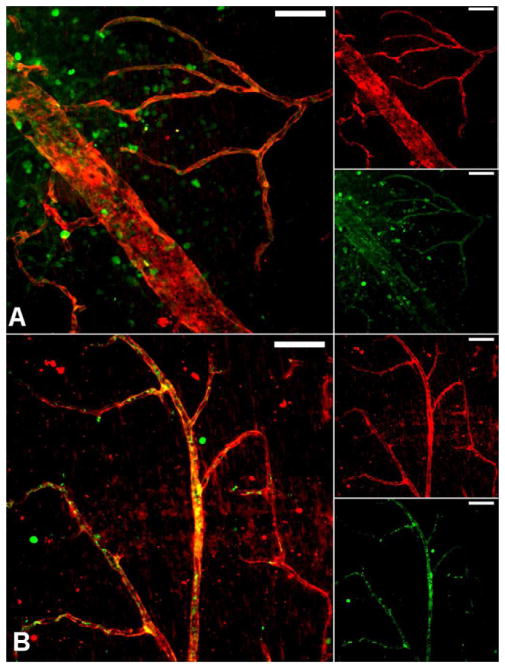
Figure 3. Human peripheral blood CD34+ cells from diabetic patients are dysfunctional in vascular homing and association and cannot repair damaged retinal vessels
Mouse eyes subjected to ischemia/reperfusion insult underwent injection (into the vitreous) with CD34+ cells isolated from long-term diabetic patients or age- and gender-matched non-diabetic controls. Two days after injection of the cells, the mouse eyes were harvested and examined by immunofluorescent laser scanning confocal microscopy. (A) CD34+ cells (identified by green fluorescence) from diabetic patients are found near vessels (visualized by red fluorescence), albeit in a random distribution (Zheng et al., 2007). (B) Most cells from non-diabetic control patients are associated with vessels. The yellow color is the result of co-localized fluorescence and indicates the CD34+ cells are associating and possibly some of the cells actually incorporating into vessel walls (Caballero et al., 2007). Images are compressed z-series (approximately 30μm total thickness). Scale bar=50μm.
Figure 4
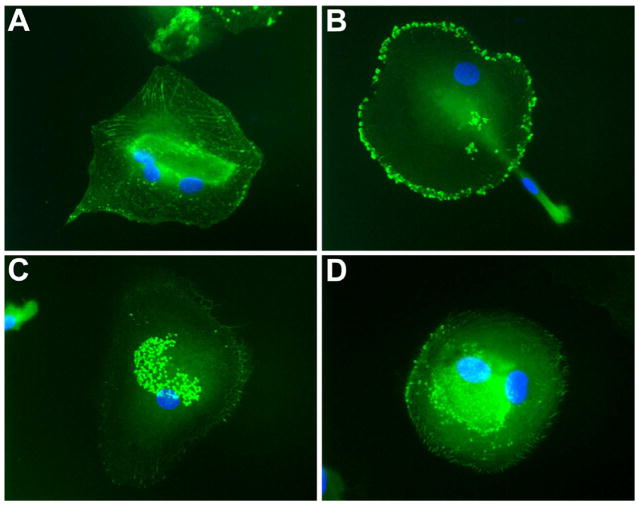
Figure 4. VASP redistribution is impaired in diabetic EPCs
Immunofluorescence images of EPCs from normal (A, B) and diabetic (C, D) donors left untreated (A, C) or treated with 100nM SDF-1 for 4 hours (B, D). Normal EPCs show a dramatic VASP redistribution following treatment (A, B) while EPCs from a diabetic donor do not show any response to SDF-1 (C, D).
Figure 5
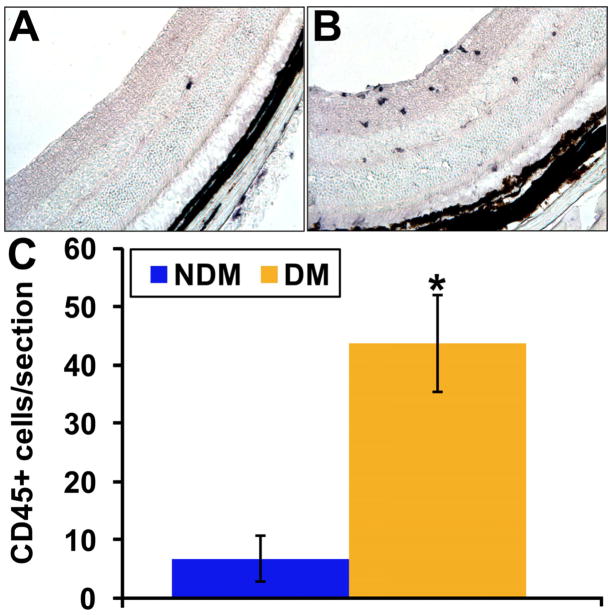
Figure 5. Diabetic retina contains higher numbers of CD45+cells
Immunohistochemical analysis of CD45+ cells in retinal cross sections from control (A) and mice with one month of STZ-induced diabetes was performed. (C) Quantitation of the number of CD45+ cells/section is shown and demonstrates increased number in diabetic compared to controls.
Figure 6
Figure 6. Immature progenitors are present in the diabetic retina
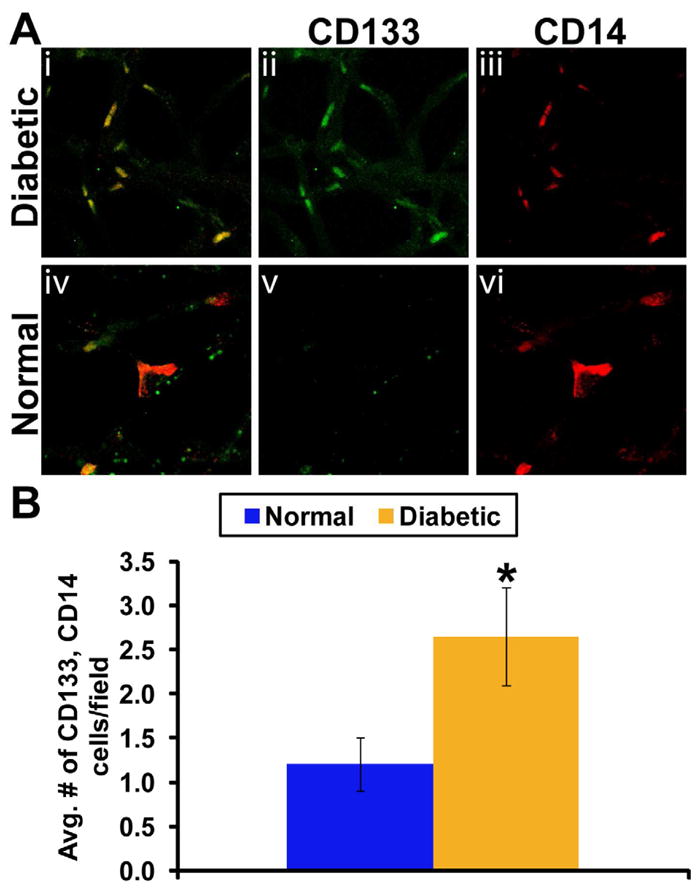
(A) Trypsin digested diabetic retinal vasculature (i) shows presence of CD133+ cells in diabetic vasculature (ii) with positive staining for CD14 marker (iii). Surprizingly, vehicle control rat retina (iv) did not show CD133+ cells (v) in 60% of the trypsin-digests although monocytic CD14+ expression were detected (vi). N=6 each vehicle control or diabetic treatment. (B) Individual count of number of CD133+ and CD14+ cells showing two fold increase in CD133+ cells (p<0.001).
Figure 7
Figure 7. Bone marrow-CNS connection in diabetes
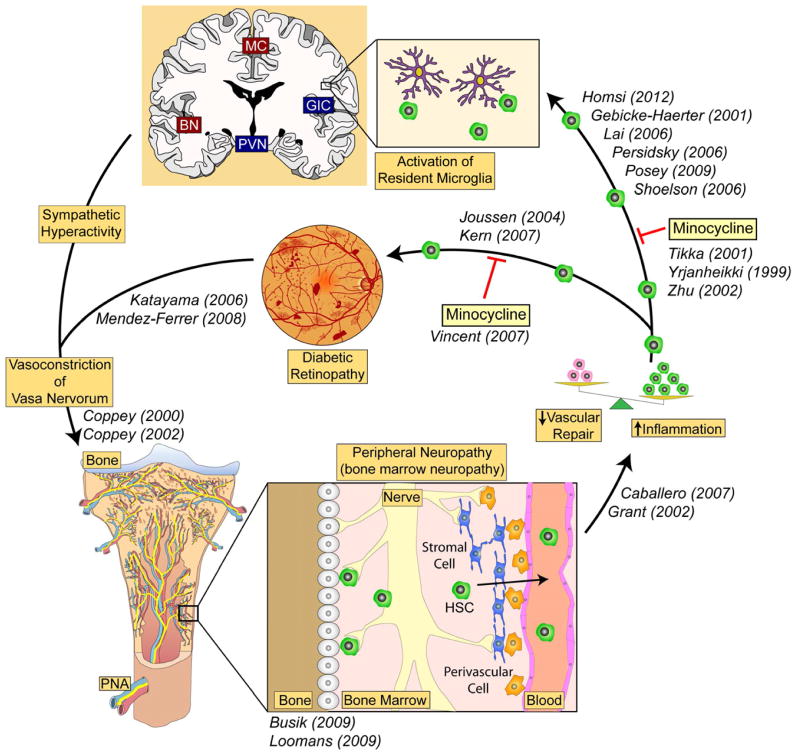
Our hypothesis suggests a strong connection between the bone marrow and CNS and retina. An imbalance in the bone marrow leads to too many monocytes being produced and too few reparative endothelial progenitors. The inflammatory cells extravasate and promote local activation of resident microglia in the retina and brain contributing to both CNS and retinal pathology. Specific CNS centers that regulate the sympathetic nervous system (SNS) make direct connections to the bone marrow while the bone marrow, via the cells it releases, communicates back to these specific SNS centers. CNS inflammation may play a central role, not only in disease process such as neurogenic hypertension and metabolic syndrome, but also in perpetuating the inflammation that plays a critical role in the pathogenesis of diabetic retinopathy. (BN = basal amygdala, GIC = granular insular cortex, MC = middle commissure, PVN = paraventricular nucleus of hypothalamus)

References

    1. Afzal A, Shaw LC, Ljubimov AV, Boulton ME, Segal MS, Grant MB. Retinal and choroidal microangiopathies: therapeutic opportunities. Microvasc Res. 2007;74:131–144. - PubMed
    1. Amin AR, Attur MG, Thakker GD, Patel PD, Vyas PR, Patel RN, Patel IR, Abramson SB. A novel mechanism of action of tetracyclines: effects on nitric oxide synthases. Proc Natl Acad Sci U S A. 1996;93:14014–14019. - PMC - PubMed
    1. Arauz-Pacheco C, Ramirez LC, Pruneda L, Sanborn GE, Rosenstock J, Raskin P. The effect of the aldose reductase inhibitor, ponalrestat, on the progression of diabetic retinopathy. J Diabetes Complications. 1992;6:131–137. - PubMed
    1. Arevalo JF, Fromow-Guerra J, Sanchez JG, Maia M, Berrocal MH, Wu L, Saravia MJ, Costa RA. Primary intravitreal bevacizumab for subfoveal choroidal neovascularization in age-related macular degeneration: results of the Pan-American Collaborative Retina Study Group at 12 months follow-up. Retina. 2008;28:1387–1394. - PubMed
    1. Arvanitakis Z, Wilson RS, Bienias JL, Evans DA, Bennett DA. Diabetes mellitus and risk of Alzheimer disease and decline in cognitive function. Arch Neurol. 2004a;61:661–666. - PubMed

Publication types

MeSH terms

Substances