


As an independent unfavorable prognostic factor, IL-8 promotes metastasis of nasopharyngeal carcinoma through induction of epithelial-mesenchymal transition and activation of AKT signaling
- PMID: 22610073
- PMCID: PMC3405654
- DOI: 10.1093/carcin/bgs181
As an independent unfavorable prognostic factor, IL-8 promotes metastasis of nasopharyngeal carcinoma through induction of epithelial-mesenchymal transition and activation of AKT signaling
Abstract
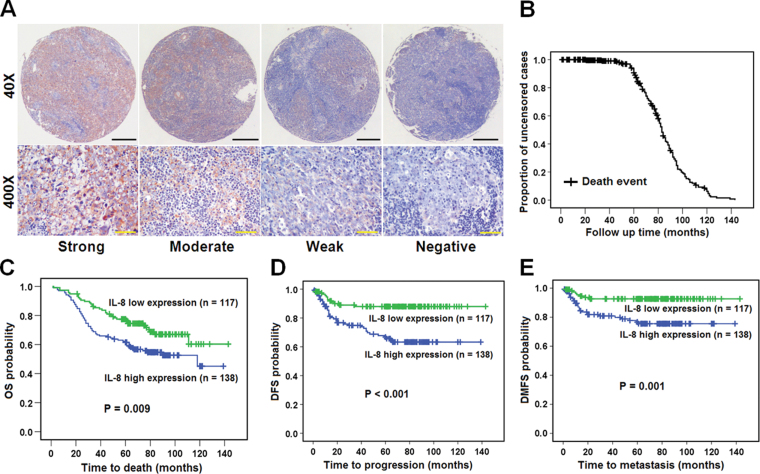
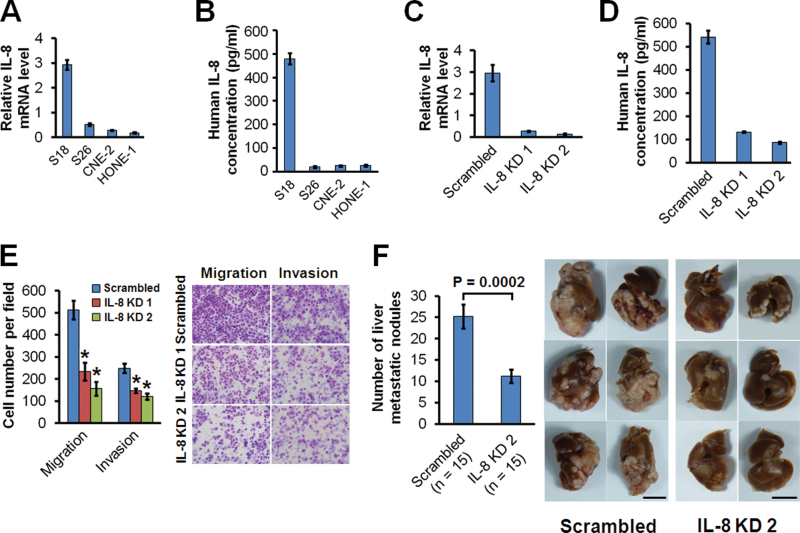
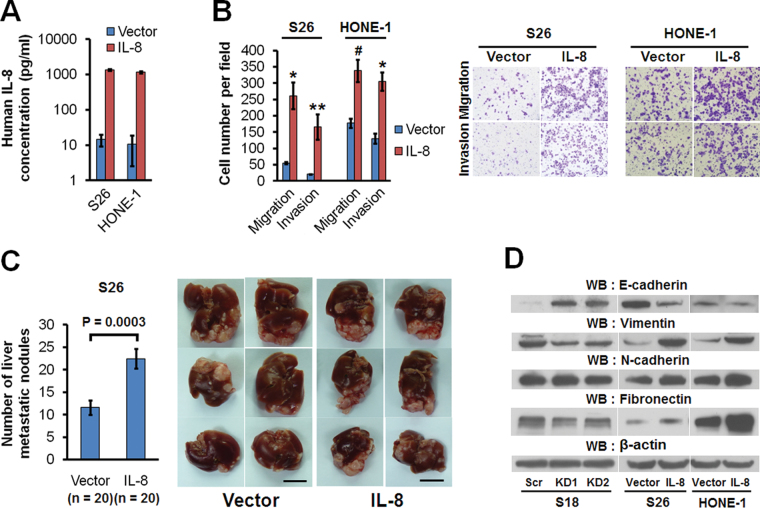
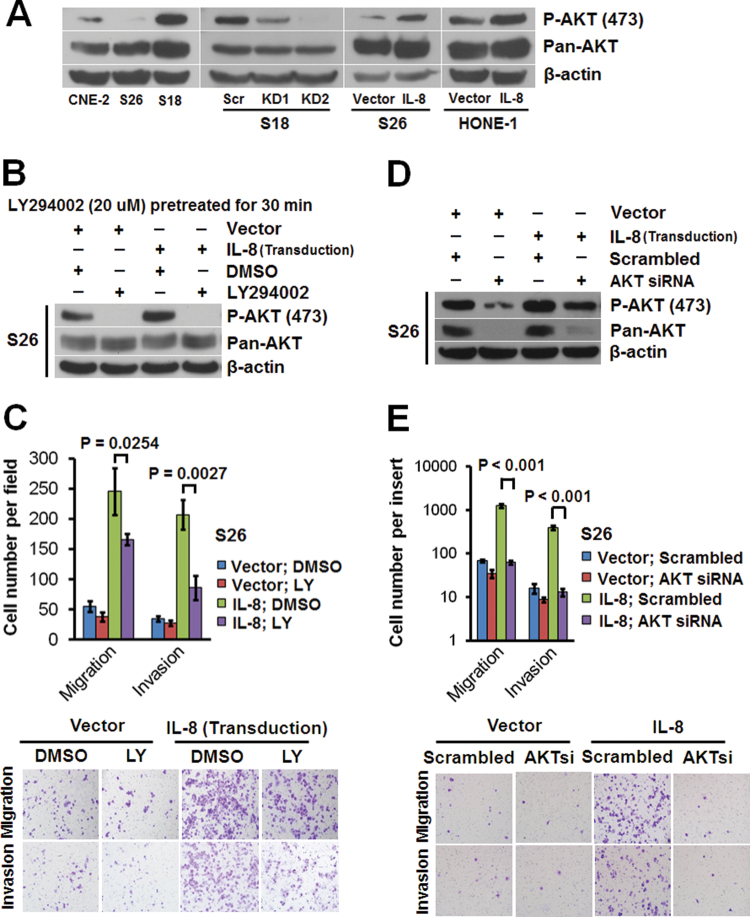
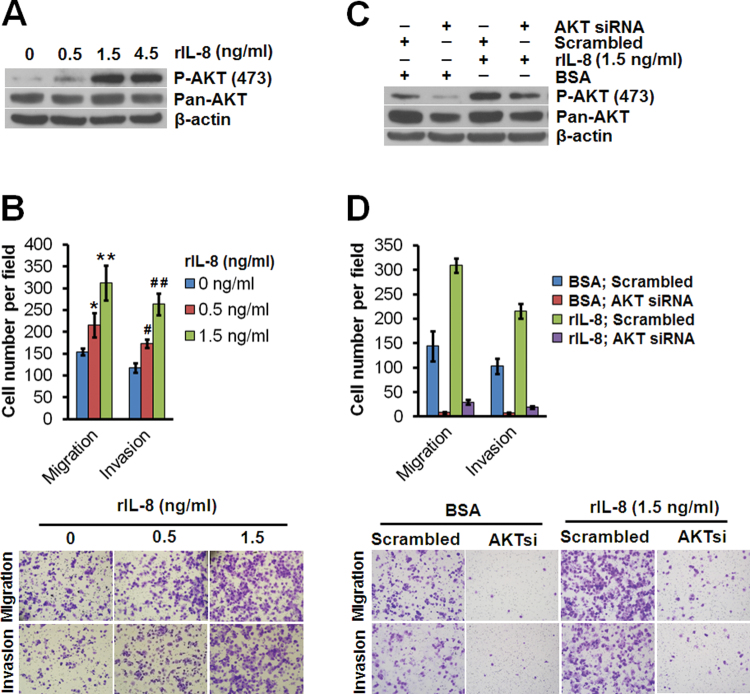
Nasopharyngeal carcinoma (NPC) has the highest metastatic potential among head and neck cancers. Distant metastasis is the major cause of treatment failure. The role of interleukin-8 (IL-8) in NPC progression remains unknown. Our multivariate survival analyses of 255 patients with NPC revealed that higher IL-8 expression in primary NPC tissue was an independent prognostic factor for overall survival, disease-free survival, and distant metastasis-free survival of the patients. In vitro study revealed that IL-8 was highly expressed in the established high-metastasis NPC clone S18 relative to the low-metastasis cells. Suppression of IL-8 by short-hairpin RNA reduced the expression of IL-8 in S18 cells and subsequently inhibited migration, invasion, and hepatic metastasis of the cells without influencing cellular growth. Overexpression of IL-8 in S26 cells resulted in increased migration, invasion, and metastasis capabilities of the cells without affecting cellular growth. Exogenous IL-8 enhanced the migration and invasion of low-metastasis CNE-2 cells in a dose-dependent manner. An epithelial-mesenchymal transition (EMT) could be induced by IL-8 in various NPC cell lines. The high level of phosphorylated AKT in S18 cells could be suppressed by knocking down IL-8 expression. Further, IL-8-promoted migration and invasion could be abolished by either the application of the phosphoinositide-3-kinase inhibitor LY294002 or the knock down of AKT expression by using small-interfering RNA. In summary, IL-8 serves as an independent prognostic indicator of overall survival, disease-free survival, and metastasis-free survival for patients with NPC. IL-8 promotes NPC metastasis via autocrine and paracrine means, involving activation of AKT signaling and inducing EMT in NPC cells.
Figures
References
-
- Wee, J.T.,, et al. Is nasopharyngeal cancer really a “Cantonese cancer”? Chin. J. Cancer, (2010);29,:517–526. - PubMed
-
- Ahmad, A.,, et al. Distant metastases of nasopharyngeal carcinoma: a study of 256 male patients. J. Surg. Oncol., (1986);33,:194–197. - PubMed
-
- Geara, F.B.,, et al. Carcinoma of the nasopharynx treated by radiotherapy alone: determinants of distant metastasis and survival. Radiother Oncol, (1997);43,:53–61. - PubMed
-
- Lee, A.W.,, et al. Retrospective analysis of patients with nasopharyngeal carcinoma treated during 1976–1985: survival after local recurrence. Int. J. Radiat. Oncol. Biol. Phys., (1993);26,:773–782. - PubMed
Publication types
MeSH terms
Substances
LinkOut - more resources
Full Text Sources
Research Materials
