


doi: 10.1016/j.ijnonlinmec.2011.09.025.
Epub 2011 Sep 22.
Modeling and numerical simulation of blood flow using the Theory of Interacting Continua
Affiliations
- PMID: 22611284
- PMCID: PMC3352667
- DOI: 10.1016/j.ijnonlinmec.2011.09.025
Item in Clipboard
Modeling and numerical simulation of blood flow using the Theory of Interacting Continua
Int J Non Linear Mech.
.
Abstract
In this paper we use a modified form of the mixture theory developed by Massoudi and Rajagopal to study the blood flow in a simple geometry, namely flow between two plates. The blood is assumed to behave as a two-component mixture comprised of plasma and red blood cells (RBCs). The plasma is assumed to behave as a viscous fluid whereas the RBCs are given a granular-like structure where the viscosity also depends on the shear-rate.
Figures
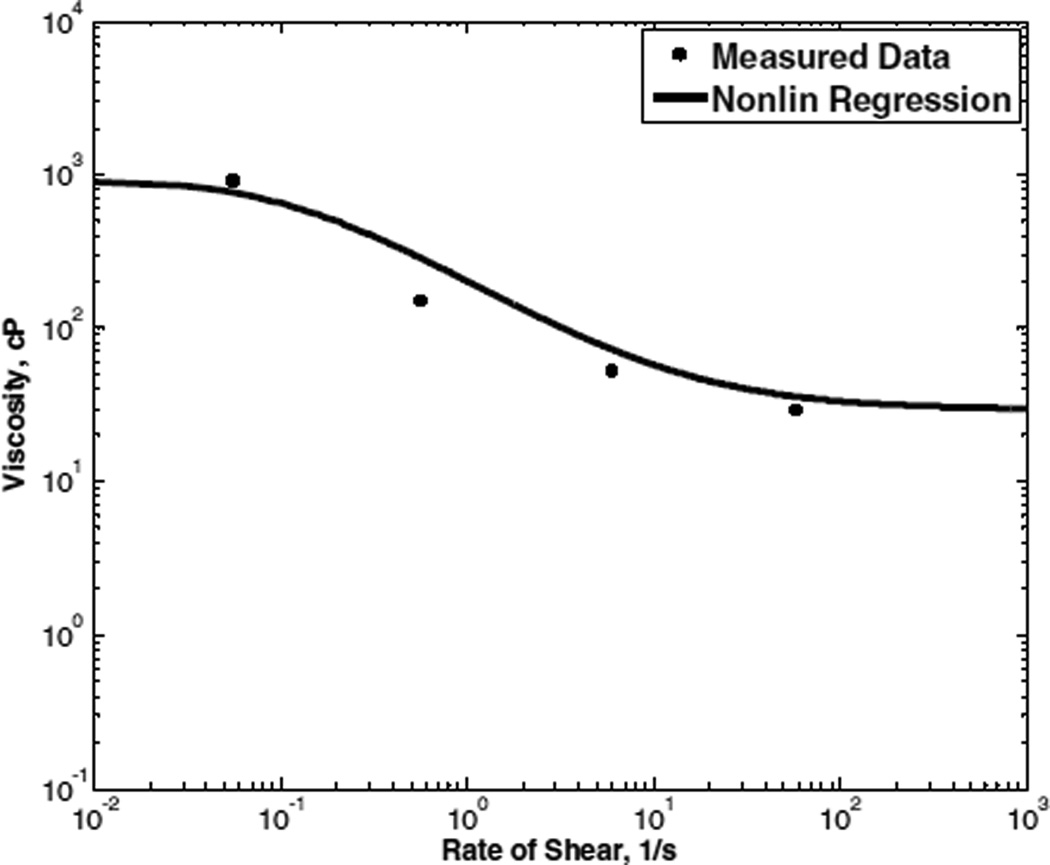
Shear thinning model for viscosity of RBC phase, calibrated to experimental data of Chien et al (1966) (Chien, Usami et al. 1966) for 90% Ht.
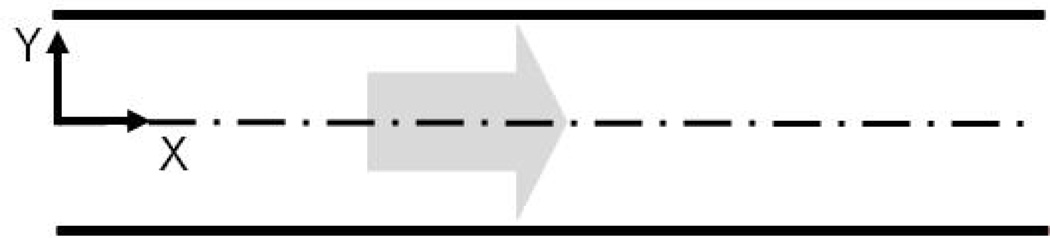
Flow between parallel plates located at Y=−1 and Y=1.
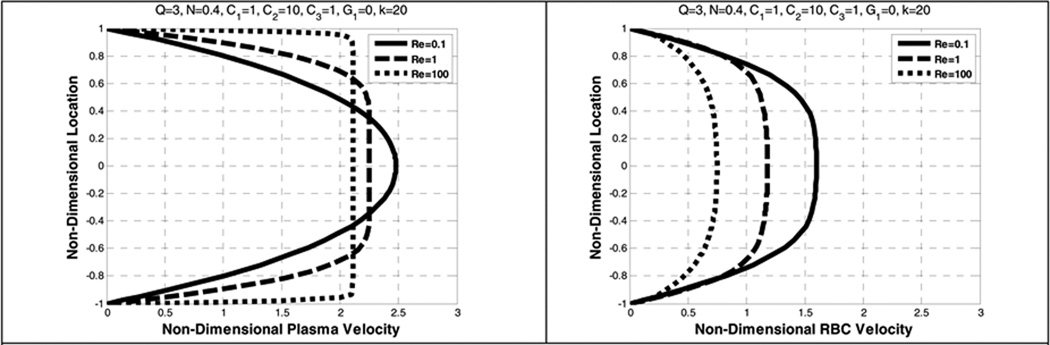
Effect of Reynolds number (Re) on the plasma velocity (left) and the RBC velocity (right)
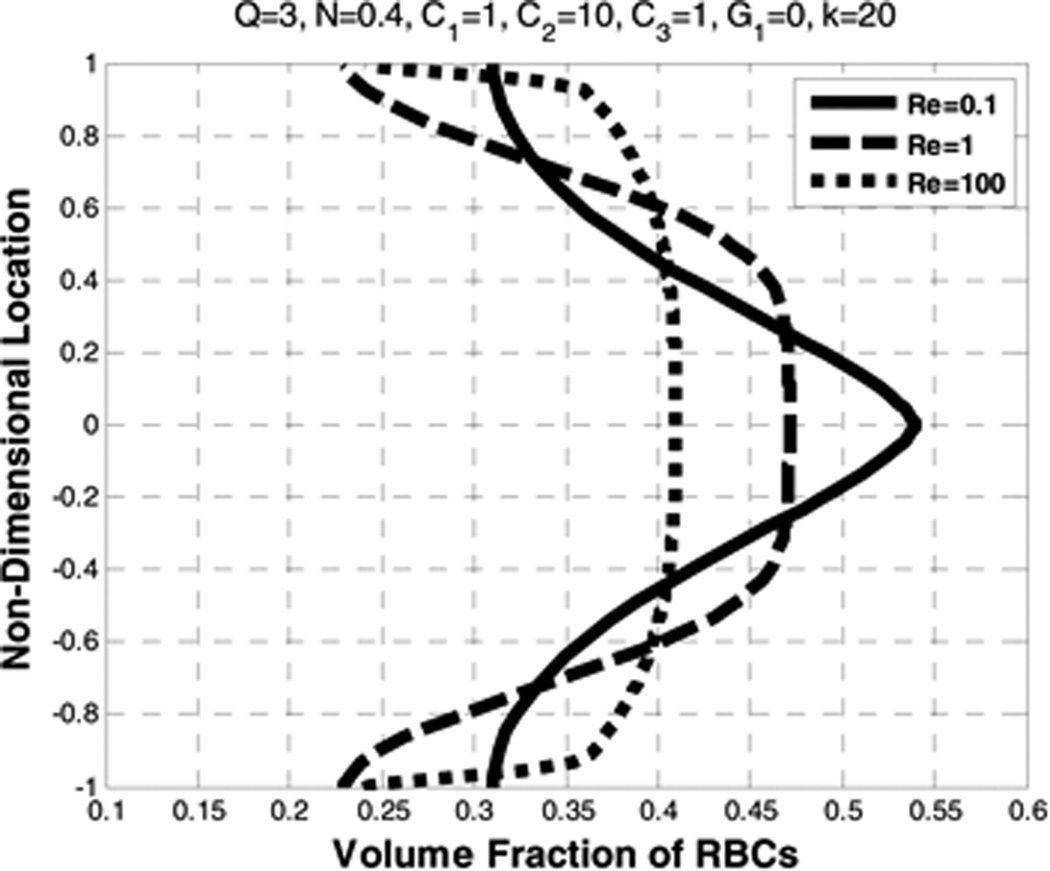
Effect of Reynolds number (Re) on the volume fraction of RBCs
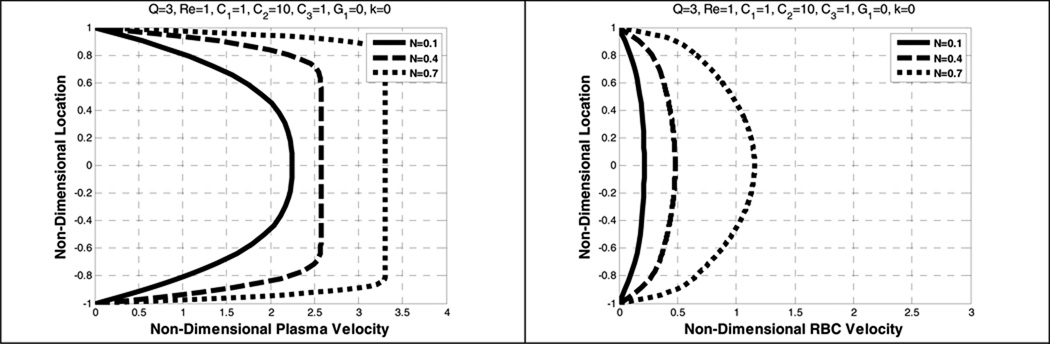
Effect of average volume fraction (N) on the plasma velocity (left) and the RBC velocity (right), without shear-thinning
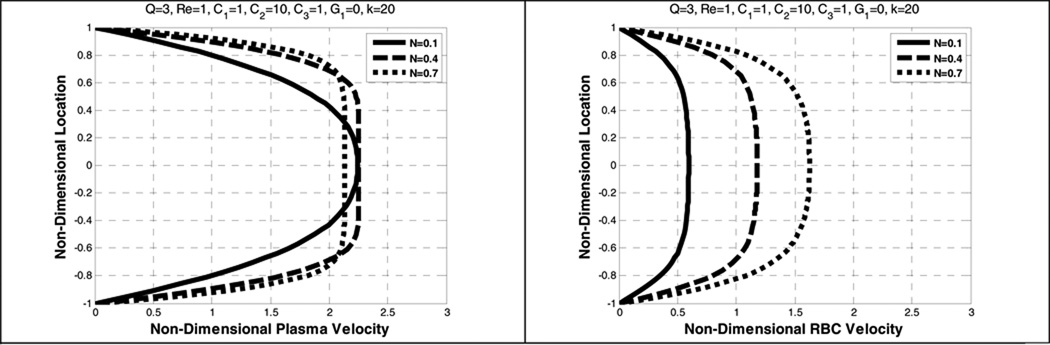
Effect of average volume fraction (N) on the plasma velocity (left) and the RBC velocity (right) with shear-thinning
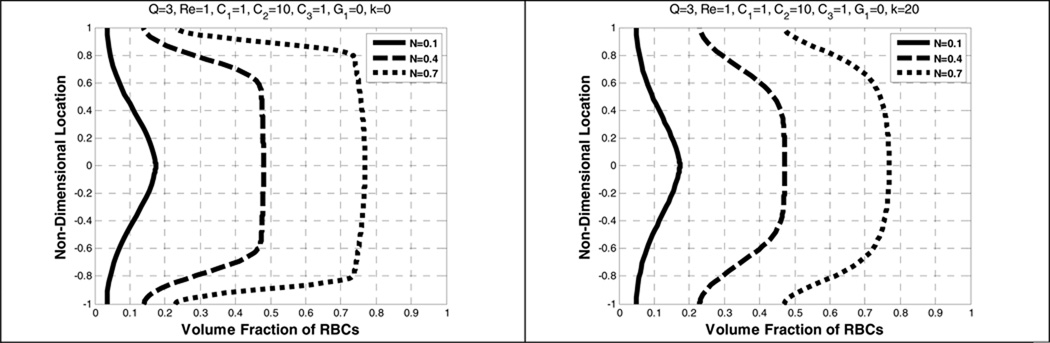
Effect of average volume fraction (N) on the volume fraction of RBCs without a shear-thinning (left) and with a shear-thinning (right)
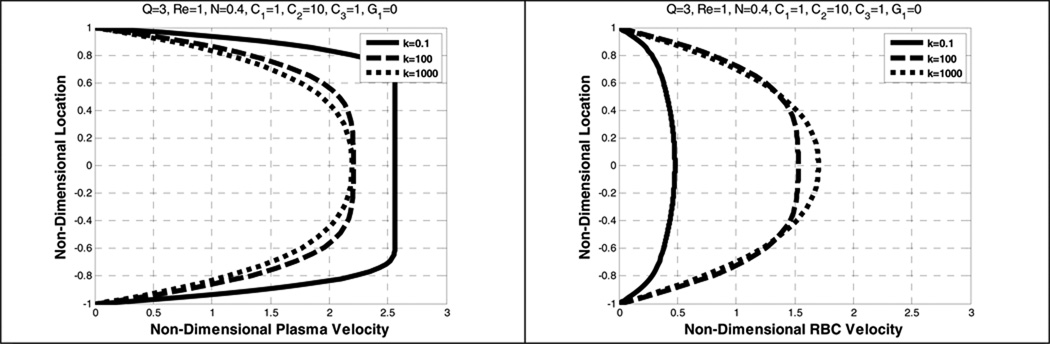
Effect of the material constant (κ) on the plasma velocity (left) and the RBC velocity (right).
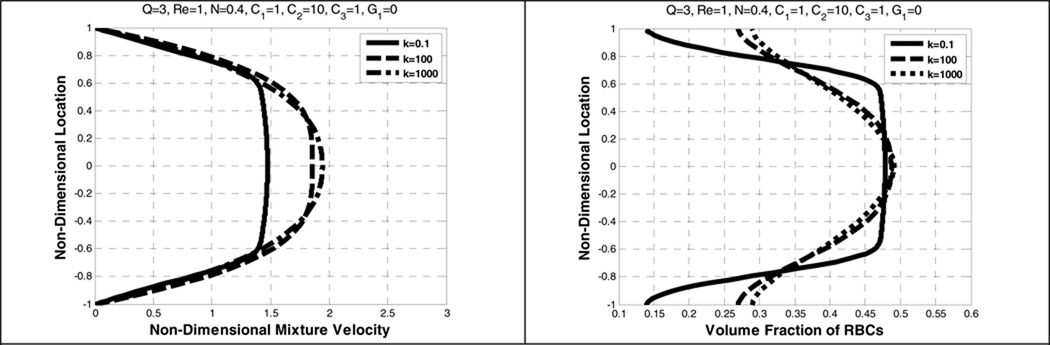
Effect of the material constant (κ) on the mean velocity of the mixture and the volume fraction of RBCs
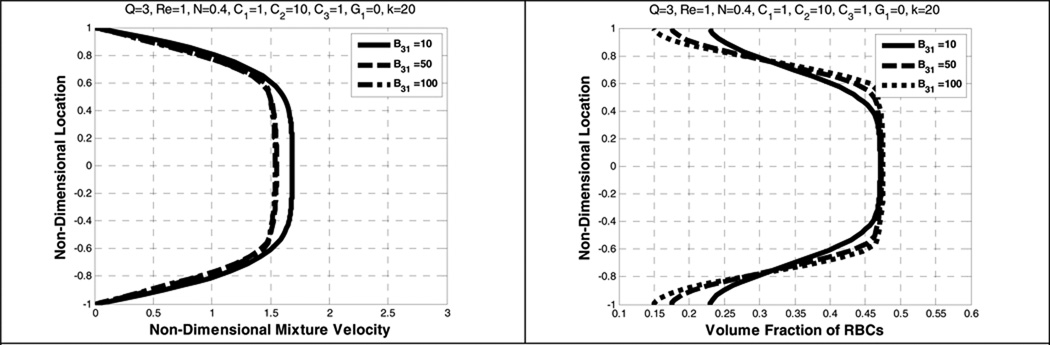
Effect of B31 on the mixture velocity (left) and the volume fraction of RBCs (right).
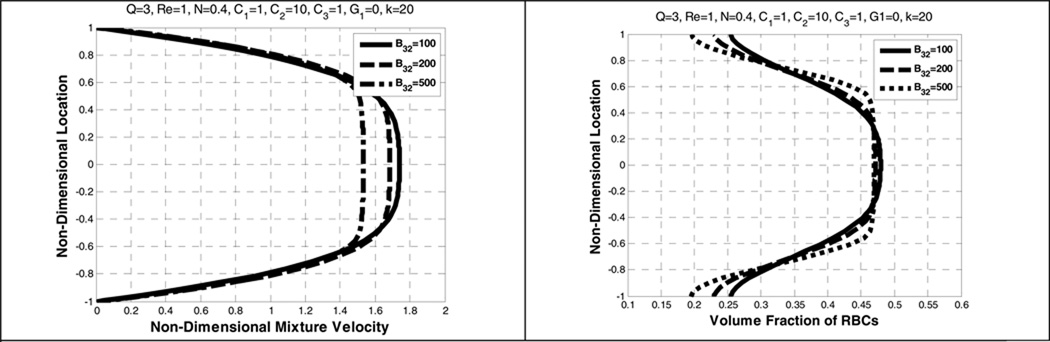
Effect of B32 on the mixture velocity (left) and the volume fraction of RBCs (right).
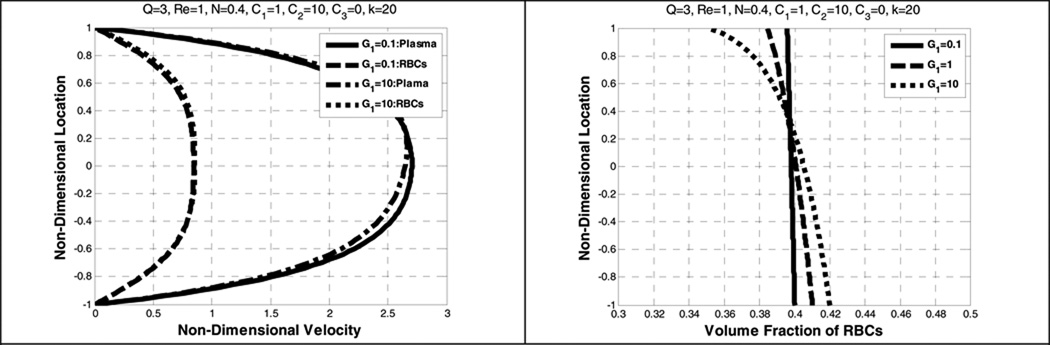
Effect of dimensionless gravity (G1) on the plasma and RBC velocity profiles (left) and the volume fraction of RBCs (right)
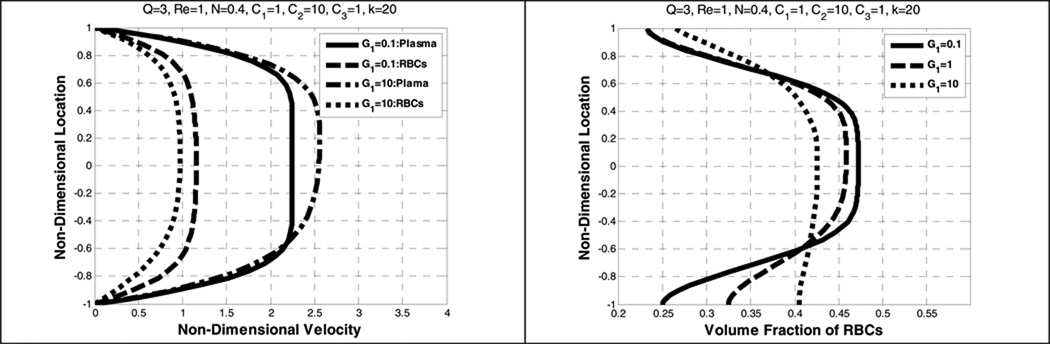
Effect of combination of dimensionless gravity and shear lift on plasma and RBC velocity profile (left) and the volume fraction of RBCs (right)
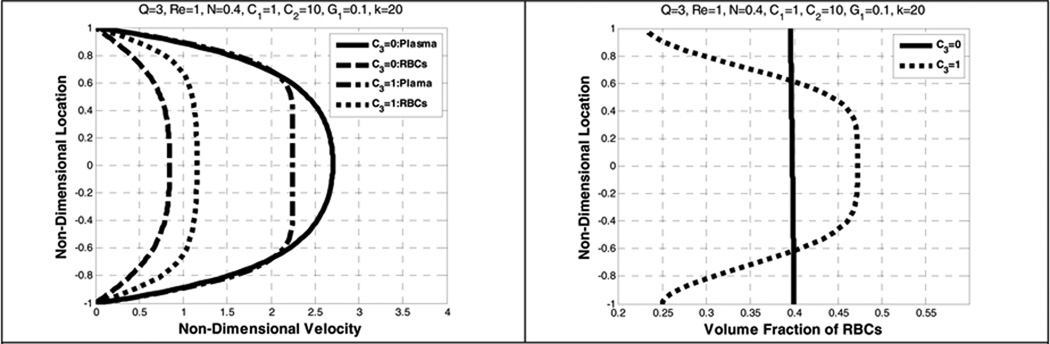
Effect of lift coefficient (C3) on the plasma and RBC velocities (left) and the volume fraction of RBCs (right)
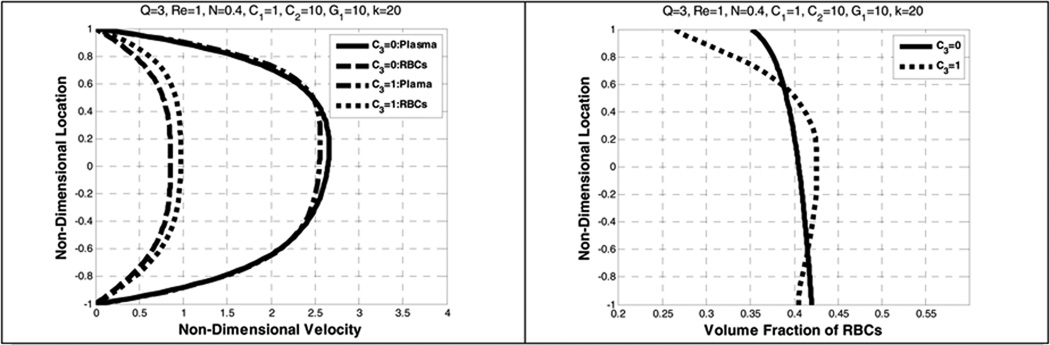
Effect of lift coefficient (C3) on the plasma and RBC velocities (left) and the volume fraction of RBCs (right)
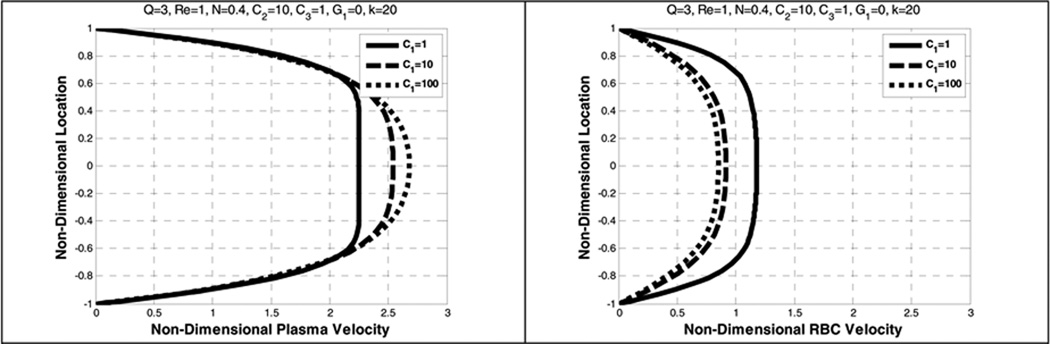
Effect of density gradient coefficient (C1) on the plasma velocity (left) and the RBC velocity (right).
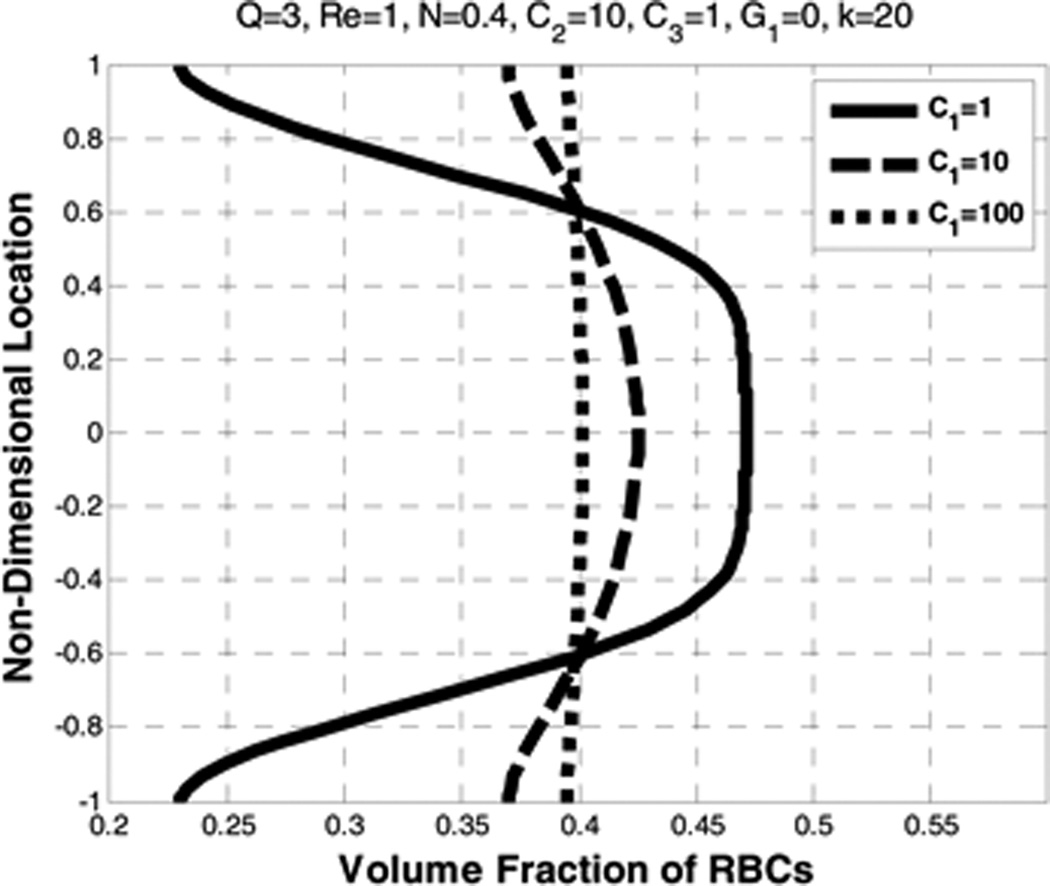
Effect of density gradient coefficient (C1) on the volume fraction of RBCs
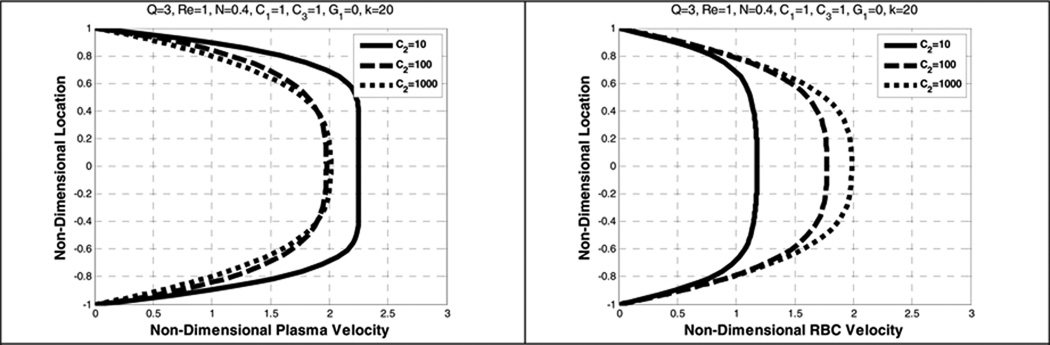
Effect of drag coefficient (C2) on the plasma velocity (left) and the RBC velocity (right)
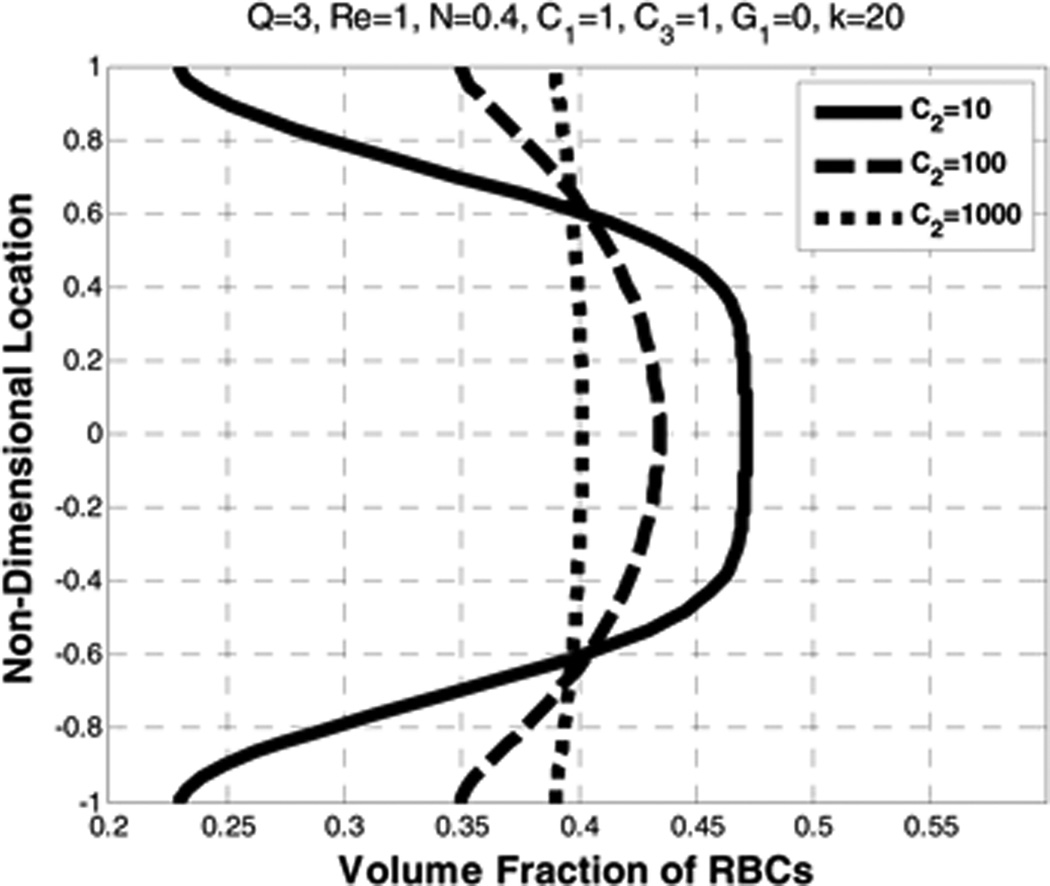
Effect of drag coefficient (C2) on the volume fraction of RBCs
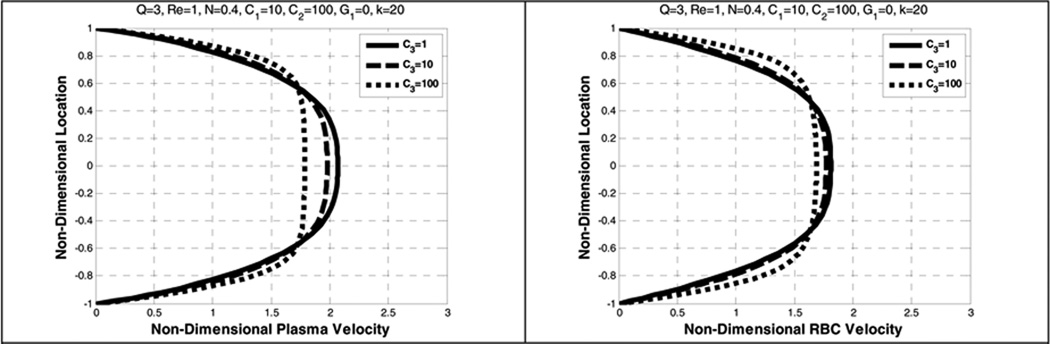
Effect of lift coefficient (C3) on the plasma velocity (left) and the RBC velocity (right)
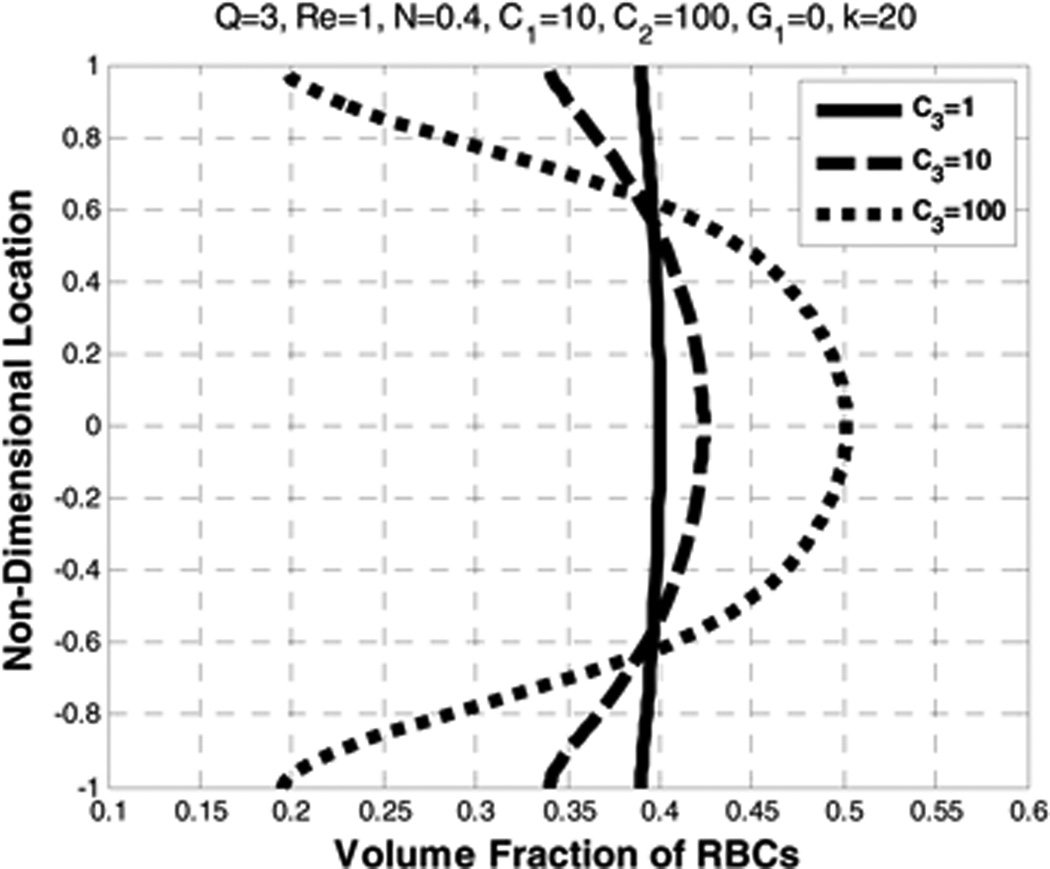
Effect of lift coefficient (C3) on the volume fraction of RBCs
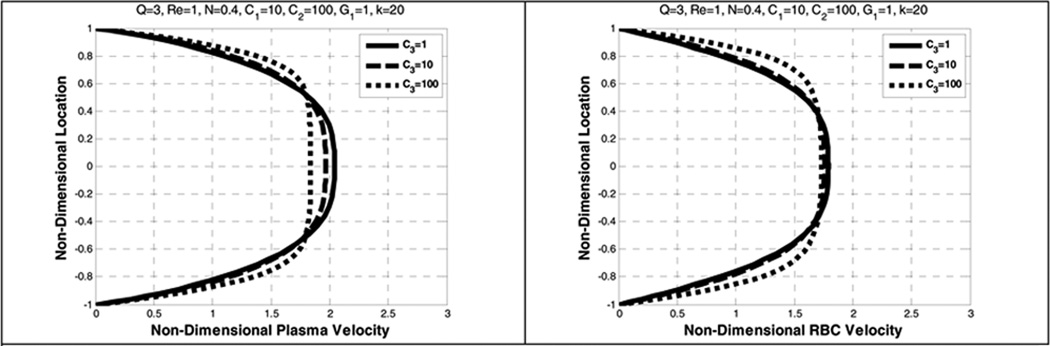
Effect of lift coefficient (C3) on the plasma velocity (left) and the RBC velocity (right)
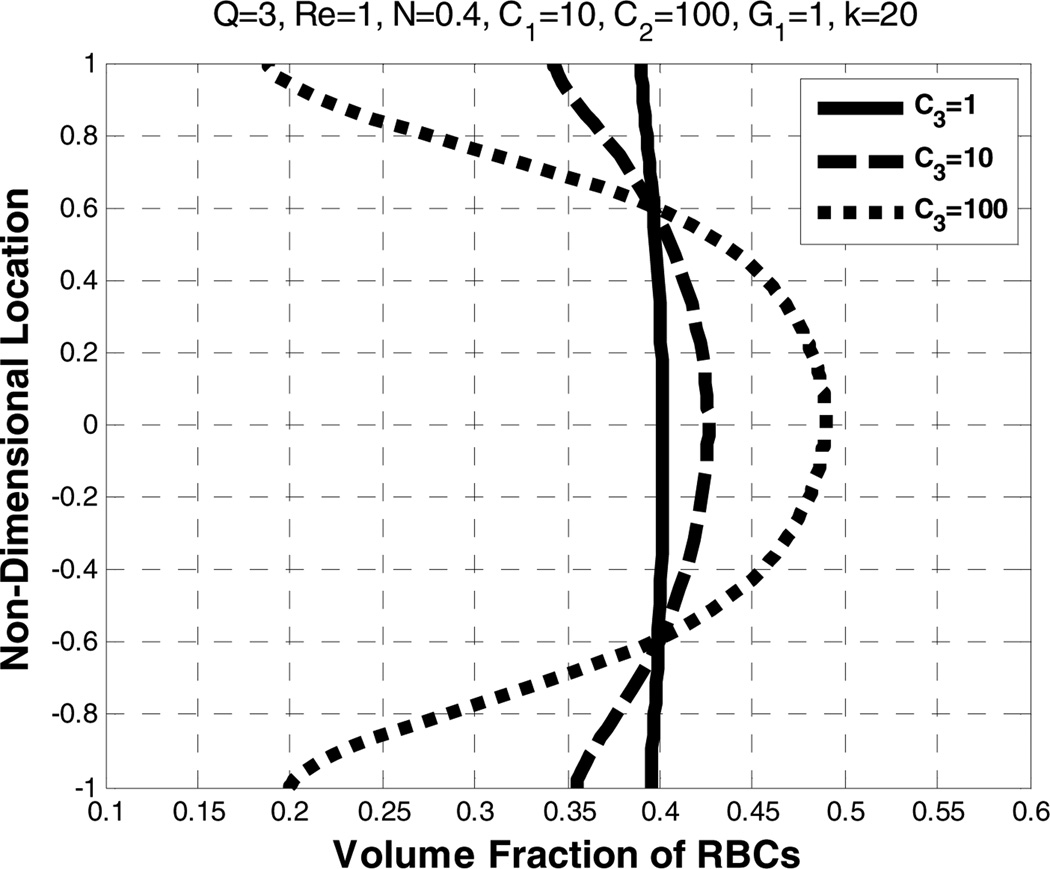
Effect of lift coefficient (C3) on the volume fraction of RBCs
References
-
- Aarts P, Vandenbroek SAT, et al. Blood-platelets are concentrated near the wall and red blood-cells, in the center in flowing blood. Arteriosclerosis. 1988;8(6):819–824. - PubMed
-
- Adkins JE. Non-Linear Diffusion, 1. Diffusion and Flow of Mixtures of Fluids. Phil. Trans. Roy. Soc. London A. 1963;255:607–633.
-
- Adkins JE. Non-Linear Diffusion, 2. Constitutive Equations for Mixtures of Isotropic Fluids. Phil. Trans. Roy. Soc. London A. 1963;255:635–648.
-
- Anderson TB, Jackson R. A fluid mechanical description of fluidized beds. Industrial & Engineering Chemistry Fundamentals. 1967;6(4) 527-&.
-
- Araujo RP, Mcelwain DLS. A mixture theory for the genesis of residual stresses in growing tissues I. Siam Journal on Applied Mathematics. 2005;65 1261-
Grants and funding
LinkOut - more resources
Full Text Sources