


Are you in or out? Leukocyte, ion, and neurotransmitter permeability across the epileptic blood-brain barrier
- PMID: 22612806
- PMCID: PMC4093790
- DOI: 10.1111/j.1528-1167.2012.03472.x
Are you in or out? Leukocyte, ion, and neurotransmitter permeability across the epileptic blood-brain barrier
Abstract
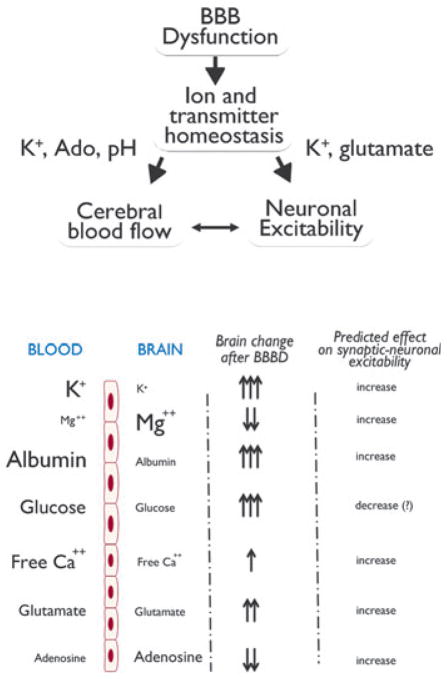
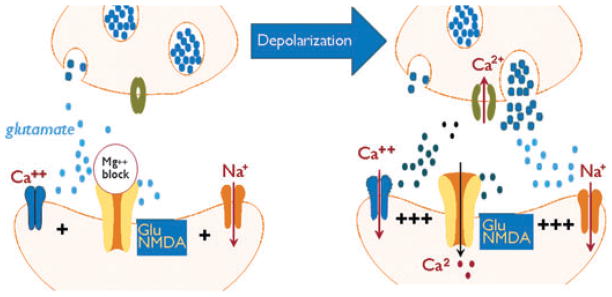
The credo that epileptic seizures can be initiated only by "epileptic" neurons has been recently challenged. The recognition of key astrocytic-neuronal communication, and the close interaction and crosstalk between astrocytes and brain endothelial cells, has shifted attention to the blood-brain barrier (BBB) and the "neurovascular unit." Therefore, the pursuit of mechanisms of seizure generation and epileptogenesis now includes investigations of cerebral blood flow and permeability of cerebral microvessels. For example, leukocyte adhesion molecules at the BBB have been proposed to play a role as an initiating factor for pilocarpine-induced status epilepticus, and a viral infection model with a strong BBB etiology has been used to study epileptogenesis. Finally, the fact that in nonepileptic subjects seizures can be triggered by BBB disruption, together with the antiseizure effects obtained by administration of potent antiinflammatory "BBB repair" drugs, has increased the interest in neuroinflammation; both circulating leukocytes and resident microglia have been studied in this context. The dual scope of this review is the following: (1) outline the proposed role of BBB damage and immune cell activation in seizure disorders; and (2) explain how increased cerebrovascular permeability causes neuronal misfiring. The temporal sequence linking seizures to peripheral inflammation and BBB dysfunction remains to be clarified. For example, it is still debated whether seizures cause systemic inflammation or vice versa. The topographic localization of fundamental triggers of epileptic seizures also remains controversial: Are immunologic mechanisms required for seizure generation brain-specific or is systemic activation of immunity sufficient to alter neuronal excitability? Finally, the causative role of "BBB leakage" remains a largely unresolved issue.
Wiley Periodicals, Inc. © 2012 International League Against Epilepsy.
Conflict of interest statement
The author has no conflicts of interest to disclose.
I confirm that I have read the Journal’s position on issues involved in ethical publication and affirm that this report is consistent with those guidelines.
Figures
References
-
- Aaslid R. Cerebral autoregulation and vasomotor reactivity. Front Neurol Neurosci. 2006;21:216–228. - PubMed
-
- Asconape JJ, Penry JK. Poststroke seizures in the elderly. Clin Geriatr Med. 1991;7:483–492. - PubMed
-
- Beghi E, Shorvon S. Antiepileptic drugs and the immune system. Epilepsia. 2011;52:40–44. - PubMed
