


Apolipoprotein E controls cerebrovascular integrity via cyclophilin A
- PMID: 22622580
- PMCID: PMC4047116
- DOI: 10.1038/nature11087
Apolipoprotein E controls cerebrovascular integrity via cyclophilin A
Erratum in
-
Author Correction: Apolipoprotein E controls cerebrovascular integrity via cyclophilin A.Nature. 2023 May;617(7961):E12. doi: 10.1038/s41586-023-06118-0. Nature. 2023. PMID: 37142785 No abstract available.
Abstract
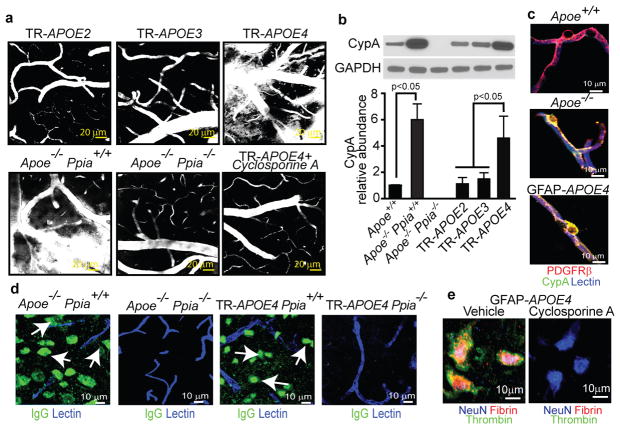
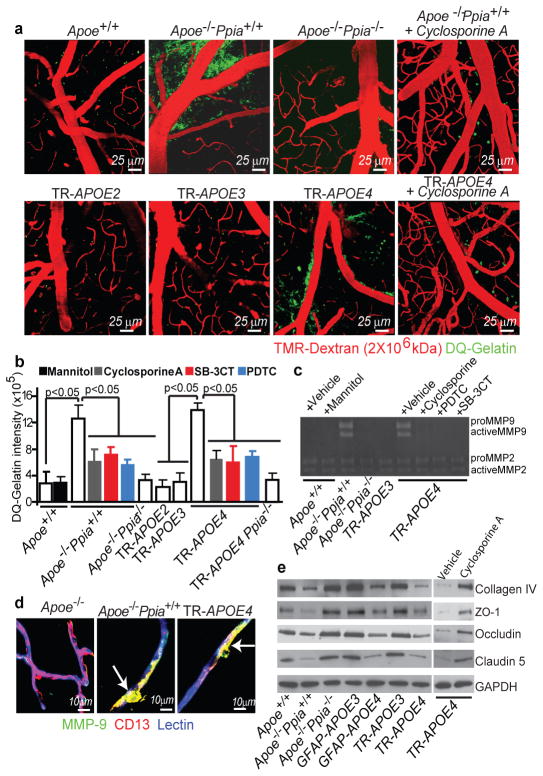
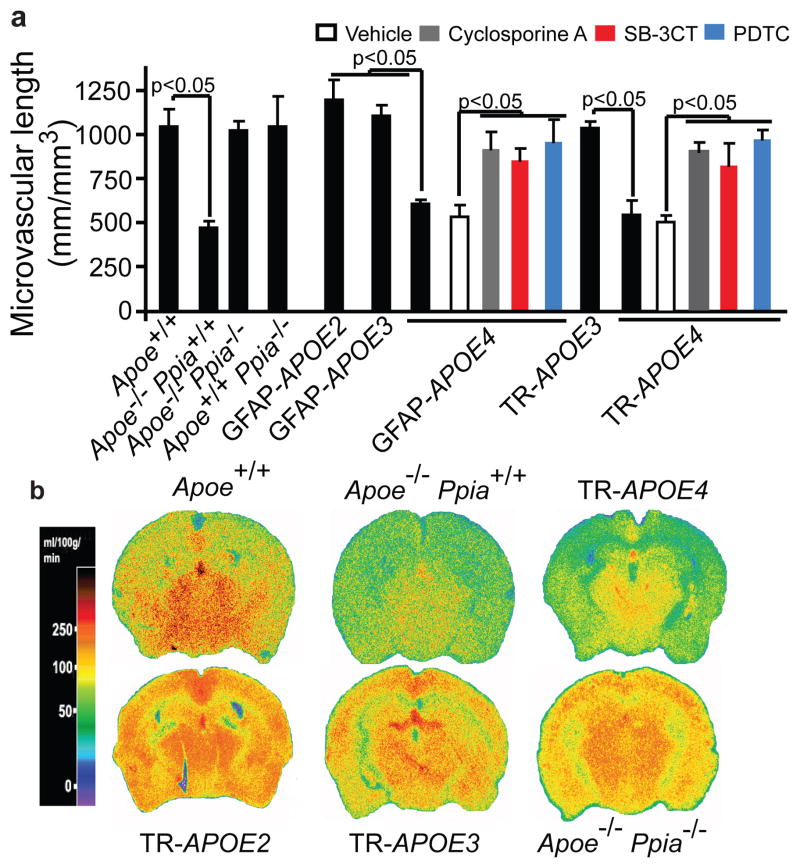
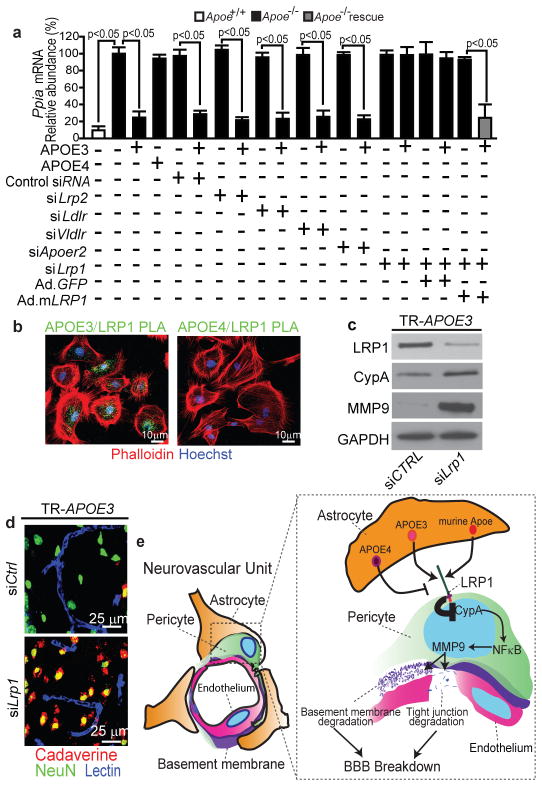
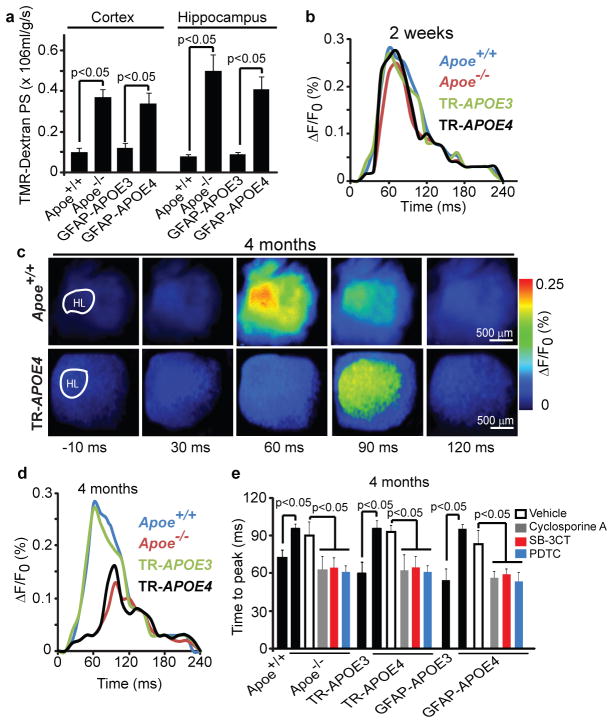
Human apolipoprotein E has three isoforms: APOE2, APOE3 and APOE4. APOE4 is a major genetic risk factor for Alzheimer's disease and is associated with Down's syndrome dementia and poor neurological outcome after traumatic brain injury and haemorrhage. Neurovascular dysfunction is present in normal APOE4 carriers and individuals with APOE4-associated disorders. In mice, lack of Apoe leads to blood-brain barrier (BBB) breakdown, whereas APOE4 increases BBB susceptibility to injury. How APOE genotype affects brain microcirculation remains elusive. Using different APOE transgenic mice, including mice with ablation and/or inhibition of cyclophilin A (CypA), here we show that expression of APOE4 and lack of murine Apoe, but not APOE2 and APOE3, leads to BBB breakdown by activating a proinflammatory CypA-nuclear factor-κB-matrix-metalloproteinase-9 pathway in pericytes. This, in turn, leads to neuronal uptake of multiple blood-derived neurotoxic proteins, and microvascular and cerebral blood flow reductions. We show that the vascular defects in Apoe-deficient and APOE4-expressing mice precede neuronal dysfunction and can initiate neurodegenerative changes. Astrocyte-secreted APOE3, but not APOE4, suppressed the CypA-nuclear factor-κB-matrix-metalloproteinase-9 pathway in pericytes through a lipoprotein receptor. Our data suggest that CypA is a key target for treating APOE4-mediated neurovascular injury and the resulting neuronal dysfunction and degeneration.
Figures
Comment in
-
Alzheimer's disease: A breach in the blood-brain barrier.Nature. 2012 May 23;485(7399):451-2. doi: 10.1038/485451a. Nature. 2012. PMID: 22622564 No abstract available.
References
Publication types
MeSH terms
Substances
Grants and funding
LinkOut - more resources
Full Text Sources
Other Literature Sources
Medical
Molecular Biology Databases
Miscellaneous
