


Implementation and spread of interventions into the multilevel context of routine practice and policy: implications for the cancer care continuum
- PMID: 22623601
- PMCID: PMC3482959
- DOI: 10.1093/jncimonographs/lgs004
Implementation and spread of interventions into the multilevel context of routine practice and policy: implications for the cancer care continuum
Abstract
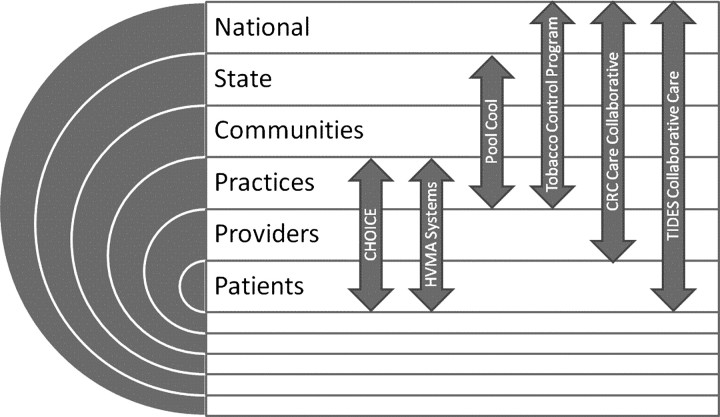
The promise of widespread implementation of efficacious interventions across the cancer continuum into routine practice and policy has yet to be realized. Multilevel influences, such as communities and families surrounding patients or health-care policies and organizations surrounding provider teams, may determine whether effective interventions are successfully implemented. Greater recognition of the importance of these influences in advancing (or hindering) the impact of single-level interventions has motivated the design and testing of multilevel interventions designed to address them. However, implementing research evidence from single- or multilevel interventions into sustainable routine practice and policy presents substantive challenges. Furthermore, relatively few multilevel interventions have been conducted along the cancer care continuum, and fewer still have been implemented, disseminated, or sustained in practice. The purpose of this chapter is, therefore, to illustrate and examine the concepts underlying the implementation and spread of multilevel interventions into routine practice and policy. We accomplish this goal by using a series of cancer and noncancer examples that have been successfully implemented and, in some cases, spread widely. Key concepts across these examples include the importance of phased implementation, recognizing the need for pilot testing, explicit engagement of key stakeholders within and between each intervention level; visible and consistent leadership and organizational support, including financial and human resources; better understanding of the policy context, fiscal climate, and incentives underlying implementation; explication of handoffs from researchers to accountable individuals within and across levels; ample integration of multilevel theories guiding implementation and evaluation; and strategies for long-term monitoring and sustainability.
Figures
References
-
- Bradley EH, Webster TR, Baker D, et al. Translating research into practice: speeding the adoption of innovative health care programs. Issue Brief (Commonw Fund). 2004;724:1–12. - PubMed
-
- Steinbrook R. The potential of human papillomavirus vaccines. N Engl J Med. 2006;354(11):1109–1112. - PubMed
-
- Markman M. Cancer screening: understanding barriers to optimal use of evidence-based strategies. J Womens Health (Larchmt). 2007;16(1):9–10. - PubMed
-
- McKenna H, Ashton S, Keeney S. Barriers to evidence based practice in primary care: a review of the literature. Int J Nurs Stud. 2004;41(4):369–378. - PubMed
