


Epidemiology, policy, and racial/ethnic minority health disparities
- PMID: 22626003
- PMCID: PMC3724931
- DOI: 10.1016/j.annepidem.2012.04.018
Epidemiology, policy, and racial/ethnic minority health disparities
Abstract
Purpose: Epidemiologists have long contributed to policy efforts to address health disparities. Three examples illustrate how epidemiologists have addressed health disparities in the United States and abroad through a "social determinants of health" lens.
Methods: To identify examples of how epidemiologic research has been applied to reduce health disparities, we queried epidemiologists engaged in disparities research in the United States, Canada, and New Zealand, and drew upon the scientific literature.
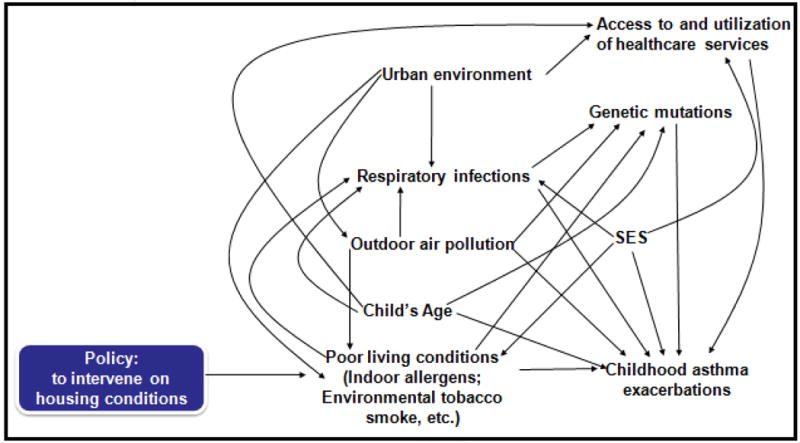
Results: Resulting examples covered a wide range of topic areas. Three areas selected for their contributions to policy were: (1) epidemiology's role in definition and measurement, (2) the study of housing and asthma, and (3) the study of food policy strategies to reduce health disparities. Although epidemiologic research has done much to define and quantify health inequalities, it has generally been less successful at producing evidence that would identify targets for health equity intervention. Epidemiologists have a role to play in measurement and basic surveillance, etiologic research, intervention research, and evaluation research. However, our training and funding sources generally place greatest emphasis on surveillance and etiologic research.
Conclusions: The complexity of health disparities requires better training for epidemiologists to effectively work in multidisciplinary teams. Together we can evaluate contextual and multilevel contributions to disease and study intervention programs to gain better insights into evidenced-based health equity strategies.
Copyright © 2012 Elsevier Inc. All rights reserved.
Figures
References
-
- Brownson RC, Hartge P, Samet JM, Ness RB. From epidemiology to policy: toward more effective practice. Ann Epidemiol. 2010 Jun;20(6):409–411. - PubMed
-
- United States Census Bureau Population Division. Population Projections. U.S. Interim Projections by Age, Sex, Race, and Hispanic Origin:2000-2050
-
- Malone TE, Task Force Members Report of the Secretary's Task Force on Black & Minority Health. [Accessed on April 5, 2012];1985 Available at http://minorityhealth.hhs.gov/assets/pdf/checked/1/ANDERSON.pdf.
-
- Centers for Disease Control and Prevention. Publications and Information Products Health, United States, annual report on trends in health statistics. [Accessed on April 5, 2012]; Available at http://www.cdc.gov/nchs/hus.htm.
Publication types
MeSH terms
Grants and funding
LinkOut - more resources
Full Text Sources
Medical
