


Psychosocial intervention effects on adaptation, disease course and biobehavioral processes in cancer
- PMID: 22627072
- PMCID: PMC3444659
- DOI: 10.1016/j.bbi.2012.05.009
Psychosocial intervention effects on adaptation, disease course and biobehavioral processes in cancer
Abstract
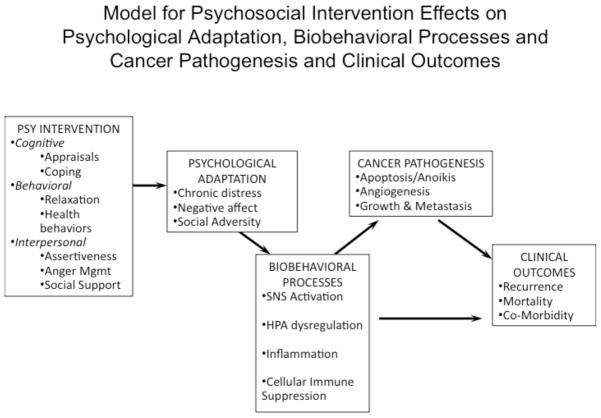
A diagnosis of cancer and subsequent treatments place demands on psychological adaptation. Behavioral research suggests the importance of cognitive, behavioral, and social factors in facilitating adaptation during active treatment and throughout cancer survivorship, which forms the rationale for the use of many psychosocial interventions in cancer patients. This cancer experience may also affect physiological adaptation systems (e.g., neuroendocrine) in parallel with psychological adaptation changes (negative affect). Changes in adaptation may alter tumor growth-promoting processes (increased angiogenesis, migration and invasion, and inflammation) and tumor defense processes (decreased cellular immunity) relevant for cancer progression and the quality of life of cancer patients. Some evidence suggests that psychosocial intervention can improve psychological and physiological adaptation indicators in cancer patients. However, less is known about whether these interventions can influence tumor activity and tumor growth-promoting processes and whether changes in these processes could explain the psychosocial intervention effects on recurrence and survival documented to date. Documenting that psychosocial interventions can modulate molecular activities (e.g., transcriptional indicators of cell signaling) that govern tumor promoting and tumor defense processes on the one hand, and clinical disease course on the other is a key challenge for biobehavioral oncology research. This mini-review will summarize current knowledge on psychological and physiological adaptation processes affected throughout the stress of the cancer experience, and the effects of psychosocial interventions on psychological adaptation, cancer disease progression, and changes in stress-related biobehavioral processes that may mediate intervention effects on clinical cancer outcomes. Very recent intervention work in breast cancer will be used to illuminate emerging trends in molecular probes of interest in the hope of highlighting future paths that could move the field of biobehavioral oncology intervention research forward.
Copyright © 2012 Elsevier Inc. All rights reserved.
Figures
References
Publication types
MeSH terms
Grants and funding
LinkOut - more resources
Full Text Sources
Other Literature Sources
Medical
