. 2012 Feb 21:3:31.
doi: 10.3389/fpls.2012.00031. eCollection 2012.

Evolution of plant p-type ATPases

Affiliations

Evolution of plant p-type ATPases

Christian N S Pedersen et al. Front Plant Sci. .

Abstract

Five organisms having completely sequenced genomes and belonging to all major branches of green plants (Viridiplantae) were analyzed with respect to their content of P-type ATPases encoding genes. These were the chlorophytes Ostreococcus tauri and Chlamydomonas reinhardtii, and the streptophytes Physcomitrella patens (a non-vascular moss), Selaginella moellendorffii (a primitive vascular plant), and Arabidopsis thaliana (a model flowering plant). Each organism contained sequences for all five subfamilies of P-type ATPases. Whereas Na(+) and H(+) pumps seem to mutually exclude each other in flowering plants and animals, they co-exist in chlorophytes, which show representatives for two kinds of Na(+) pumps (P2C and P2D ATPases) as well as a primitive H(+)-ATPase. Both Na(+) and H(+) pumps also co-exist in the moss P. patens, which has a P2D Na(+)-ATPase. In contrast to the primitive H(+)-ATPases in chlorophytes and P. patens, the H(+)-ATPases from vascular plants all have a large C-terminal regulatory domain as well as a conserved Arg in transmembrane segment 5 that is predicted to function as part of a backflow protection mechanism. Together these features are predicted to enable H(+) pumps in vascular plants to create large electrochemical gradients that can be modulated in response to diverse physiological cues. The complete inventory of P-type ATPases in the major branches of Viridiplantae is an important starting point for elucidating the evolution in plants of these important pumps.

Keywords: Na+ pumps; P-type ATPases; evolution; plants; salt tolerance.


Figures
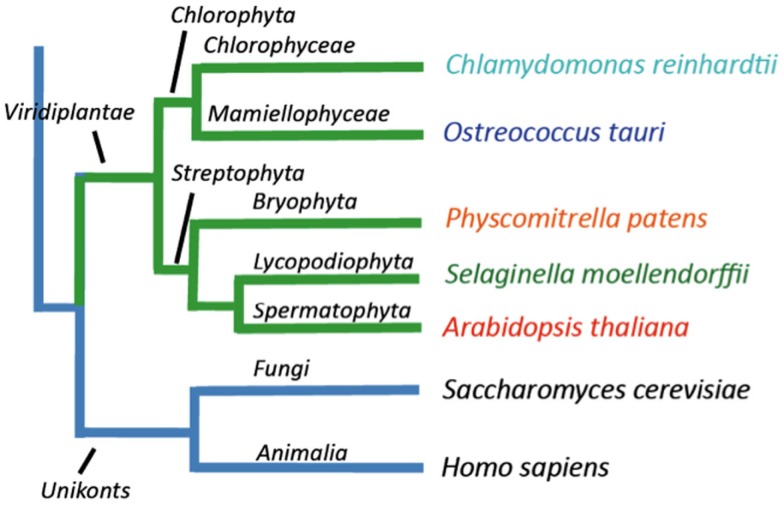
Figure 1
Figure 1
Overview of the evolutionary relationship between the green plant genomes analyzed in this study.
Figure 2
Figure 2
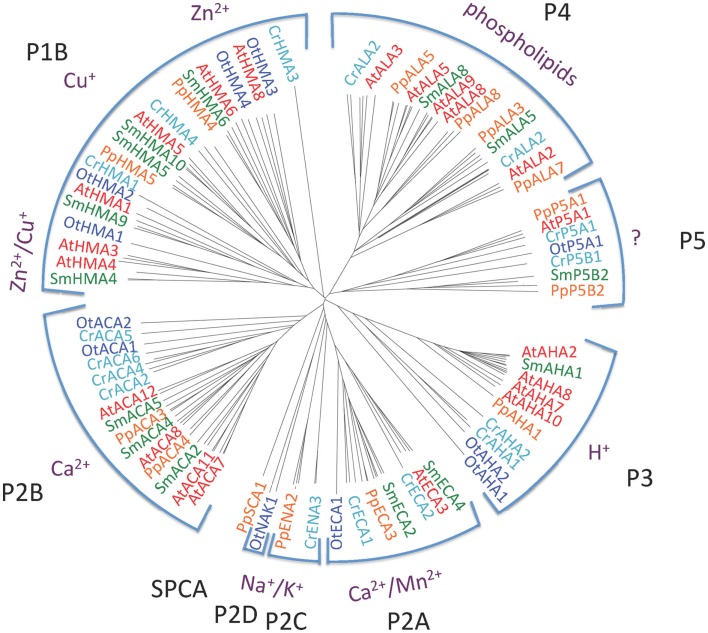
Phylogenetic tree of P-type ATPases analyzed in this study. Not all branches are labeled. Accession numbers for sequences are given in Table 2.
Figure 3
Figure 3
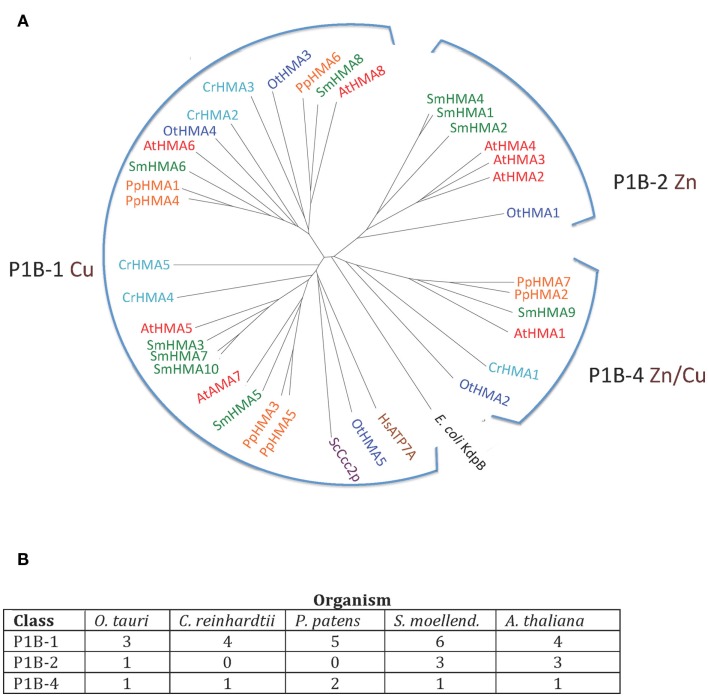
(A) Phylogenetic tree of P1B ATPases (heavy metal pumps) from Viridiplantae. Accession numbers for sequences are given in Table 2. For comparison, the following outliers were included: a bacterial P1A ATPase E. coli KdpB (P03960), and HsATP7A (Q04656), and ScCcc2p (P38995), Cu+ pumps from H. sapiens and S. cerevisiae, respectively. (B) Numbers of P1B ATPases by subgroups (Argüello et al., 2007) in the five plant genomes analyzed.
Figure 4
Figure 4
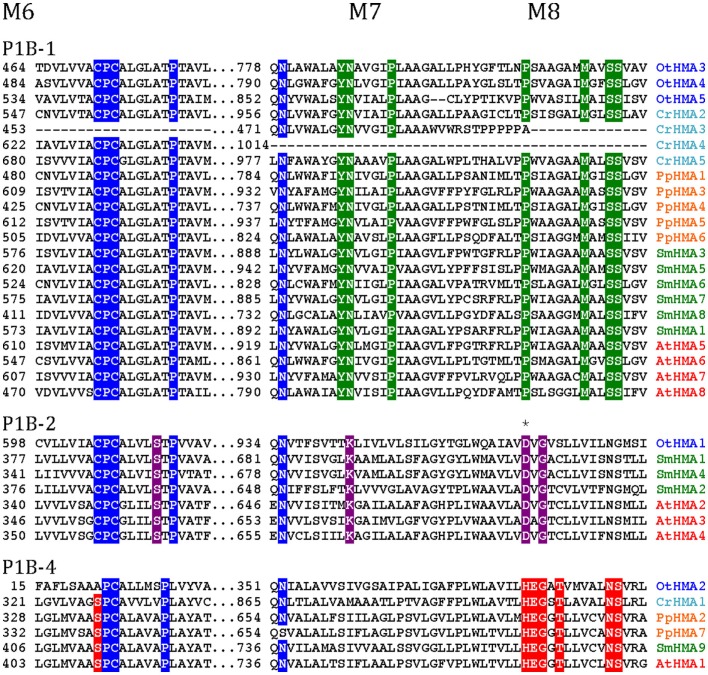
Alignment of three transmembrane segments from Viridiplantae P1B ATPases analyzed in this study. Only the predicted transmembrane segments M6, M7, and M8 are shown. P1B-1: Cu+ transporting ATPases; P1B-2: Zn2+ transporting ATPase: P1B-4: Mixed specificity heavy metal pumps. The asterisk indicates an Asp residue (D) conserved in P1B-2 ATPases, which could be important for coordination of Zn2+ (Dutta et al., 2006).
Figure 5
Figure 5
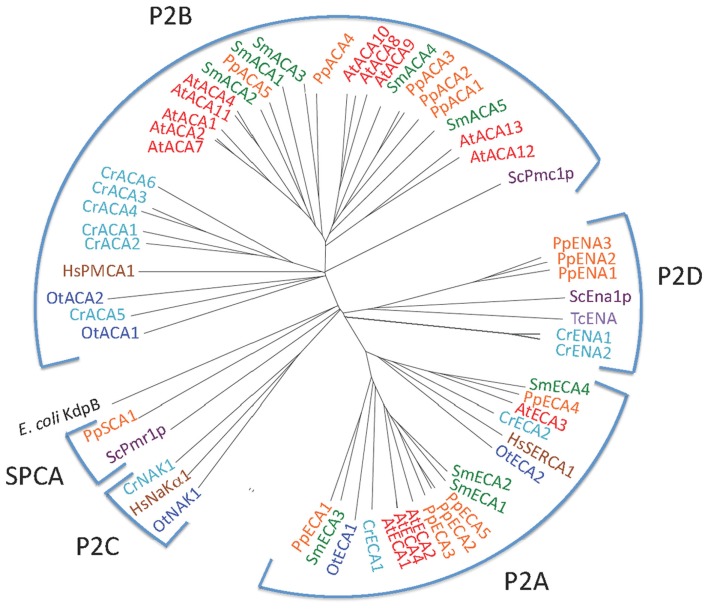
Phylogenetic tree of P2 ATPases (Ca2+ and Na+ pumps). Accession numbers for sequences are given in Table 2. For comparison, the following outliers were included: a bacterial P1A ATPase E. coli KdpB (P03960), the S. cerevisiae pumps ScPmr1p (P13586), ScPmc1p (P38929), and ScEna1p (P13857), the H. sapiens pumps HsPMCA1 (P20200), HsSERCA1 (O14983), and HsNaKα1 (P98194), and the Trypanosoma cruzi pump TcENA (Q76DT8).
Figure 6
Figure 6
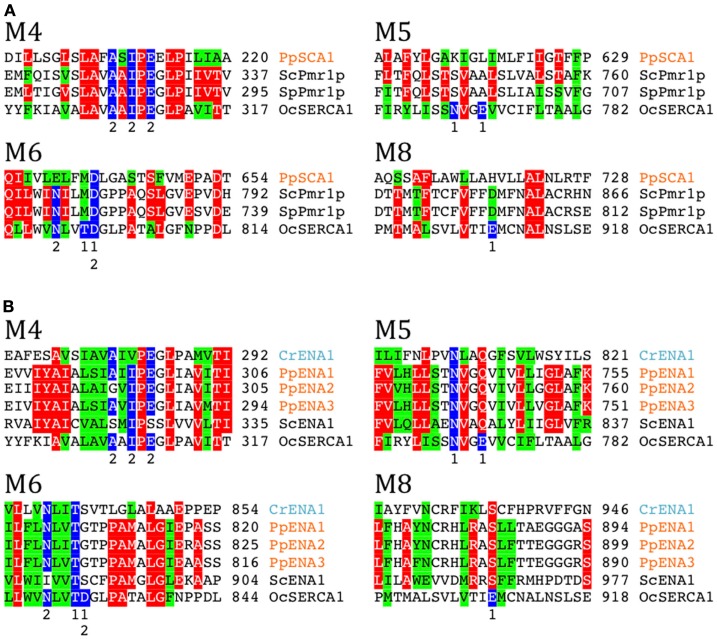
Alignment of transmembrane segments showing differences in a potential cation binding site for selected Ca2+ and Na+ pumps. Secretory pathway Ca2+ATPases (SPCA pumps) and ENA Na+ pumps (P2D ATPases) are missing Ca2+ binding site 1 present in P2A pumps typified by rabbit OcSERCA1 (P04191). In P2A pumps a conserved Asp in M6 contributes to coordination of both Ca2+ ions. (A) Secretory pathway pumps (SPCAs) have a conserved Asp in M6. Fungal examples shown are S. cerevisiae Pmr1p (P13586) and S. pombe Pmr1p (O59868). (B) P2D ATPases (ENA pumps) do not have a conserved Asp in M6 like all other P2 ATPases. Residues contributing with Ca2+ coordinating oxygen molecules in rabbit SERCA1 (Toyoshima et al., 2000) are marked in blue. Only sequences including the predicted transmembrane segments M4, M5, M6, and M8 are shown.
Figure 7
Figure 7
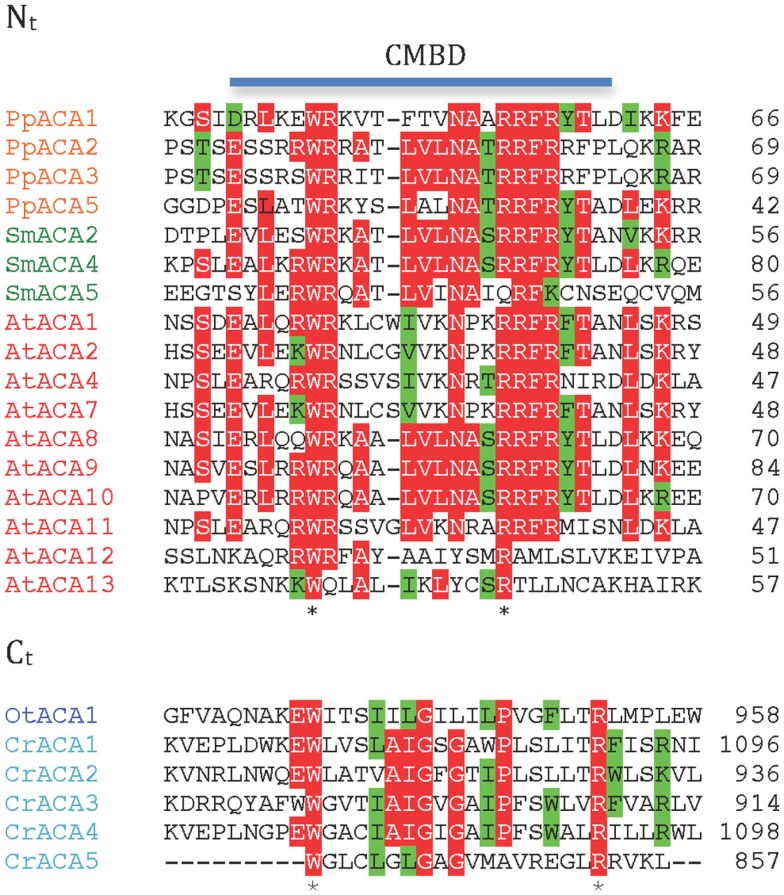
Alignment of putative calmodulin-binding sites in the N- and C-terminal regions of ACA pumps. Nt, N-terminal domain; Ct, C-terminal domain.
Figure 8
Figure 8
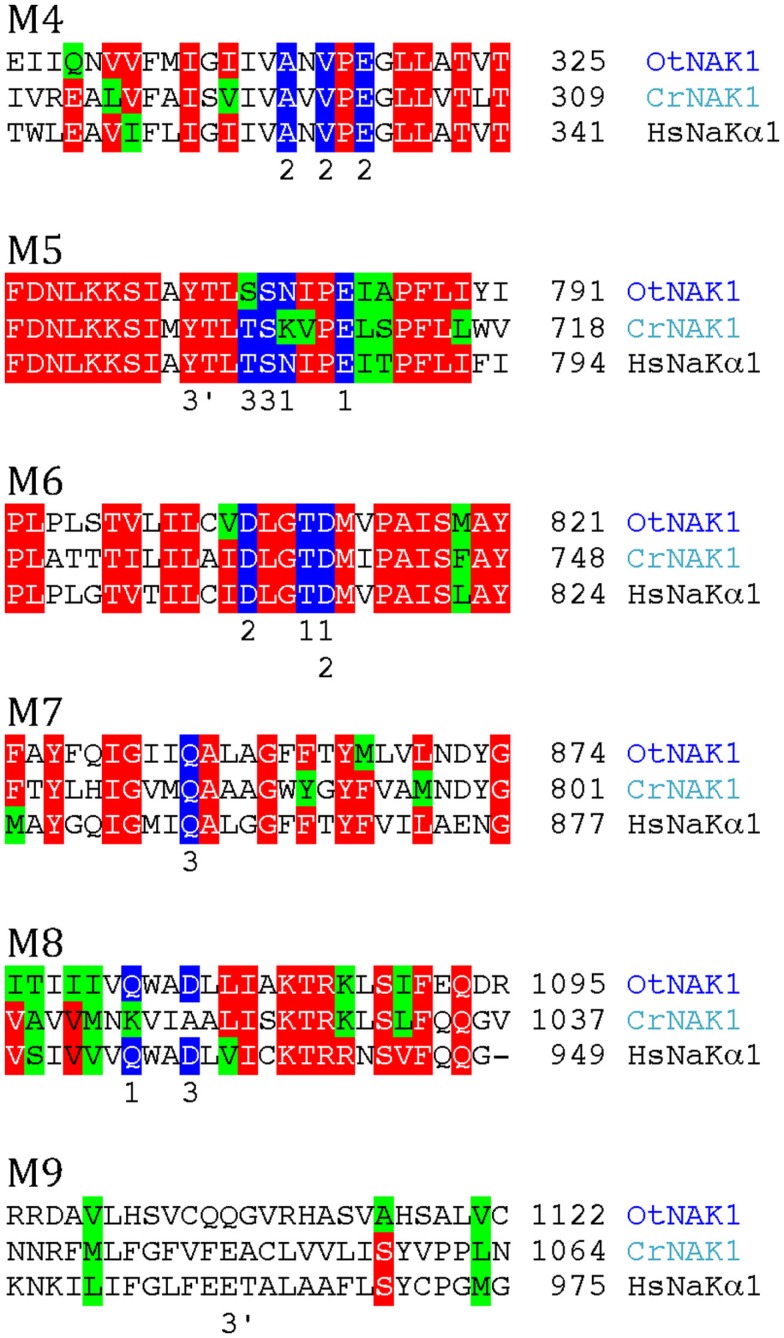
Alignment of predicted transmembrane segments of putative chlorophyte Na+/K+-ATPases (OtNAK1 and CrNAK1) with similar regions in the human Na+/K+-ATPase α1 subunit (ATP1A1; P05023). Residues that in Na+/K+-ATPase are likely to contribute with oxygen atoms for coordination of Na+ (Morth et al., 2007) are marked by blue. Numbers above these residues refer to which of the three Na+ sites (1–3) they contribute to. Residues contributing to an alternative Na+ site (site 3b) are marked 3′.
Figure 9
Figure 9
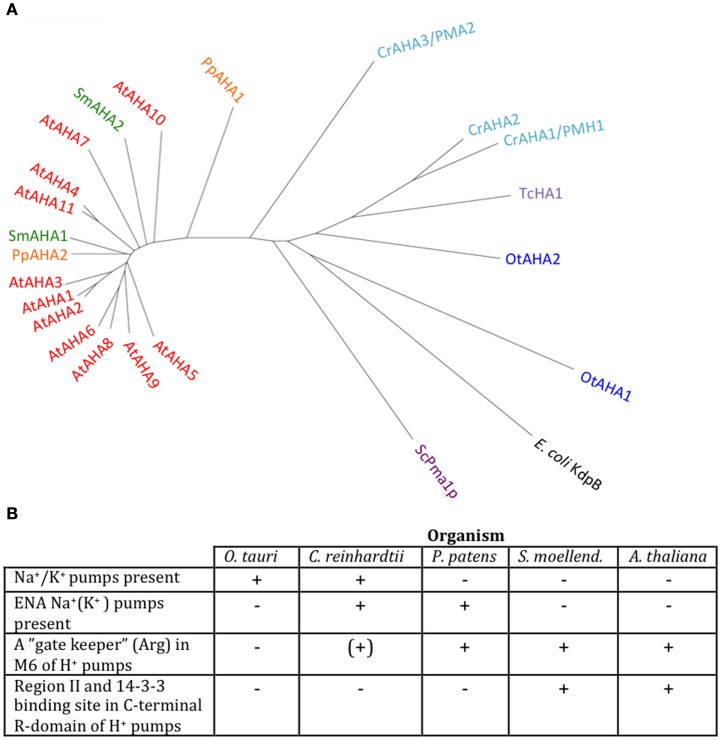
Phylogenetic tree of P3 ATPases (H+-pumps) (A) and table summarizing conserved features (B). Accession numbers for sequences are given in Table 2. For comparison, the following outliers were included: a bacterial P1A ATPase E. coli KdpB (P03960), the S. cerevisiae pump ScPma1p (P05030), and the Trypanosoma cruzi pump TcHA1 (Q8T7V7).
Figure 10
Figure 10
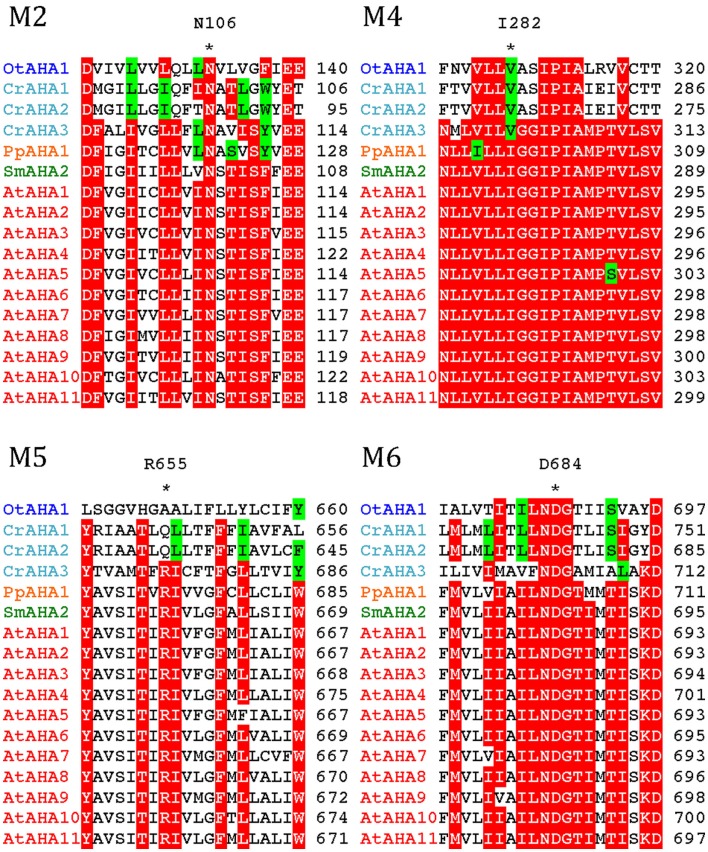
Alignment of predicted transmembrane segments in P3A H+-ATPases. Asterisks mark residues of potential importance for proton coordination and pumping based on evidence from mutagenesis and analysis of a crystal structure for AtAHA2 (Pedersen et al., 2007). The number of the amino acid residue in AtAHA2 is indicated above each asterisk. R655 in M5, which seems important for controlling backflow of H+ at high electrochemical gradients (Pedersen et al., 2007), is lacking in some chlorophyte H+-ATPases.
Figure 11
Figure 11
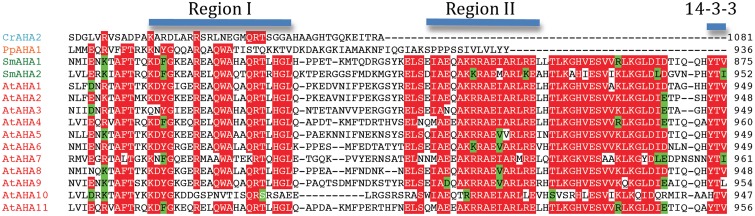
Alignment of putative autoinhibitory regions in the C-terminal region of P3A H+-ATPases.
Figure 12
Figure 12
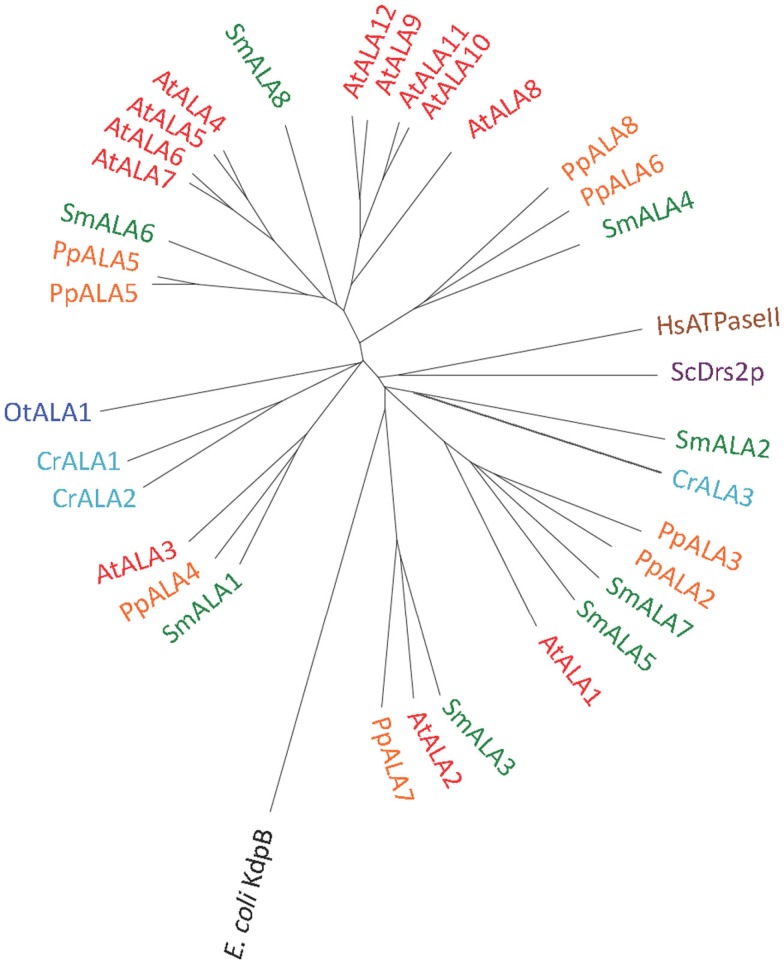
Phylogenetic tree of P4 ATPases (lipid flippases). Accession numbers for sequences are given in Table 2. For comparison, the following outliers were included: A bacterial P1A ATPase E. coli KdpB (P03960), the S. cerevisiae pump ScDrs2p (P39524), and the H. sapiens pump HsATPaseII (ATP8A1; Q9Y2Q0).
Figure 13
Figure 13
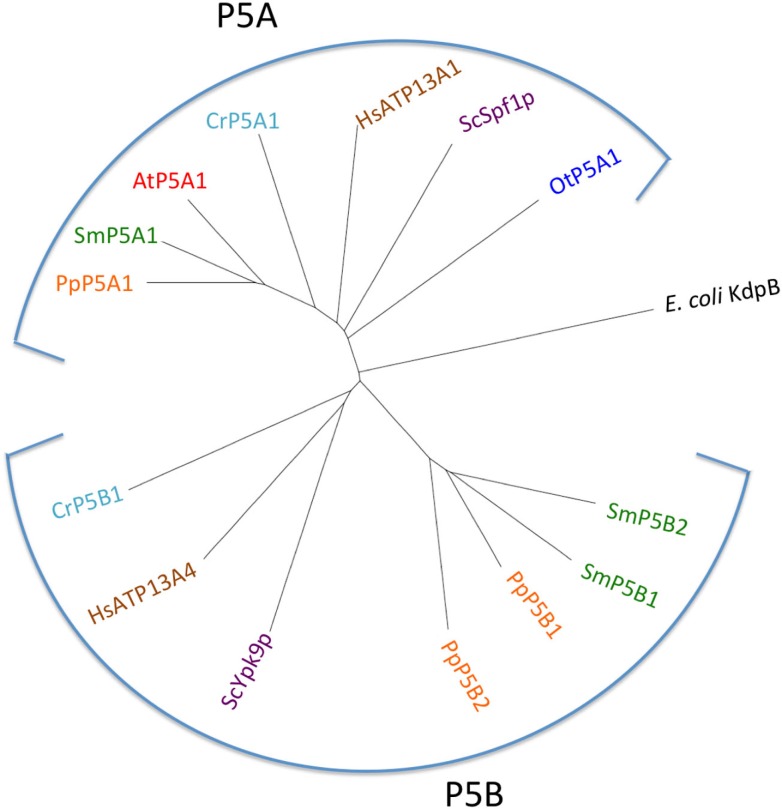
Phylogenetic tree of P5 ATPases (having unknown transport activity). Accession numbers for sequences are given in Table 2. For comparison, the following outliers were included: a bacterial P1A ATPase E. coli KdpB (P03960), the S. cerevisiae pumps ScSpf1p (P39986) and ScYpk9 (Q12697), and the H. sapiens pumps HsATP13A1 (Q6NT90) and HsATP13A4 (Q4VNC1).
Figure 14
Figure 14
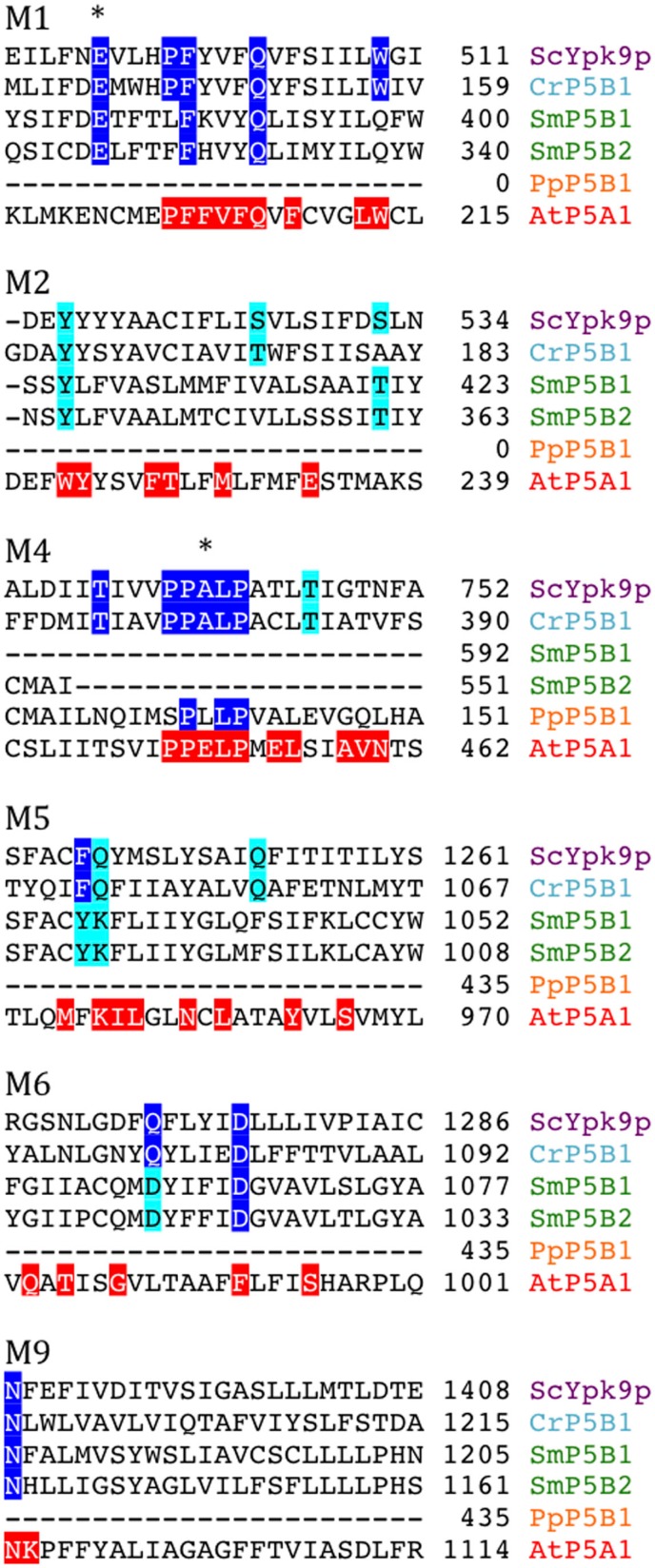
Alignment of predicted transmembrane segments of putative P5B ATPases aligned with similar regions in the S. cerevisiae P5B ATPase ScYpk9p (Q12697). Residues conserved in all P5B ATPases (according to Sørensen et al., 2010) are marked in blue. Those that are highly conserved are marked in cyan. The P5A ATPase AtP5A/AtMIA is shown with residues conserved in P5A ATPases highlighted in red (Sørensen et al., 2010). Asterisks mark residues that are likely to play a role in ligand coordination.
Figure 15
Figure 15
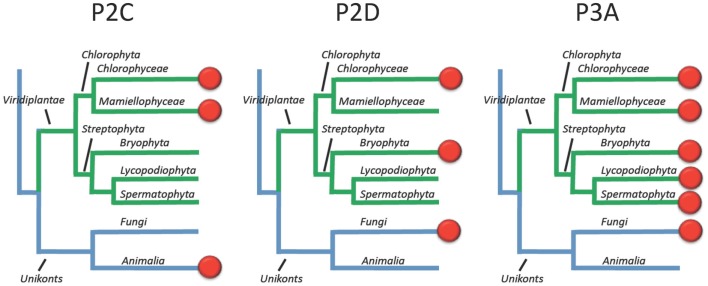
Overview of the evolution of Na+ and H+ transporting P-type ATPases in Viridiplantae. Most likely, the ancestor of green plants had two types of Na+ pumps (P2C and P2D) in addition to a plasma membrane H+ pump (P3A). In present day plants, the terrestrial green algae C. reinhardtii still has all three types of pumps whereas Na+ pumps have been lost completely in vascular plants (here represented by Lycopodiophyta and Spermatophyta).

References

    1. Abdel-Ghany S. E., Muller-Moule P., Niyogi K. K., Pilon M., Shikanai T. (2005). Two P-type ATPases are required for copper delivery in Arabidopsis thaliana chloroplasts. Plant Cell 17, 1233–1251 10.1105/tpc.104.030452 - DOI - PMC - PubMed
    1. Antebi A., Fink G. R. (1992). The yeast Ca2+-ATPase homologue, PMR1, is required for normal Golgi function and localizes in a novel Golgi-like distribution. Mol. Biol. Cell 3, 633–654 - PMC - PubMed
    1. Argüello J. M., Eren E., González-Guerrero M. (2007). The structure and function of heavy metal transport P1B-ATPases. Biometals 20, 233–248 10.1007/s10534-006-9055-6 - DOI - PubMed
    1. Axelsen K. B., Palmgren M. G. (1998). Evolution of substrate specificities in the P-Type ATPase superfamily. J. Mol. Evol. 46, 84–101 10.1007/PL00006286 - DOI - PubMed
    1. Axelsen K. B., Palmgren M. G. (2001). Inventory of the superfamily of P-type ion pumps in Arabidopsis. Plant Physiol. 126, 696–706 10.1104/pp.126.2.696 - DOI - PMC - PubMed

LinkOut - more resources