Review
. 2012 May;14(3):233-41.
doi: 10.1016/j.ymben.2012.02.001.

The future of metabolic engineering and synthetic biology: towards a systematic practice

Affiliations
Review

The future of metabolic engineering and synthetic biology: towards a systematic practice

Vikramaditya G Yadav et al. Metab Eng. 2012 May.

Abstract

Industrial biotechnology promises to revolutionize conventional chemical manufacturing in the years ahead, largely owing to the excellent progress in our ability to re-engineer cellular metabolism. However, most successes of metabolic engineering have been confined to over-producing natively synthesized metabolites in E. coli and S. cerevisiae. A major reason for this development has been the descent of metabolic engineering, particularly secondary metabolic engineering, to a collection of demonstrations rather than a systematic practice with generalizable tools. Synthetic biology, a more recent development, faces similar criticisms. Herein, we attempt to lay down a framework around which bioreaction engineering can systematize itself just like chemical reaction engineering. Central to this undertaking is a new approach to engineering secondary metabolism known as 'multivariate modular metabolic engineering' (MMME), whose novelty lies in its assessment and elimination of regulatory and pathway bottlenecks by re-defining the metabolic network as a collection of distinct modules. After introducing the core principles of MMME, we shall then present a number of recent developments in secondary metabolic engineering that could potentially serve as its facilitators. It is hoped that the ever-declining costs of de novo gene synthesis; the improved use of bioinformatic tools to mine, sort and analyze biological data; and the increasing sensitivity and sophistication of investigational tools will make the maturation of microbial metabolic engineering an autocatalytic process. Encouraged by these advances, research groups across the world would take up the challenge of secondary metabolite production in simple hosts with renewed vigor, thereby adding to the range of products synthesized using metabolic engineering.


Figures

Figure 1
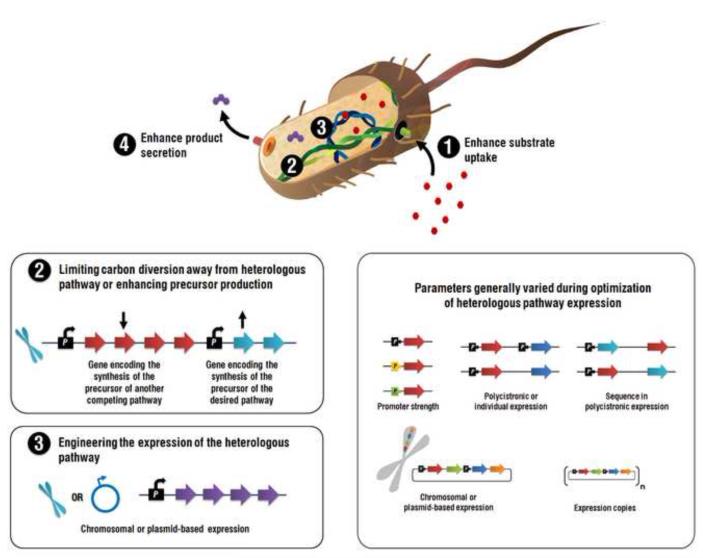
Figure 1. A holistic view of metabolic and cellular engineering
Methods for manipulating the flux from a substrate towards the product can be grouped into four categories: (1) enhancement in the rate of substrate uptake, (2) reduction of flux to undesirable by-products and enhancement of precursor and cofactor flux, (3) introduction of the heterologous pathway and optimization of the activity of its constituent enzymes, and (4) export of the product to the extracellular medium in order to shift equilibrium towards product formation.
Figure 2
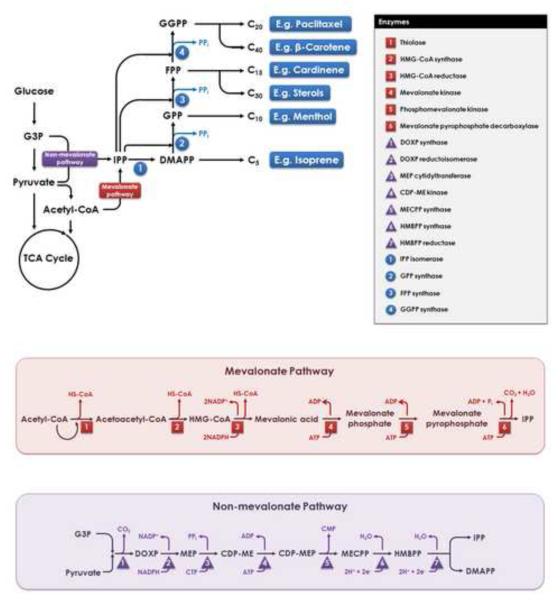
Figure 2. Terpenoid biosynthetic pathways
Terpenoids are naturally synthesized via one of two possible routes – the mevalonate (MVA) pathway or the non-mevalonate or 2-methyl-(D)-erythritol-4-phosphate (MEP) pathway. The MVA pathway commences with the co-condensation of acetyl-CoA to form acetoacetyl-CoA. The MEP pathway, on the other hand, commences with the condensation of glyceraldehyde-3-phosphate with pyruvate to yield 2-methyl-(D)-erythritol-4-phosphate. Both pathways culminate in the production of isopentenyl pyrophosphate (IPP) and dimethylallyl pyrophosphate (DMAPP) – the universal, 5-carbon terpenoid precursors. IPP then successively condenses with DMAPP and the products of its condensation reactions therewith to yield a homologous series of allylic pyrophosphates that, in turn, serve as precursors to specialized terpenoid producing pathways. The cyclized and branched derivatives of the de-phosphorylated allylic pyrophosphates then undergo a variety of substitution reactions such as hydroxylations and esterifications to yield individual terpenoid molecules.
Figure 3
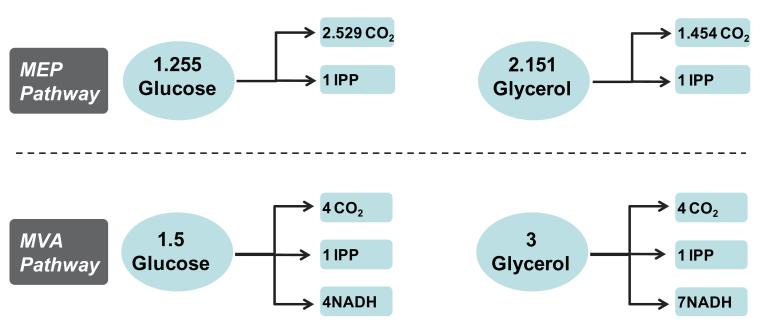
Figure 3. Stoichiometry and redox balance in isoprenoid pathways
Although both, the MVA and MEP pathways culminate in the production of IPP and DMAPP, the MEP pathway is energetically balanced and more efficient than the MVA pathway in its ability to convert sugars or glycerol into terpenoids. The mevalonate MVA consumes 1.5 moles of glucose or 3 moles of glycerol for every mole of IPP produced but generates excess reducing equivalents (NADH) that must be expended in cell growth or secreted as reduced metabolites. This diverts carbon away from the product and decreases the overall yield of IPP. Moreover, excessive NADH can further heighten co-factor imbalances. On the other hand, the MEP pathway utilizes 1.255 moles of glucose or 2.151 moles of glycerol for every mole of IPP produced, but, in contrast with the MVA pathway, is redox balanced.
Figure 4
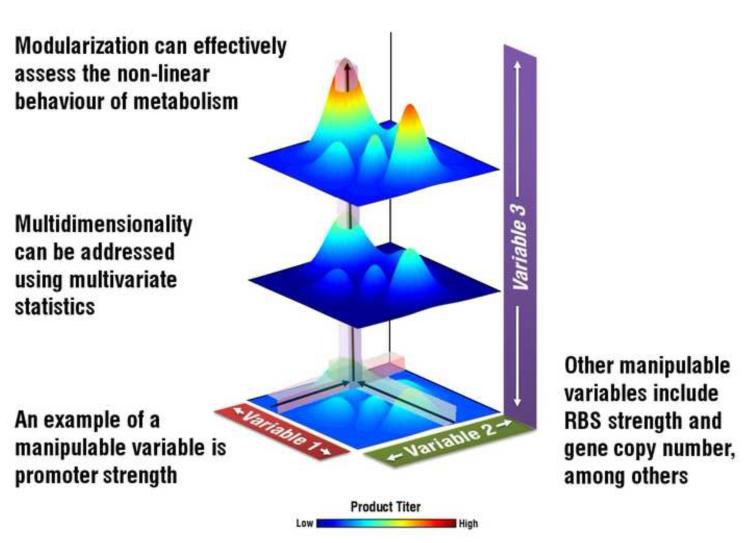
Figure 4. Multivariate modular metabolic engineering (MMME)
The technique assesses and eliminates regulatory and pathway bottlenecks by re-defining the metabolic network as a collection of distinct modules. Each module generally consists of enzymes with similar turnovers. Next, the turnovers of the different modules are equalized by adjusting their concentrations. This maximizes the ratio of pathway turnover to resource expenditure. The practice of re-casting metabolic networks as a collection of interacting modules not only makes the analysis of a very complicated system considerably more tractable, but since the concentrations of a module’s enzymes can be adjusted using a variety of transcriptional, post-transcriptional and translational mechanisms, performance of module configurations can be easily assessed using multivariate statistics.
Figure 5
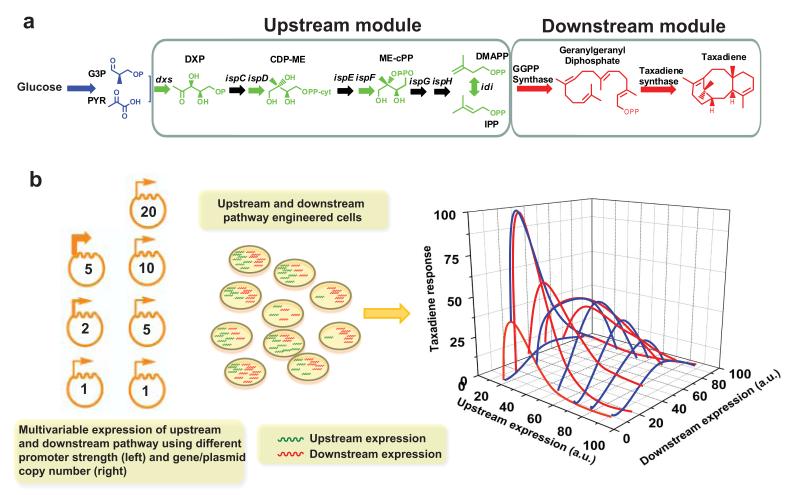
Figure 5. Optimization of taxadiene production by applying multivariate-modular engineering
(a) Schematic of the two modules, the native upstream MEP isoprenoid pathway (green) and synthetic taxadiene pathway (red). (b) Schematic of the multivariate-modular isoprenoid pathway engineering approach for probing the non-linear response in terpenoid accumulation from upstream and downstream pathway engineered cells. Expression of upstream and downstream pathways is modulated by varying the promoter strength [1 (Trc), 2 (T5) and 5 (T7)] or gene/plasmid copy number (right). Variation of upstream and downstream pathway expression gives different maxima in taxadiene accumulation.
Figure 6
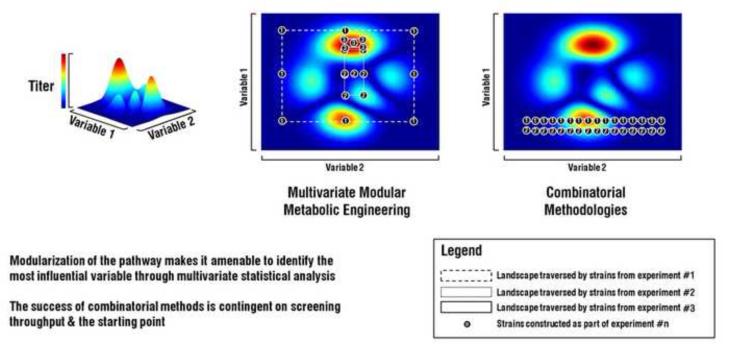
Figure 6. Comparison between MMME and combinatorial approaches
In combinatorial strain optimization, one must manipulate several genes in order to observe a superior phenotype and this usually involves screening an overwhelming number of strains. Combinatorial experimentation may be infeasible without a reliable, high-throughput screen and more importantly, may require significant investments of time, resources and effort. Moreover, the success of a combinatorial screen is often heavily reliant on the starting point. A bad starting mutation could make the process laborious and unsuccessful.

References

    1. Ajikumar PK, et al. Terpenoids: Opportunities for biosynthesis of natural product drugs using engineered microorganisms. Molecular Pharmaceutics. 2008;5:167–190. - PubMed
    1. Ajikumar PK, et al. Isoprenoid pathway optimization for Taxol precursor overproduction in Escherichia coli. Science. 2010;330:70–4. - PMC - PubMed
    1. Alper H, et al. Tuning genetic control through promoter engineering. PNAS. 2005a;102:12678–12683. - PMC - PubMed
    1. Alper H, et al. Tuning genetic control through promoter engineering. Proceedings of the National Academy of Sciences of the United States of America. 2005b;102:12678. - PMC - PubMed
    1. Alper H, et al. Construction of lycopene-overproducing E. coli strains by combining systematic and combinatorial gene knockout targets. Nat Biotechnol. 2005c;23:612–6. - PubMed

Publication types

MeSH terms

LinkOut - more resources