


Hyaluronic acid three-dimensional scaffold for surgical revision of retracting scars: a human experimental study
- PMID: 22630331
- PMCID: PMC7950506
- DOI: 10.1111/j.1742-481X.2012.00981.x
Hyaluronic acid three-dimensional scaffold for surgical revision of retracting scars: a human experimental study
Abstract
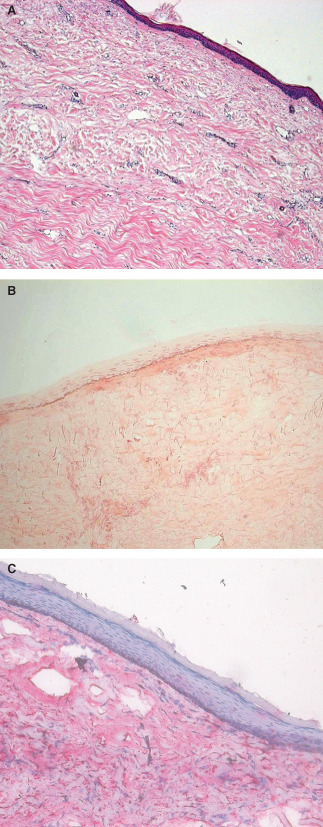
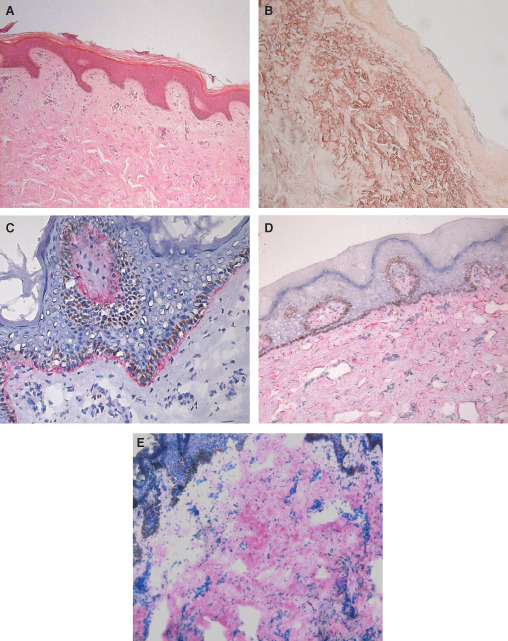
An observational study was carried out at the Plastic and Reconstructive Surgery Unit of the University of Pavia - Salvatore Maugeri Research and Care Institute, Pavia, Italy, to assess the clinical and histological long-term outcomes of autologous skin grafting of fresh surgical wounds following previous repair with a hyaluronic acid three-dimensional scaffold (Hyalomatrix®). Eleven fresh wounds from surgical release of retracted scars were enrolled in this study. A stable skin-like tissue cover was observed in all of the treated wounds in an average 1 month's time; at the end of this study, after an average of 12 months' time, all of the reconstructed areas were pliable and stable, although an average retraction rate of 51·62% was showed. Histological observation and immunohistochemical analysis displayed integration of the graft within the surrounding tissues. A regenerated dermis with an extracellular matrix rich in type I collagen and elastic fibres and with reduced type III collagen rate was observed. The epidermis and dermoepidermal junction featured a normal appearance with well-structured dermal papillae, too. Although the histological features would suggest regeneration of a skin-like tissue, with a good dermis and no signs of scarring, the clinical problem of secondary contracture is still unsolved.
© 2012 The Authors. International Wound Journal © 2012 John Wiley & Sons Ltd and Medicalhelplines.com Inc.
Figures
References
-
- Gravante G, Delogu D, Giordan N, Morano G, Montone A, Esposito G. The use of Hyalomatrix PA in the treatment of deep partial‐thickness burns. J Burn Care Res 2007;28:269–74. - PubMed
-
- Vaiude P, Anthony ET, Soranzo C, Myers SR. Hyalomatrix®– a novel dermal pre‐treatment. J Plast Reconstr Aesthet Surg 2007;60:S14.
-
- Gravante G, Sorge R, Merone A, Tamisani AM, Di Lonardo A, Scalise A, Doneddu G, Melandri D, Stracuzzi G, Onesti MG, Cerulli P, Pinn R, Esposito G. Hyalomatrix PA in burn care practice: results from a national retrospective survey, 2005 to 2006. Ann Plast Surg 2010;64:69–79. - PubMed
-
- Collins TJ. ImageJ for microscopy. Biotechniques 2007;43(1 Suppl):25–30. - PubMed
-
- Chen WYJ, Abatangelo G. Functions of hyaluronan in wound repair. Wound Repair Regen 1999;7:79–89. - PubMed
Publication types
MeSH terms
Substances
LinkOut - more resources
Full Text Sources
Medical
