


IFN-γ protects from lethal IL-17 mediated viral encephalomyelitis independent of neutrophils
- PMID: 22642802
- PMCID: PMC3419086
- DOI: 10.1186/1742-2094-9-104
IFN-γ protects from lethal IL-17 mediated viral encephalomyelitis independent of neutrophils
Abstract
Background: The interplay between IFN-γ, IL-17 and neutrophils during CNS inflammatory disease is complex due to cross-regulatory factors affecting both positive and negative feedback loops. These interactions have hindered the ability to distinguish the relative contributions of neutrophils, Th1 and Th17 cell-derived effector molecules from secondary mediators to tissue damage and morbidity.
Methods: Encephalitis induced by a gliatropic murine coronavirus was used as a model to assess the direct contributions of neutrophils, IFN-γ and IL-17 to virus-induced mortality. CNS inflammatory conditions were selectively manipulated by adoptive transfer of virus-primed wild-type (WT) or IFN-γ deficient (GKO) memory CD4+ T cells into infected SCID mice, coupled with antibody-mediated neutrophil depletion and cytokine blockade.
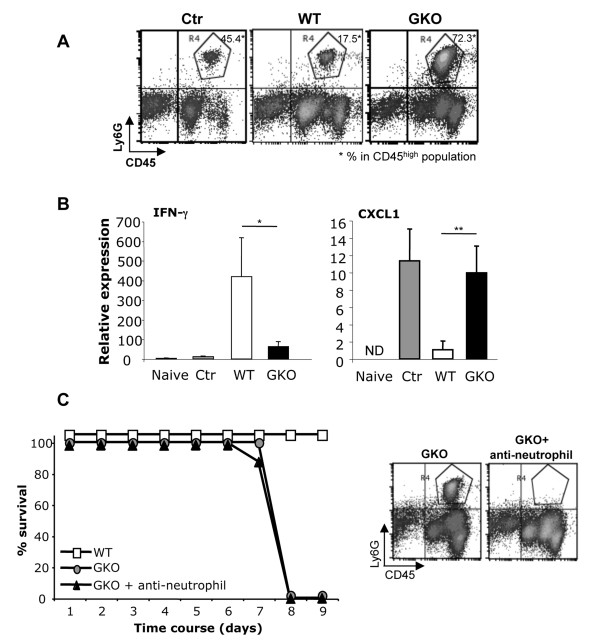
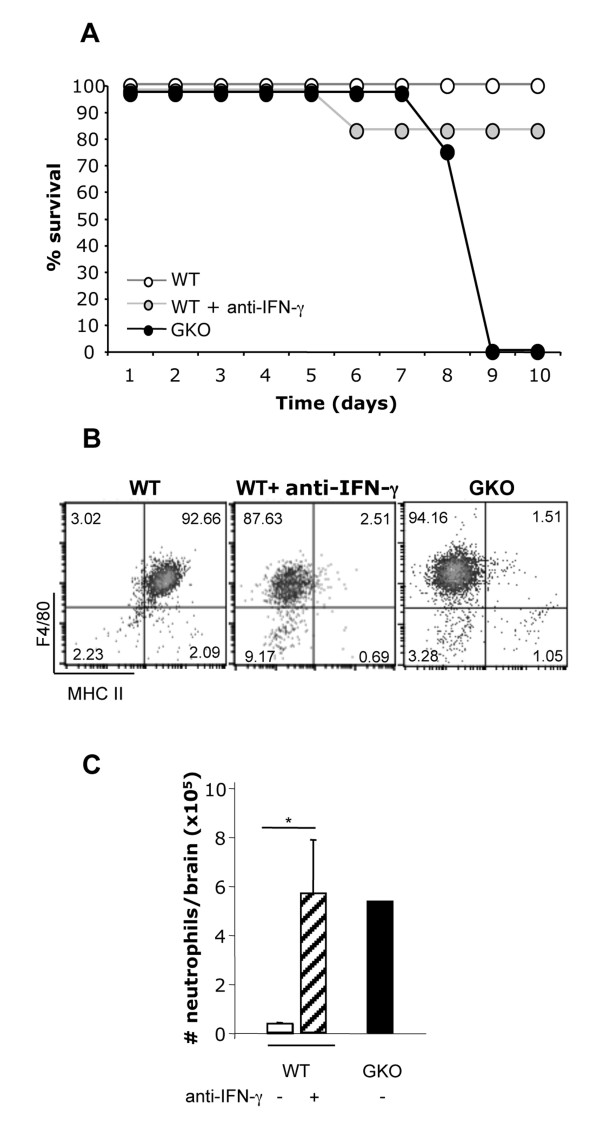
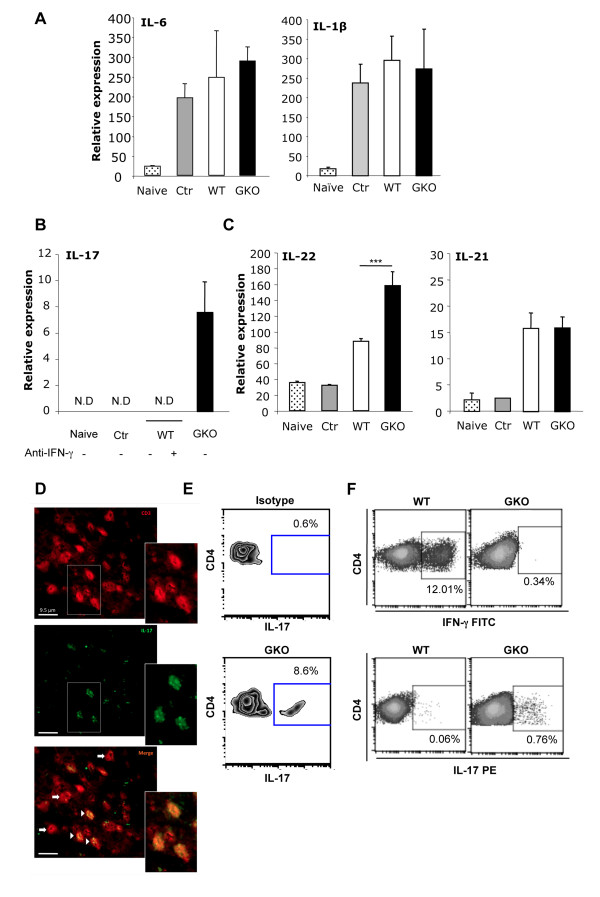
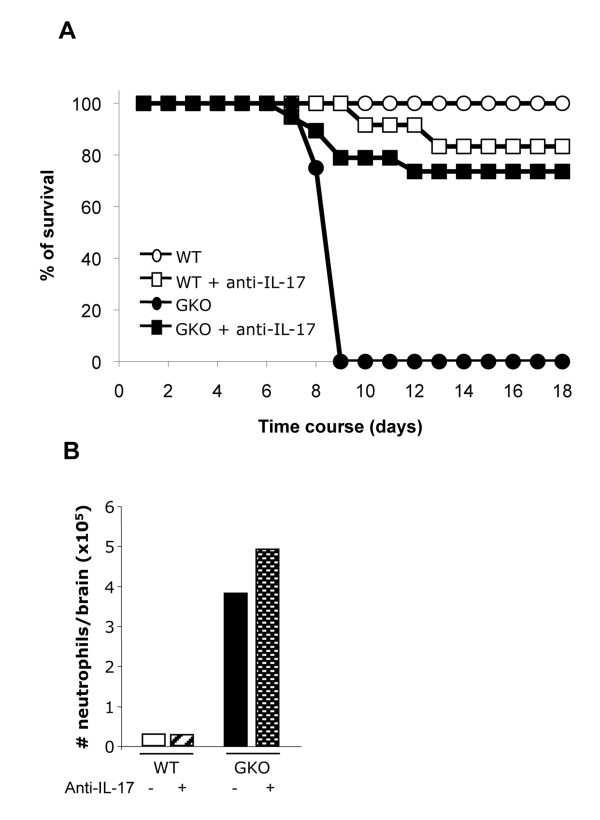
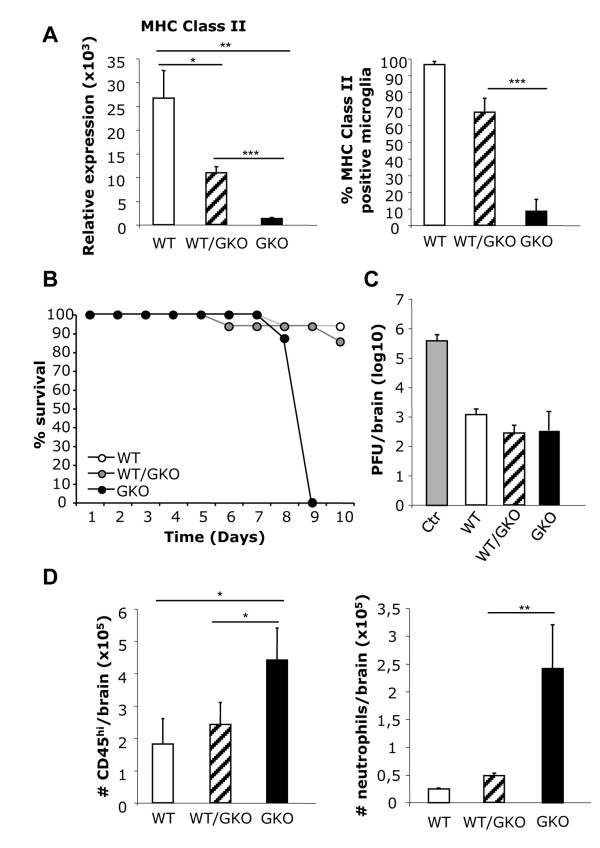
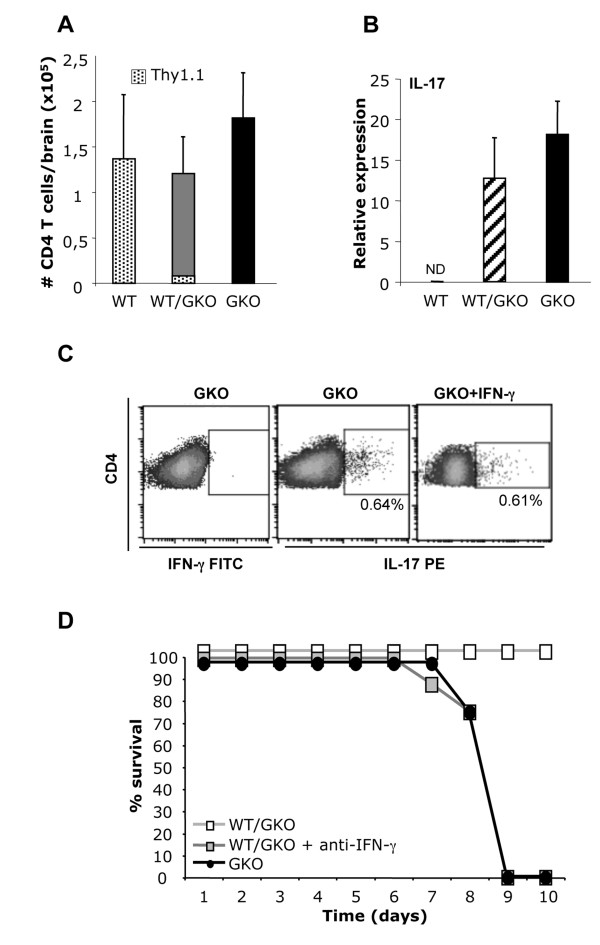
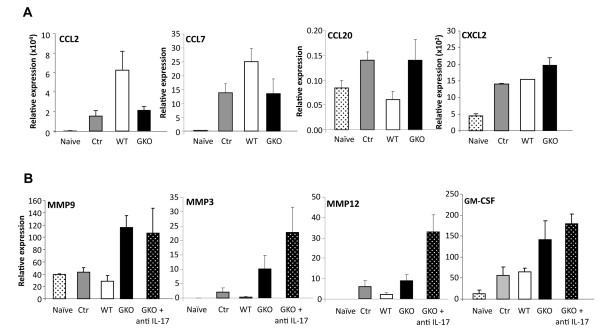
Results: Transfer of GKO memory CD4+ T cells into infected SCID mice induced rapid mortality compared to recipients of WT memory CD4+ T cells, despite similar virus control and demyelination. In contrast to recipients of WT CD4+ T cells, extensive neutrophil infiltration and IL-17 expression within the CNS in recipients of GKO CD4+ T cells provided a model to directly assess their contribution(s) to disease. Recipients of WT CD4+ T cells depleted of IFN-γ did not express IL-17 and were spared from mortality despite abundant CNS neutrophil infiltration, indicating that mortality was not mediated by excessive CNS neutrophil accumulation. By contrast, IL-17 depletion rescued recipients of GKO CD4+ T cells from rapid mortality without diminishing neutrophils or reducing GM-CSF, associated with pathogenic Th17 cells in CNS autoimmune models. Furthermore, co-transfer of WT and GKO CD4+ T cells prolonged survival in an IFN-γ dependent manner, although IL-17 transcription was not reduced.
Conclusions: These data demonstrate that IL-17 mediates detrimental clinical consequences in an IFN-γ-deprived environment, independent of extensive neutrophil accumulation or GM-CSF upregulation. The results also suggest that IFN-γ overrides the detrimental IL-17 effector responses via a mechanism downstream of transcriptional regulation.
Figures
References
-
- Schwarzenberger P, Huang W, Ye P, Oliver P, Manuel M, Zhang Z, Bagby G, Nelson S, Kolls JK. Requirement of endogenous stem cell factor and granulocyte-colony-stimulating factor for IL-17-mediated granulopoiesis. J Immunol. 2000;164:4783–4789. - PubMed
-
- Ye P, Rodriguez FH, Kanaly S, Stocking KL, Schurr J, Schwarzenberger P, Oliver P, Huang W, Zhang P, Zhang J, Shellito JE, Bagby GJ, Nelson S, Charrier K, Peschon JJ, Kolls JK. Requirement of interleukin 17 receptor signaling for lung CXC chemokine and granulocyte colony-stimulating factor expression, neutrophil recruitment, and host defense. J Exp Med. 2001;194:519–527. doi: 10.1084/jem.194.4.519. - DOI - PMC - PubMed
-
- Tran EH, Prince EN, Owens T. IFN-gamma shapes immune invasion of the central nervous system via regulation of chemokines. J Immunol. 2000;164:2759–2768. - PubMed
Publication types
MeSH terms
Substances
Grants and funding
LinkOut - more resources
Full Text Sources
Molecular Biology Databases
Research Materials
