


Mid-way and post-intervention effects on potential determinants of physical activity and sedentary behavior, results of the HEIA study - a multi-component school-based randomized trial
- PMID: 22643014
- PMCID: PMC3422999
- DOI: 10.1186/1479-5868-9-63
Mid-way and post-intervention effects on potential determinants of physical activity and sedentary behavior, results of the HEIA study - a multi-component school-based randomized trial
Abstract
Background: There is limited knowledge as to whether obesity prevention interventions are able to produce change in the determinants hypothesized to precede change in energy balance-related behaviors in young people. The aim of this study was to evaluate the effect of a multi-component intervention on a wide range of theoretically informed determinants of physical activity (PA) and sedentary behavior (SB). Moderation effects of gender, weight status and parental education level and whether the perceived intervention dose received influenced the effects were also explored.
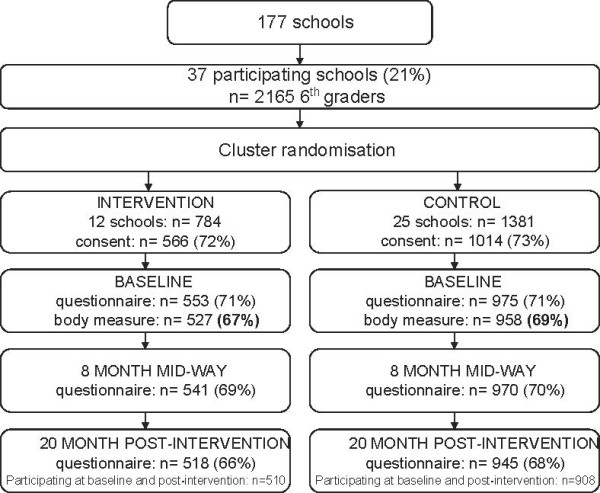
Methods: The HEIA study was a 20-month school-based, randomized controlled trial to promote healthy weight development. In total, 1418 11-year-olds participated at baseline and post-intervention assessment. Enjoyment, self-efficacy, perceived social support from parents, teachers and friends related to PA, perceived parental regulation of TV-viewing and computer/game-use and perceived social inclusion at schools were examined by covariance analyses to assess overall effects and moderation by gender, weight status and parental education, mid-way and post-intervention. Covariance analyses were also used to examine the role of intervention dose received on change in the determinants.
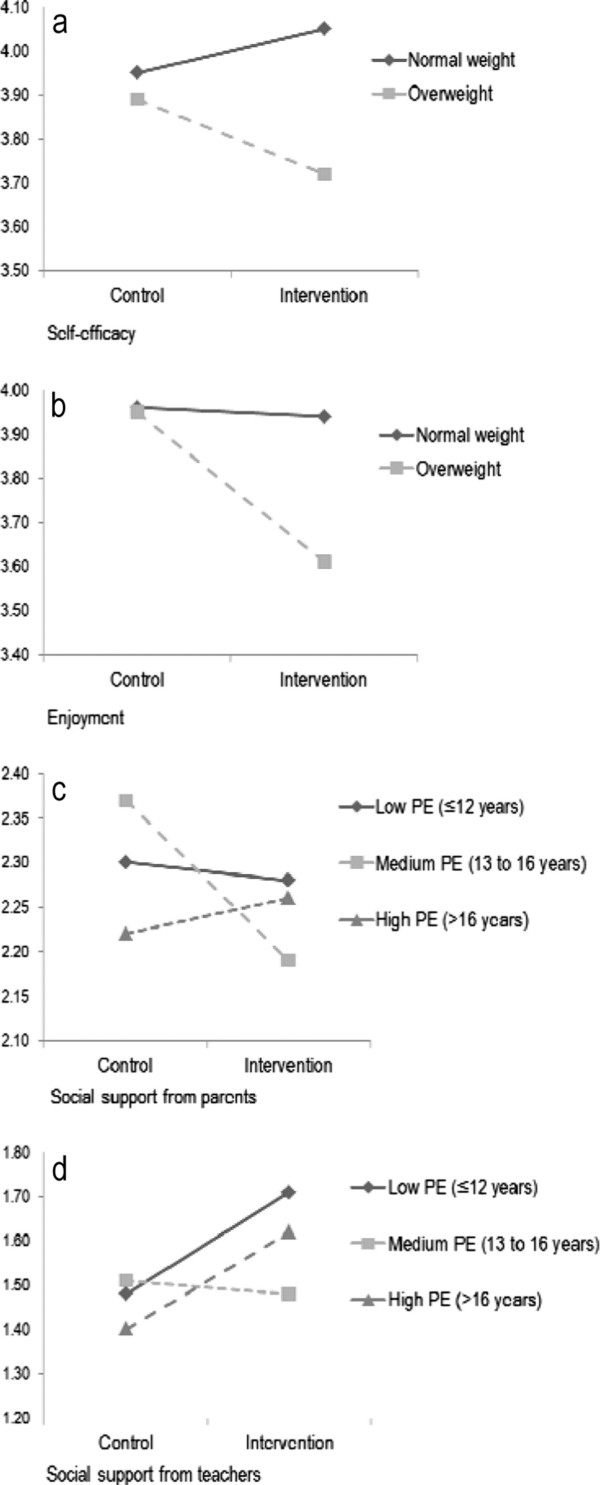
Results: At mid-way enjoyment (p = .03), perceived social support from teachers (p = .003) and self-efficacy (p = .05) were higher in the intervention group. Weight status moderated the effect on self-efficacy, with a positive effect observed among the normal weight only. At post-intervention results were sustained for social support from teachers (p = .001), while a negative effect was found for self-efficacy (p = .02). Weight status moderated the effect on enjoyment, with reduced enjoyment observed among the overweight. Moderation effects for parental education level were detected for perceived social support from parents and teachers. Finally, positive effects on several determinants were observed among those receiving a high as opposed to a low intervention dose.
Conclusion: The intervention affected both psychological and social-environmental determinants. Results indicate that social support from teachers might be a potential mediator of PA change, and that overweight adolescents might be in need of specially targeted interventions to avoid reducing their enjoyment of PA. Further studies should continue to assess how intervention effectiveness is influenced by the participants' self-reported dose of intervention received.
Figures
References
-
- Flynn MA, McNeil DA, Maloff B, Mutasingwa D, Wu M, Ford C, Though SC. Reducing obesity and related chronic disease risk in children and youth: a synthesis of evidence with "best practice" recommendations. Obes Rev. 2006;7(Suppl 1):7–66. - PubMed
-
- Brown T, Summerbell C. Systematic review of school-based interventions that focus on changing dietary intake and physical activity levels to prevent childhood obesity: an update to the obesity guidance produced by the National Institute for Health and Clinical Excellence. Obes Rev. 2009;10:110–141. doi: 10.1111/j.1467-789X.2008.00515.x. - DOI - PubMed
Publication types
MeSH terms
LinkOut - more resources
Full Text Sources
Medical
